


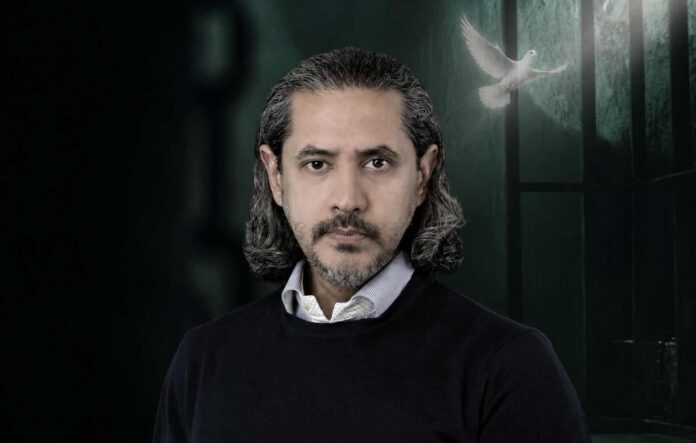
Egyptian-Turkish poet Abdul Rahman Yusuf al-Qaradawi, son of the late prominent scholar Yusuf al-Qaradawi, has been pardoned by the UAE president just days after being sentenced to 10 years in prison.
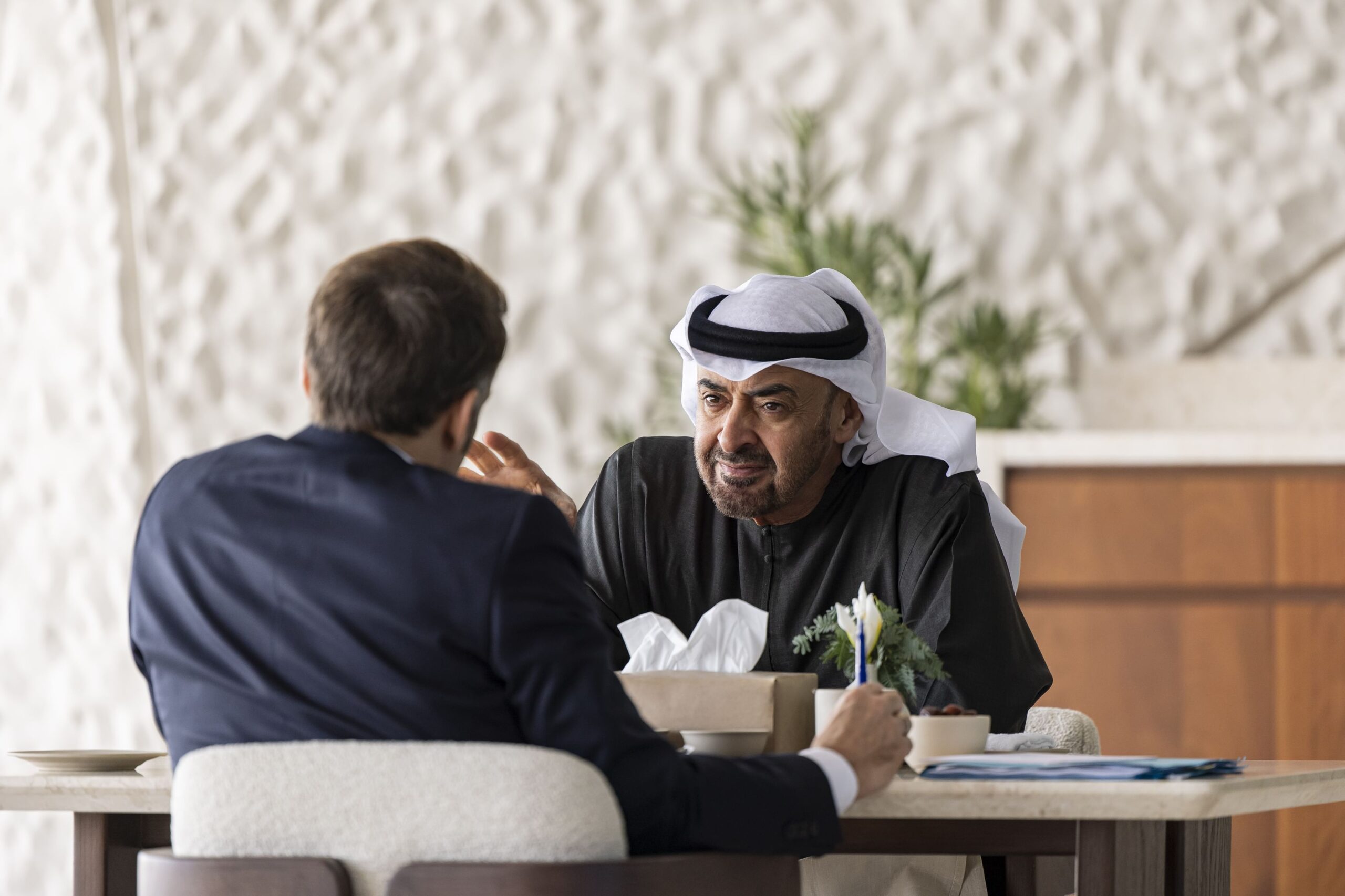
UAE President Sheikh Mohamed bin Zayed Al Nahyan has issued a presidential pardon for Egyptian-Turkish poet and activist Abdul Rahman Yusuf al-Qaradawi, shortly after he was handed the lengthy prison sentence.
The pardon was announced today just eight days after the Abu Dhabi Federal Court of Appeal convicted al-Qaradawi and sentenced him to ten years in prison and a fine of AED200,000 (£41,000).
The UAE’s state news agency, WAM, confirmed that the necessary procedures to implement the pardon had been completed. However, Emirati authorities have not publicly specified the offences for which al-Qaradawi was convicted, nor made clear whether the presidential pardon also covers the fine.
Mohammed bin Saqr Al-Zaabi, President of the Emirates Detainees Advocacy Centre (EDAC), reacted to the news, saying: “The presidential pardon is a welcome step towards ending Abdul Rahman Yusuf al-Qaradawi’s ordeal, but it must be followed by his immediate release and guarantees for his safety. We remain concerned about any possibility of deportation to Egypt, where he could face arbitrary detention, torture or other serious violations. The principle of non-refoulement must be respected, and he should be allowed to return safely to Turkey. This pardon must result in genuine freedom, not a transfer from one form of detention to another.”
Al-Qaradawi, who was born in 1970 and holds Egyptian and Turkish citizenship, is the son of the late prominent Islamic scholar Sheikh Yusuf al-Qaradawi.

His case began in December 2024 when he was detained by Lebanese authorities after returning from Syria. During a visit to Damascus, al-Qaradawi had published a video criticising the governments of Egypt, the UAE and Saudi Arabia.
Lebanese authorities subsequently detained him on the basis of warrants and requests from Egypt and the UAE. In January 2025, Lebanon’s government approved his transfer to the UAE.
Subscribe to our newsletter and stay updated on the latest news and updates from around the Muslim world!
His extradition generated considerable concern among human rights organisations.
Amnesty International warned that al-Qaradawi faced a serious risk of enforced disappearance, torture and other ill-treatment if he was sent to Egypt, noting that he had previously been sentenced in absentia by an Egyptian court to five years in prison in a case it described as politically-motivated.
Human Rights Watch also raised concerns about his treatment following his detention and extradition.
In April 2025, lawyers representing al-Qaradawi filed a legal complaint in Britain calling for the Metropolitan Police to investigate allegations surrounding his detention, extradition and treatment. His lawyer alleged that he had been held in solitary confinement without charge or due process.
The case also prompted intervention from UN special procedures experts, who expressed concerns that al-Qaradawi could face torture or ill-treatment, arbitrary detention, enforced disappearance and violations of his fair-trial rights.
Yusuf al-Qaradawi, who died in 2022 aged 96, was a hugely influential Sunni scholar whose television programmes, books and religious rulings reached millions of Muslims around the world.
He was also a longstanding critic of successive Egyptian governments and was closely associated with the Muslim Brotherhood, which is banned by Egypt and designated as a terrorist organisation by several governments.
Abdul Rahman himself is primarily known as a poet and political activist rather than as an Islamic scholar.
The Egyptian authorities sentenced him in absentia in 2017 to five years in prison over allegations including spreading false news. Amnesty International said the charges were politically-motivated.