
Syrian Foreign Minister Asaad al-Shaibani confirmed discussions are underway over Damascus joining the new regional alliance involving Saudi Arabia, Türkiye and Pakistan, while calling for stronger joint defence arrangements and condemning more than 1,000 Israeli attacks on Syria.
Speaking during a regional security session at the Manama Dialogue 2026 on Saturday, Shaibani said discussions were underway to assess Syria’s potential entry into the alliance.
According to the Syrian Arab News Agency (SANA), the foreign minister described Damascus as an “integral” part of regional security and said Syria would support any framework aimed at protecting regional stability.
He argued that the region was in greater need than ever of developing joint deterrence and defence systems.
The Mecca pact brings together three influential Muslim-majority countries: Saudi Arabia, Türkiye and Pakistan. Syria’s potential participation would expand the framework’s regional reach.

Syria condemns Israeli attacks
During his remarks, Shaibani also accused Israel of carrying out more than 1,000 attacks against Syrian territory in less than two years, killing dozens of people.
Subscribe to our newsletter and stay updated on the latest news and updates from around the Muslim world!
“Our territory has been subjected to more than 1,000 Israeli attacks in less than two years, killing dozens,” he said.
Questioning international demands for greater Syrian border control and the concentration of weapons under state authority, he asked: “How can calls for border control and placing weapons exclusively under state control be justified while Syrian sovereignty is violated and targeted on a daily basis?”

The foreign minister called for a return to the positions that existed before December 8, 2024, and for the implementation of the 1974 Disengagement Agreement between Syria and Israel.
He also reiterated that the Golan Heights remains Syrian territory, pointing to UN Security Council Resolution 497 as the international reference on the issue.
Israel expanded its military presence inside Syrian territory following the fall of Bashar al-Assad’s government on December 8, 2024.
Israeli forces moved into the buffer zone established under the 1974 Disengagement Agreement and subsequently established military positions both inside and beyond the area.
The United Nations described Israel’s move into the separation zone as a violation of the 1974 agreement.
The agreement had established a demilitarised buffer zone between Israeli and Syrian forces in the occupied Golan Heights area, with UN peacekeepers monitoring the separation.
Preparing for war or pushing for peace?
Syria’s potential entry into the Mecca Defence Pact would represent a significant development in the emerging regional security framework, although no formal agreement on its membership has yet been announced.
When the pact was signed, hopes were raised that it could mark the beginning of a process leading to the creation of an “Islamic NATO” – a regional alliance capable of better protecting the interests of the Muslim world.
However, the alliance now appears to be caught up in a bloody conflict between rival Muslim actors, as Saudi Arabia battles Yemen’s Houthi Ansarallah movement for control of the country.
Reports suggest that Saudi Arabia has been pressing Türkiye and Pakistan to play a role in the fight against the Houthis. However, both countries have so far refrained from sending troops into Yemen to support the Saudi campaign, instead favouring a role in strengthening Saudi Arabia’s border defences.
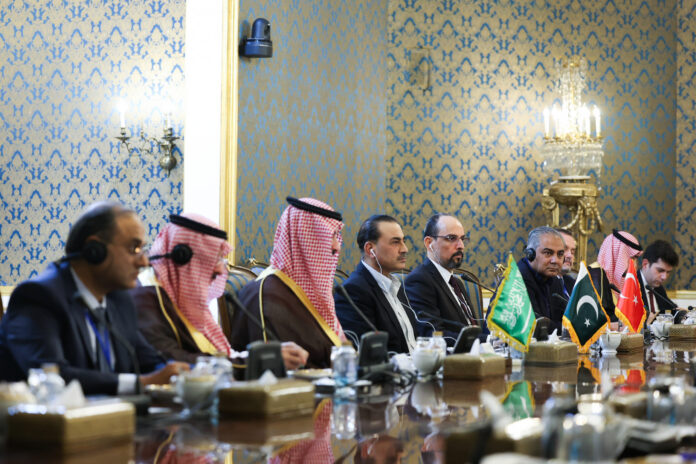
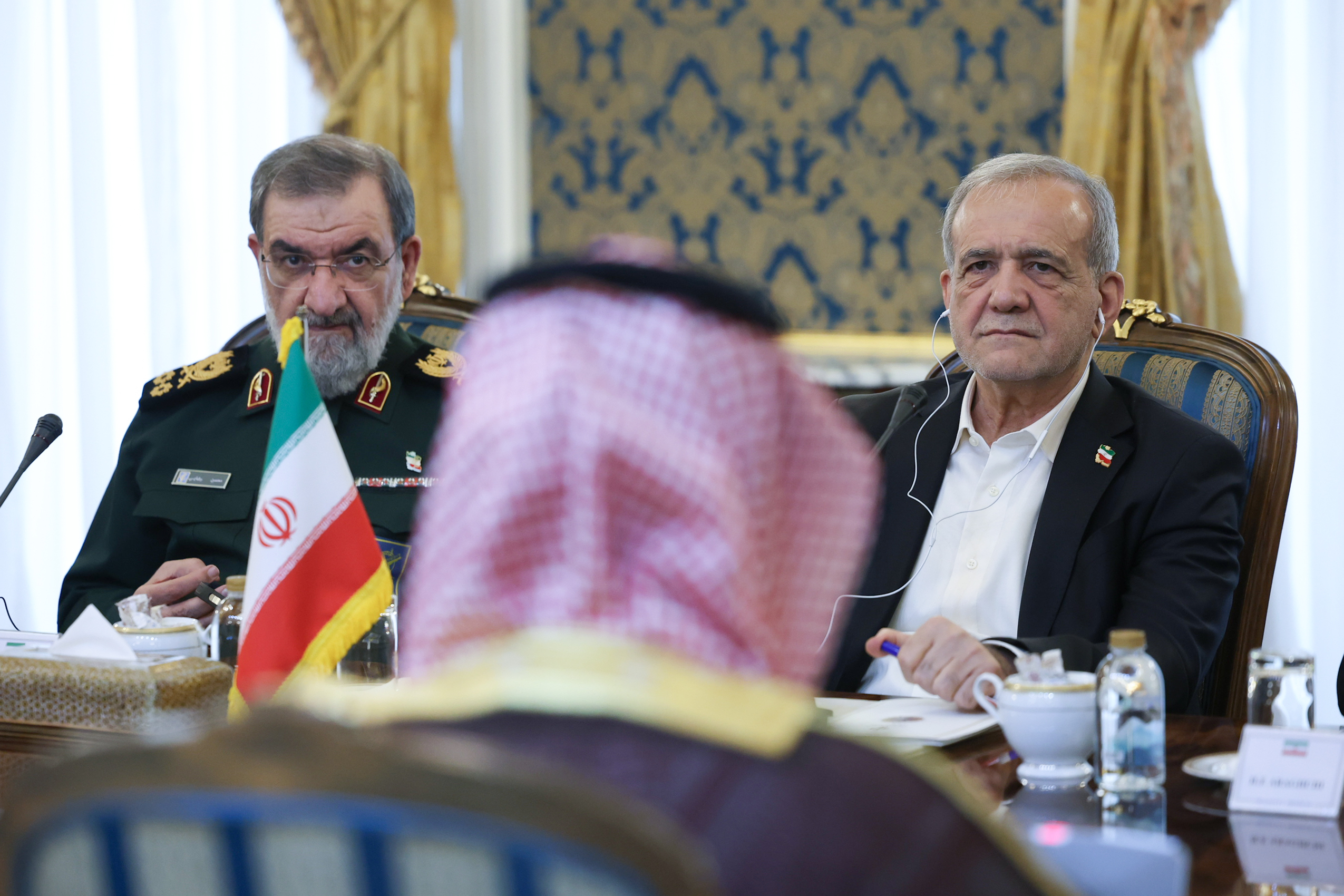
In a surprising development, the alliance – comprising three major Sunni Muslim nations – has also seen representatives travel to Tehran on October 26 for discussions on regional security with Iran.
Saudi Defence Minister Khalid bin Salman Al Saud, Pakistan’s military chief Asim Munir and Türkiye’s intelligence chief Ibrahim Kalin met Iranian President Masoud Pezeshkian, with further discussions involving security chief Mohsen Rezaei.
Although Iran, a Shia-majority republic, is unlikely to become a member of the alliance, its importance as a regional power means it cannot be excluded from wider discussions about security. Tehran remains a major player in the volatile confrontation with the United States, particularly over control of the Strait of Hormuz.
Countering Houthi advances in Yemen is believed to be a major concern for Saudi Arabia and its partners, although the wider regional picture remains complex, with several competing interests at play.
Saudi Arabia appears to be intensifying its efforts to defeat the Houthis, while the alliance is seeking to strengthen the kingdom’s border and air defences amid concerns over repeated attacks on Saudi territory, including Riyadh, and reported threats to Mecca.
Meanwhile, Pakistan and Türkiye are attempting to balance their security commitments to Saudi Arabia with their own interests, including maintaining positive working relations with Iran.
All parties also remain concerned about the possibility of a renewed major escalation between Iran and the United States. Such a confrontation could once again put Arab countries hosting US military bases at risk of Iranian drone and ballistic missile attacks.