


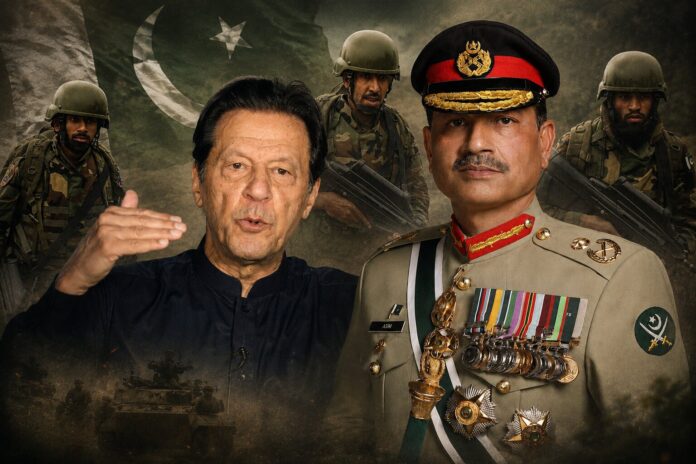
The Pakistani authorities’ apparent defiance of a Supreme Court order over Imran Khan’s medical treatment is about far more than the fate of one man, writes Sohail Malik. It is another disturbing sign that Pakistan’s institutions are losing legitimacy and the country is approaching a dangerous crossroads.
What happened to Imran Khan overnight should concern every Pakistani – whether they support him politically or not.
On Tuesday, Pakistan’s Supreme Court ordered the authorities to transfer the imprisoned former prime minister from Adiala Jail to Shifa International Hospital in Islamabad within 48 hours for examination and treatment by a multidisciplinary medical board.
Crucially, the court also stipulated that Khan’s personal physician should be involved in his care, amid serious concerns over the 73-year-old’s health.
The government attempted to challenge that order, but its review petition was returned by the Supreme Court registrar’s office on Thursday because of deficiencies in the paperwork.

Yet what happened next was extraordinary.
According to Khan’s family and Pakistan Tehreek-e-Insaf, he was taken instead to the state-run Pakistan Institute of Medical Sciences (PIMS), while his personal physician, Dr Faisal Sultan, was waiting for him at Shifa International Hospital.
Subscribe to our newsletter and stay updated on the latest news and updates from around the Muslim world!
Within hours, Khan had reportedly been declared medically fit and returned to Adiala Jail.
The government says security concerns caused the change of hospital. PTI says the authorities have violated the Supreme Court order and has announced that it intends to bring contempt proceedings.
Whatever one’s politics, the implications are deeply troubling.
The Supreme Court did not simply order the authorities to take Imran Khan out for a drive to a hospital, have somebody examine him and then return him to prison.
It issued specific directions concerning where he should be treated, the composition of his medical team and the involvement of his personal physician.
So if the authorities can effectively reinterpret such an order according to their own wishes, what is the authority of the Supreme Court worth?
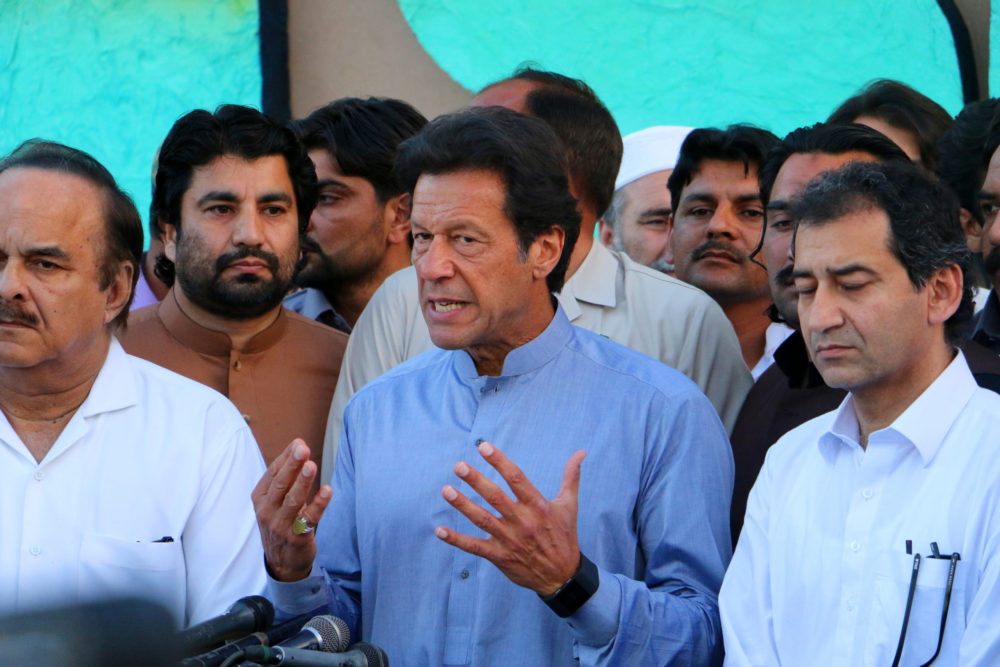
A crisis of legitimacy
This is no longer simply about Imran Khan. It is about whether Pakistan is still governed by meaningful constitutional restraints or whether brute power has become the ultimate arbiter of political life.
The tragedy of Pakistan today is that so many of the institutions that should provide checks and balances appear either compromised, intimidated or unwilling to confront the real centres of power.
Parliamentary democracy has been hollowed out. The judiciary has suffered an enormous loss of public confidence. Much of the media has been intimidated or constrained.
And perhaps most disappointingly for those of us who care deeply about Islam and Pakistan, too many of our ulema have been virtually silent in the face of obvious injustice.
Islam does not permit Muslims to remain silent simply because oppression is politically inconvenient to confront. Justice is not conditional upon whether we like its victim.
You do not have to regard Imran Khan as a saint. You do not have to agree with PTI. You do not have to support every decision Khan made when he was prime minister.
The issue is whether the law applies equally, whether court orders mean anything and whether Pakistanis have the right to choose their rulers without powerful unelected institutions deciding which political outcomes are acceptable.
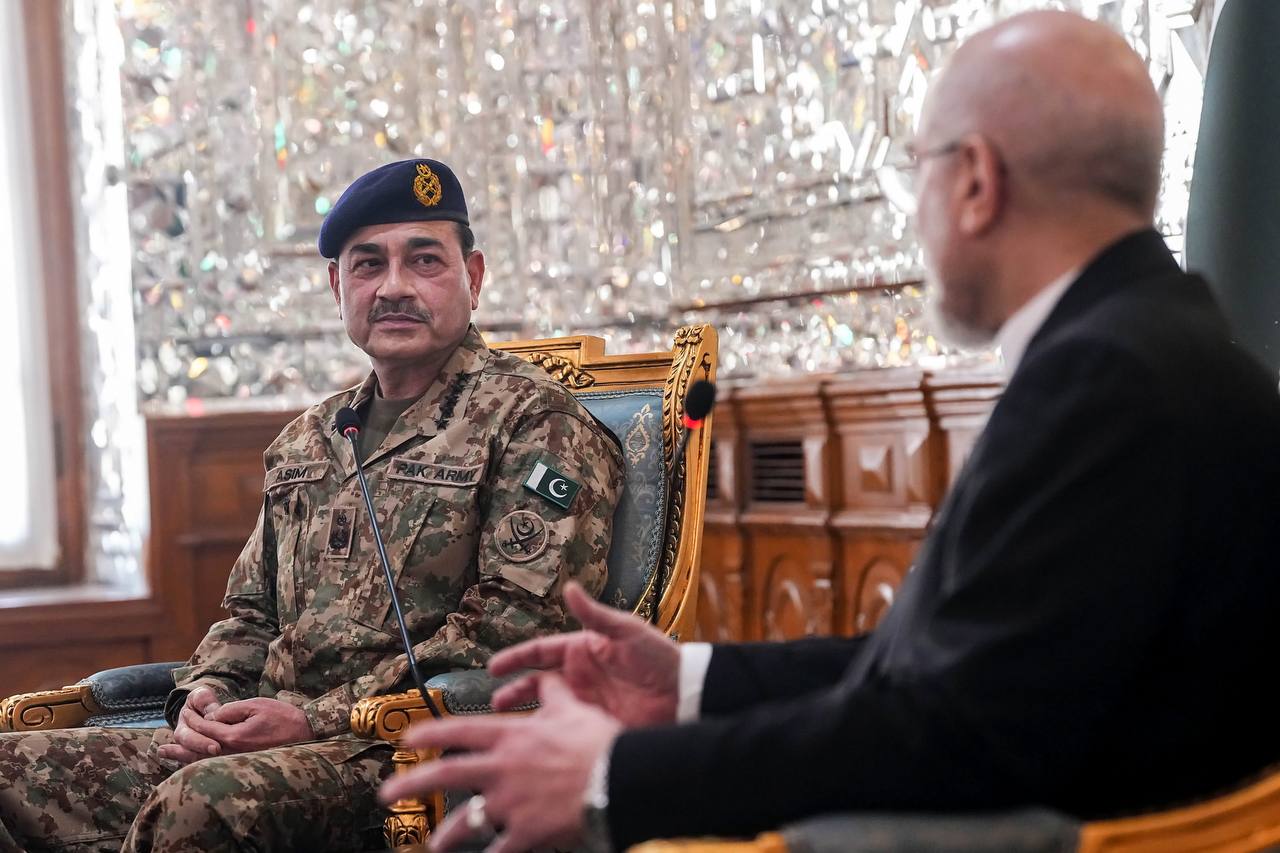
( Iranian Parliament Speaker Office – Anadolu Agency )
The politics of brute force
Pakistan’s military establishment appears increasingly incapable of imagining political solutions to political problems.
An army is trained to exercise force. That is its purpose when confronting an external enemy. But a nation cannot be governed like a battlefield.
Political disagreements require dialogue, compromise, elections and political settlements. When every serious challenge to authority is treated as a security problem, the inevitable tools become arrests, intimidation, censorship and coercion.
That may produce temporary obedience, but it cannot produce legitimacy.
The establishment has also become intertwined with political forces that have their own bitter rivalry with Imran Khan. The result is that millions of Pakistanis now believe – rightly or wrongly – that the entire machinery of the state has been mobilised to prevent one political movement from exercising power.
That perception alone is disastrous because democracy ultimately depends upon losers believing they can contest another election and winners believing their mandate will be respected.
Once people conclude that elections cannot change who really governs them, democracy becomes theatre.
Azad Kashmir is another warning
The turmoil in Azad Kashmir should also be understood within this broader crisis.
The reports emerging from there of deaths, arrests, disappearances, restrictions on movement and communications and an extraordinary breakdown in trust between ordinary Kashmiris and the authorities should alarm anyone who cares about Pakistan.
The response to political discontent cannot simply be repression.
When people cease believing that official institutions represent them, they begin creating alternative structures of authority and legitimacy. That is an extremely dangerous stage for any country to reach.
Pakistan should be learning from its own history that political grievances suppressed through force do not disappear. They deepen.
Where are the ulema?
For a Muslim country, there is another uncomfortable question that must be asked: where are Pakistan’s ulema?
Islam places justice at the centre of public life. The Qur’an commands believers to stand firmly for justice, even when doing so goes against themselves, their parents or their relatives.
Yet where is the sustained, collective religious opposition to arbitrary imprisonment, political repression, the subversion of constitutional government and abuses carried out by those in authority?
Our scholars should not be adjuncts of the state. They should be among the strongest voices reminding rulers that power is an amanah – a trust – and that every ruler will ultimately answer to Allah for how that power was exercised.
External legitimacy cannot replace the people
There is also an international dimension to this crisis.
Pakistan’s establishment continues to enjoy relationships with Washington, Western governments, Saudi Arabia and other powerful international partners.
As long as those relationships remain intact, those exercising real power may calculate that domestic anger is manageable.
But external legitimacy can never permanently substitute for legitimacy among your own people.
Foreign governments may recognise you. International institutions may deal with you. Powerful allies may welcome your generals and politicians. But none of that answers the fundamental question: do your own people believe the system governing them is legitimate?
Increasing numbers of Pakistanis clearly do not. And that should terrify those currently exercising power far more than any demonstration.
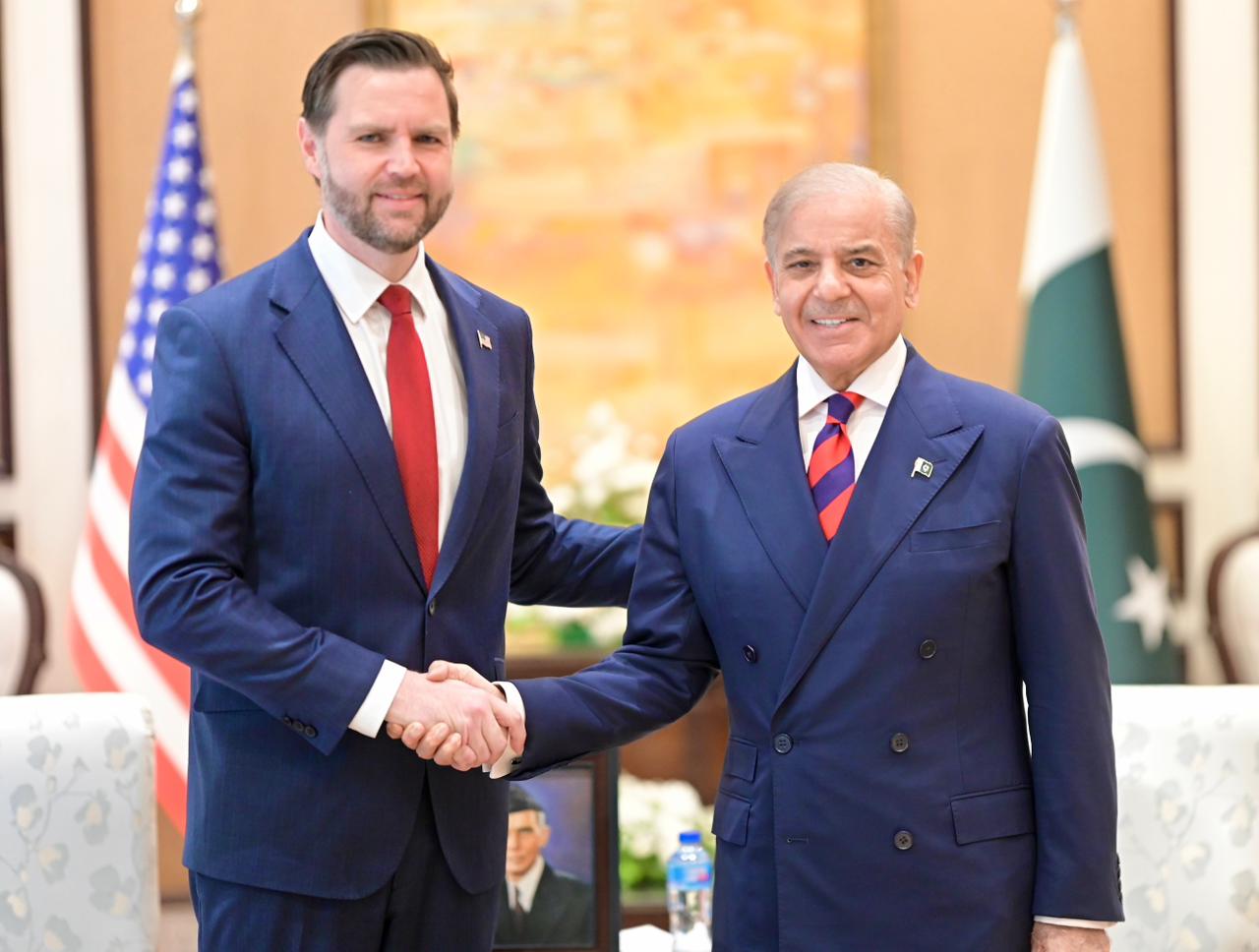
Pakistan is at a crossroads
The constitution cannot simply be rewritten or reinterpreted whenever it becomes inconvenient to those holding power.
Supreme Court judgments cannot be obeyed only when the establishment agrees with them.
Elections cannot be meaningful only when the preferred candidates win.
Political opponents cannot indefinitely be treated as enemies of the state.
And an army cannot become the permanent political referee of a country of more than 250 million people.
Pakistan desperately needs a return to genuine constitutional government, an independent judiciary, meaningful elections, political dialogue and respect for fundamental rights.
Above all, those exercising power need to understand that Pakistan does not belong to its generals, its judges, the Sharifs, the Bhuttos or even Imran Khan. It belongs to its people.
When a government can apparently circumvent the country’s highest court, when unelected power increasingly overrides elected politics, when judges, journalists and ulema fail to provide adequate resistance, and when ordinary citizens lose faith in elections themselves, a nation has entered dangerous territory.
Sohail Malik is a pseudonym for a veteran Pakistani activist who has chosen to write anonymously for fear of repercussions from the Pakistani authorities.