



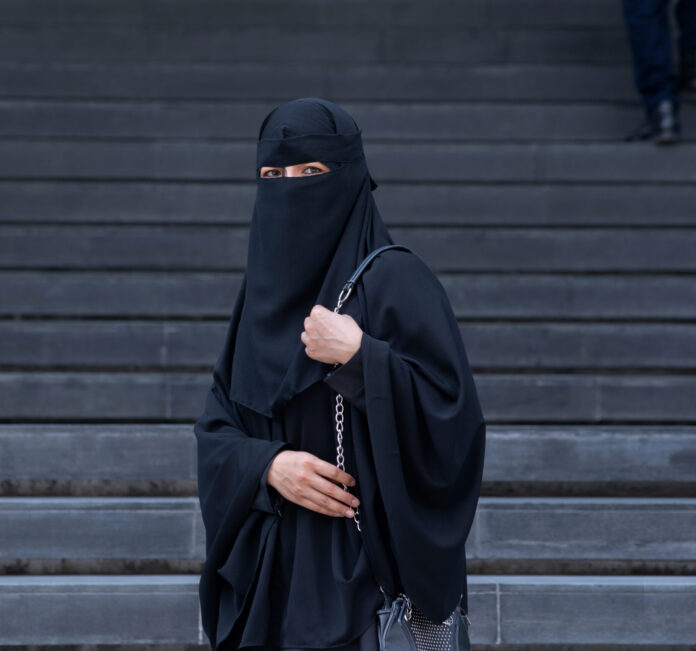
Portugal has enacted a controversial law banning the concealment of faces in public spaces, becoming the latest European country to impose restrictions that will primarily affect Muslim women who wear the niqab or burqa.
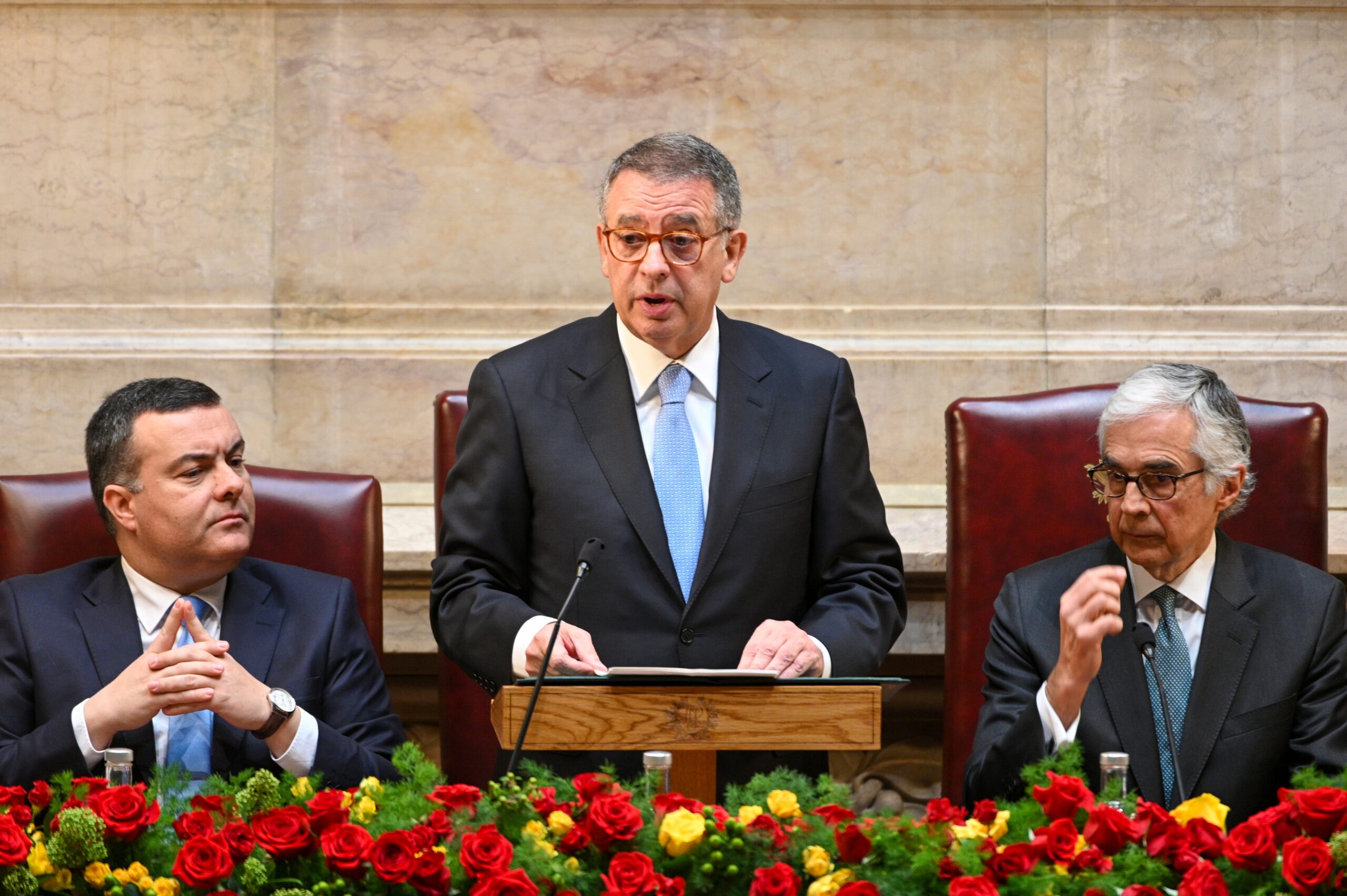
The legislation was signed into law by Portuguese President António José Seguro after being approved by parliament. Although its final wording does not explicitly mention Islam, the measure was originally proposed by the far-right Chega party with the stated aim of banning full-face Islamic veils.
The law prohibits clothing intended to conceal the face in public spaces, with certain exceptions, including for health, work and artistic purposes. Those found in breach can face fines, while separate penalties apply to those who force another person to cover their face.
Critics say that despite the ostensibly neutral wording, there is little doubt about who the law will disproportionately affect.
Chega leader André Ventura has openly campaigned against the wearing of the burqa and niqab, while arguing that such restrictions are necessary to protect women and uphold Portuguese values.

However, human rights groups and opponents of the legislation argue that the state cannot claim to be liberating Muslim women by taking away their right to choose how they dress.
Speaking to 5Pillars, Co-founder of Muslim Debate Initiative Abdullah al-Andalusi, who is a Portuguese convert to Islam, explained how the controversial move is “deeply alienating and disappointing” and has sparked major backlash from human rights groups.
Subscribe to our newsletter and stay updated on the latest news and updates from around the Muslim world!
“As a Portuguese Muslim, watching Portugal pass a face veil ban pass feels deeply alienating and profoundly disappointing. Violators face fines ranging from €150 to €3,000. Many human rights campaigners have criticised the ban, arguing that such laws ultimately erode women’s rights by dictating what they are allowed to wear. Our country, which for decades prided itself on being immune to the xenophobic right-wing populism sweeping across Europe, is now actively passing legislation that essentially tells a small, vulnerable minority of Muslim women that they are unwelcome in public spaces.
“The “burqa law” isn’t really about security or communication, as President Antonio Jose Seguro claims; it’s a dog-whistle. It strips away the agency of citizens while ironically claiming to protect their liberty and equality. It is incredibly unnerving but unfortunately not surprising, watching democratic institutions pander to a rising far-right faction that portrays my community as a threat to “western civilisation,” and to see mainstream centre-right parties enable this just to maintain power.”
“Discriminatory and a threat to human rights”
Amnesty International Portugal strongly condemned the legislation following its approval by parliament, describing the blanket restrictions as “discriminatory and a threat to human rights.”
The organisation warned that the law threatens rights including freedom of religion, freedom of expression and the right to participate fully in public life.
It also argued that removing explicit references to Islamic veils from the final wording did not change the reality that Muslim women who choose to cover their faces will be among those most directly affected.
Human rights campaigners have further warned that such bans can have the opposite effect to that claimed by their supporters. Rather than promoting women’s freedom, they may further isolate women by making it more difficult for them to access public spaces, education, employment, healthcare and other essential services.
The Portuguese Bar Association, the High Council of the Public Prosecutor’s Office and the Portuguese Association of Women Lawyers also issued negative opinions on the original bill, while concerns were raised about its constitutionality.
The issue is particularly striking given that full-face veils are believed to be rarely worn in Portugal at all. Nevertheless, the clothing choices of a tiny number of Muslim women have become the subject of national legislation following a campaign spearheaded by the country’s largest far-right Islamophobic party.
The move has fuelled concerns about growing hostility towards visible manifestations of Islam, particularly at a time when anti-immigration and far-right politics are gaining ground across Europe.
Portugal is joining a growing number of European countries that have introduced nationwide bans or significant restrictions on full-face Islamic coverings.
France introduced its public face-covering ban in 2011, followed by Belgium. Other countries, including Austria, Denmark, the Netherlands, Bulgaria and Switzerland, have subsequently adopted nationwide bans or major restrictions, although the precise scope of the laws varies.
Supporters commonly cite public security, integration and women’s rights. But critics point out that the political debate surrounding such laws has overwhelmingly focused on Muslim women.
Muslim women face rising discrimination
Portugal’s decision comes amid wider evidence of growing discrimination against Muslims across Europe, with visibly Muslim women facing particular difficulties.
A 2024 survey by the EU Agency for Fundamental Rights (FRA) found that racism and discrimination against Muslims had risen sharply across the European Union. Almost one in two Muslim respondents reported experiencing racial discrimination during the previous five years, compared with 39% in the agency’s previous comparable survey in 2016.
The FRA said that women wearing religious clothing were particularly vulnerable to discrimination, including in employment and other areas of daily life.
For women whose Muslim identity is immediately visible through their clothing, anti-Muslim prejudice can therefore intersect with gender discrimination.
While the new Portuguese law alone does not establish a broader rise in Islamophobic attacks within Portugal, its passage reflects a wider European political environment in which Muslim religious practices are increasingly treated as matters requiring state regulation.
The law was proposed by a far-right party specifically campaigning against Islamic face veils and will now place Portugal alongside an expanding list of European countries where Muslim women’s clothing has become subject to legal restrictions.
For Muslim women who freely choose to wear the niqab or burqa, the consequences are not merely symbolic. They face the prospect of being prevented from appearing in public dressed in accordance with their religious beliefs.
Portugal’s government and supporters of the law may argue that the legislation applies equally to all forms of face covering. But its political origins have led critics to conclude that its principal targets were clear from the beginning.
At a time when the EU’s own Fundamental Rights Agency is warning of increasing racism and discrimination against Muslims, Portugal’s decision is likely to deepen fears that visibly Muslim women are becoming an increasingly acceptable target for restrictions on religious freedom.
The question posed by critics is therefore a simple one: if women’s freedom means having control over their own bodies and clothing, why should that freedom not also include a Muslim woman’s right to decide for herself whether to wear a niqab or burqa?