



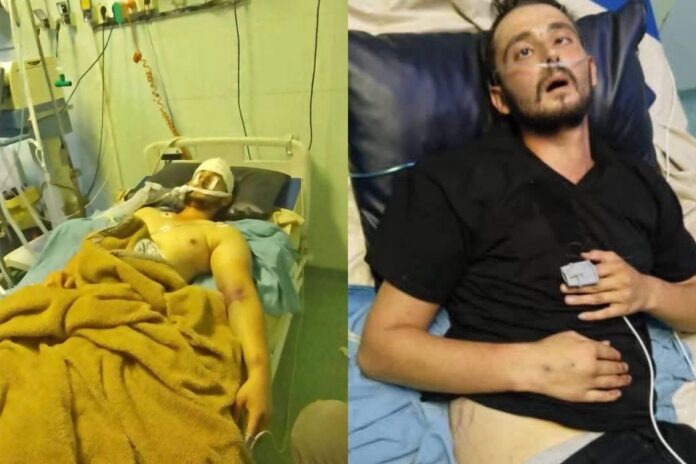
The death of a young Syrian man who was allegedly beaten to death following three days in police detention has sparked protests and anger across Syria, as the case draws uncomfortable comparisons to the torture and arbitrary detention that defined the Assad regime.
Muhammad Hossam al-Din Ghamira, a member of the Syrian Civil Defence, died on August 16 after several days in hospital following his release on August 9.
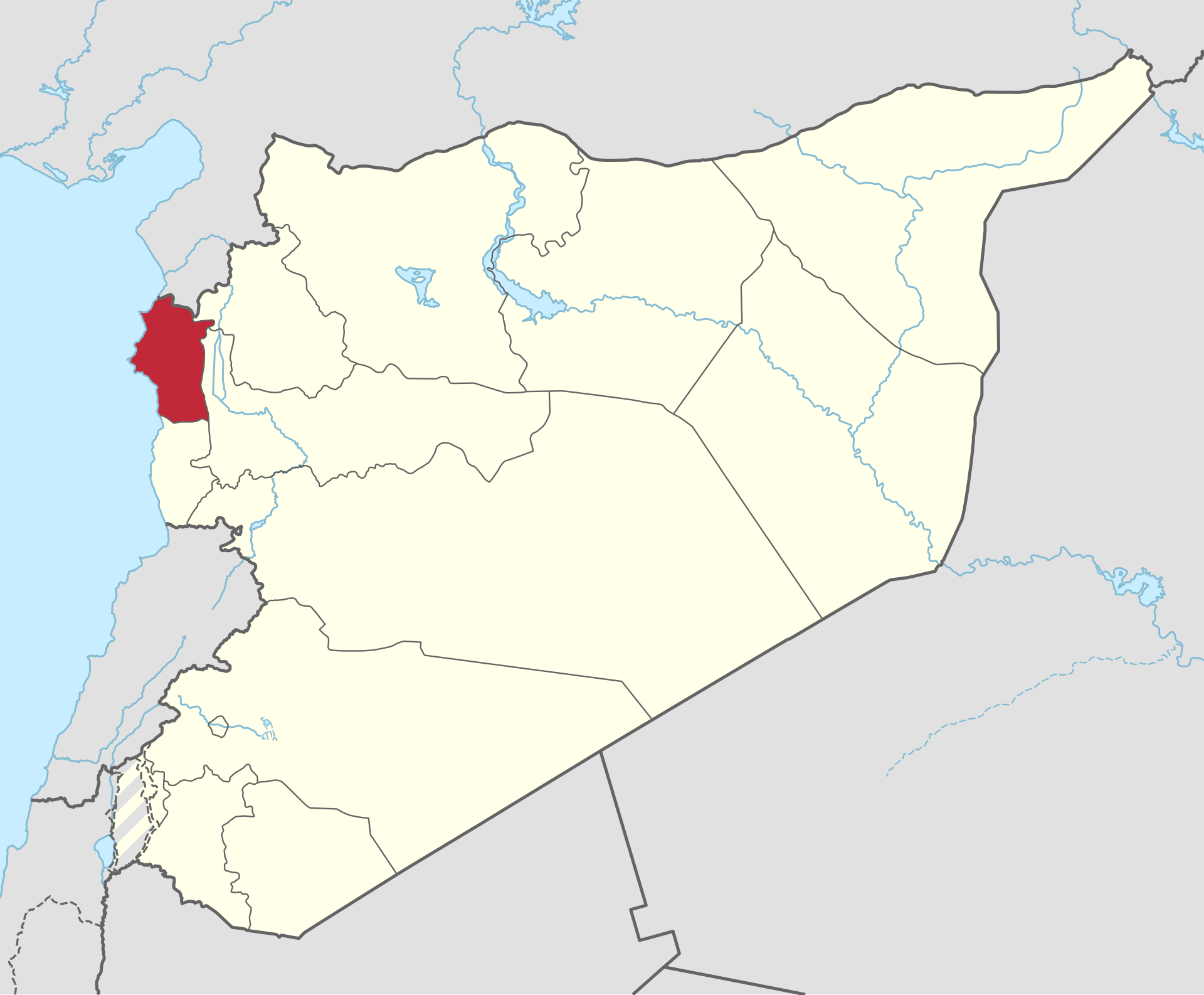
Ghamira’s death came after he was held for three days in detention at the Al-Haffah police station in the Latakia countryside, under the Syrian Ministry of Interior. He suffered a severe brain haemorrhage and internal bleeding in the abdomen.
Ghamira suffered from haemophilia, a medical condition which increases the risk of bleeding-related complications due to a failure of the blood’s ability to clot.
Interior Minister Anas Khattab ordered a committee to investigate the circumstances surrounding Ghamira’s death.

Syrian security forces have detained seven people connected to the case who were present at Al-Haffah station during his detention.
Emergency Minister Raed al-Saleh said the personnel accused of beating him have been detained, with Khattab saying that every person who violated the law would be arrested once investigations concluded.
Subscribe to our newsletter and stay updated on the latest news and updates from around the Muslim world!
Details of arrest
Ghamira was stopped by police on the pretext of a financial claim. His family said he entered the police station in stable health.
However, his condition deteriorated rapidly after days of alleged beatings.
Ghamira’s wife warned authorities that he suffered from a medical condition that meant any beatings or ill-treatment could cause serious complications, and even death.
Her warnings were ignored, despite Ghamira himself warning the officers: “Guys, don’t hit me, I have a bleeding disorder (hemophilia), don’t hit me.”
According to reports, one of the officers cursed him and struck him in the face, after which further beatings followed, as he was struck in the head and abdomen.
During his detention, his family was unable to visit or contact him and were told only that he was “under investigation.”
Circumstances of death
According to his family, Ghamira left the station in a coma.
He was transferred to the National Hospital in the city of Al-Haffah immediately after his release, and subsequently transferred to Latakia University Hospital’s intensive care unit as his health rapidly deteriorated.
His death was announced on Sunday, August 16, and he was buried on August 17 in the countryside of Latakia governorate, his hometown.
Ghamira was a Sunni Muslim, despite Latakia being an Alawite Muslim-majority region at around 68%, with a sizable Christian population of 10-15%. Sunni Muslims reportedly make up around 17% of Latakia governorate.
According to reports circulating on Syrian media, Ghamira was loyal to Syria’s transitional government, currently led by President Ahmed al-Sharaa.
Ghamira served in the ranks of the Syrian Civil Defence and took part in rescue operations during the conflict. He was originally from the city of Al-Haffah in the Latakia countryside, born in the city of Douma in Rif Dimashq governorate in 1997, where he grew up, and had recently returned to Al-Haffah. He was married and the father of two children.
The Syrian Network for Human Rights (SNHR) condemned Ghamira’s death in an official statement, saying: “A death occurring after release and immediate hospitalisation, amid a deteriorating health condition and under circumstances that raise suspicion, places an obligation on the state to carry out an effective investigation into the possibility of an unlawful death and to establish the responsibilities connected to it. The prohibition of torture under international law is a peremptory norm that may not be violated under any circumstances.”
The SNHR continued: “The Syrian Network for Human Rights extends its sincere condolences to the family and relatives of Mohammad Ghamira, and affirms its solidarity with them in their pursuit of the truth and in ensuring accountability and achieving justice.”
Reviving memories of the Assad regime
The news of Ghamira’s death comes shortly after the visit of UN Secretary-General António Guterres to Syria last month, where he condemned the torture crimes committed at Sednaya Prison under the Assad regime.

Syrians have met the news of Ghamira’s death with sadness and anger, as many had hoped the new government would have left such atrocities in the past and moved on from the crimes of the Assad regime.
According to an investigative report by the Syrians for Truth and Justice (STF), which is funded by the European Union, there is alarming evidence to suggest that torture and a systemic machinery of violence is being rebuilt following the collapse of the Assad regime.
“Numerous testimonials reveal that severe beatings, electric shocks, humiliation, threats, deprivation of basic necessities, and deaths in custody continue to be common practices of multiple security and military actors. These abuses have occurred in official and undisclosed detention facilities, at checkpoints, and during transfers and interrogations,” STJ said in their report.
There is still limited information available surrounding the injuries Ghamira sustained, as at the time of publication no forensic report or detention and medical care records related to the case have been released.






I have been one of the loudest cheerleaders for the Syrian revolution, defending it when others mocked it, doubted it or deliberately distorted what Syrians rose up against. So I will not remain silent now. Mohammed Hussam al-Din Ghamira, a 29-year-old Syrian Civil Defence volunteer, husband and father of two, entered a police station in al-Haffah alive and, according to his family, emerged three days later in a coma after allegedly being beaten despite repeatedly warning his captors that he suffered from haemophilia. He subsequently died. Seven men connected with his detention have been arrested and an investigation ordered, but Syrians did not sacrifice their children, their homes and more than a decade of their lives merely to replace one set of torturers with another. Assad’s dungeons were supposed to have been buried with his regime. If a Syrian can still enter a police station and leave catastrophically injured after alleged beatings, then something has gone terribly, shamefully wrong with the revolution we spent years defending.
And some of us warned that this moment was coming. When my colleague Bilal Abdul Kareem was taken away and imprisoned without charge or trial, we were told to shut up and not to make a fuss. Don’t rock the boat. Don’t embarrass the new leadership. Don’t undermine the revolution. What cowardly nonsense! A real friend does not applaud while you walk towards the edge of a cliff; a real friend grabs you by the collar and tells you where you are heading. Silence in the face of injustice is not loyalty. It is complicity. President Ahmed al-Sharaa may enjoy handshakes, photo opportunities and the approval of Donald Trump, but he should remember where his legitimacy came from. It did not come from Washington. It came from God-fearing Syrians who buried their sons and daughters rather than surrender to tyranny. A revolution whose leaders become more interested in pleasing foreign presidents than answering the cries coming from their own detention cells has forgotten why it began.
So how long will Syrians and their supporters remain silent? How many detainees must disappear behind doors, how many allegations of beatings and torture must surface, how many families must wait outside prisons before everyone finally admits that this is not what victory was supposed to look like? The answer cannot be another committee, another investigation quietly forgotten when the headlines move on, or another frightened chorus warning critics not to damage the revolution. The revolution belongs to the Syrian people, not to you, me or Ahmed al-Sharaa, not to his ministers and certainly not to the pale imitations of Assad’s security state who imagine that changing the flag above a prison changes what happens inside it. Syrians resisted Assad because dignity mattered. Islamic ideals and principles cannot suddenly become negotiable because the men holding the keys have changed. Raise your voices. Demand accountability. Resist injustice wherever it appears and whoever commits it. Do not allow fear, misplaced loyalty or political convenience to steal what Syrians paid such an unimaginable price to achieve. If this revolution is to mean anything, then defending it must also mean having the courage to defend it from those now governing in its name.