



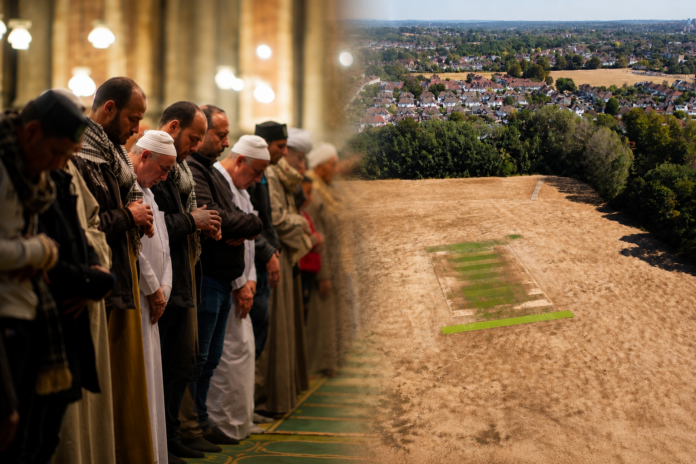
As drought grips much of England and heatwaves batter the usually lush country, Muslims scholars are urging a unique response to dealing with the extreme weather – the Islamic practice of praying for rain, Salat al-Istisqa.
Britain is supposed to be the land of grey skies, drizzle and weather that changes its mind every 20 minutes. But this summer, many parts of England have looked more like the Arabian Penisula than the typically green British landscape.
Grass burned brown, soil cracked, rivers and reservoirs drying out, farmers are struggling and hosepipe bans have all become a familiar part of British life in 2026.
But now, with much of England officially in drought, Muslims have a spiritual response which more and more are turning towards. Istisqa – turning to Allah swt and asking Him for rain.
The scale of the current drought is impossible to ignore from Brits all across the UK.

On August 10, the UK Government announced that 71.3% of England had officially entered drought, with around 45 million people living in drought-affected areas and more than 27 million facing restrictions on water use.
The Government said England had experienced its driest July in 190 years, while the combination of exceptionally low rainfall and high temperatures had produced what it described as a rapidly developing “flash drought.”
Subscribe to our newsletter and stay updated on the latest news and updates from around the Muslim world!
The effects are being felt far beyond people’s gardens.
Farmers have reported unusually early harvests and reduced yields, while livestock farmers have been forced to use winter feed because grass has stopped growing properly. Rivers, reservoirs and groundwater levels have continued to fall, while rising water temperatures are putting additional pressure on wildlife.
The heat has also been relentless. Britain has experienced its fifth heatwave of 2026, with temperatures forecast to approach 37°C in parts of southern and eastern England. Fire services have responded to hundreds of wildfires, while the prolonged dry conditions have hit agriculture and water supplies.
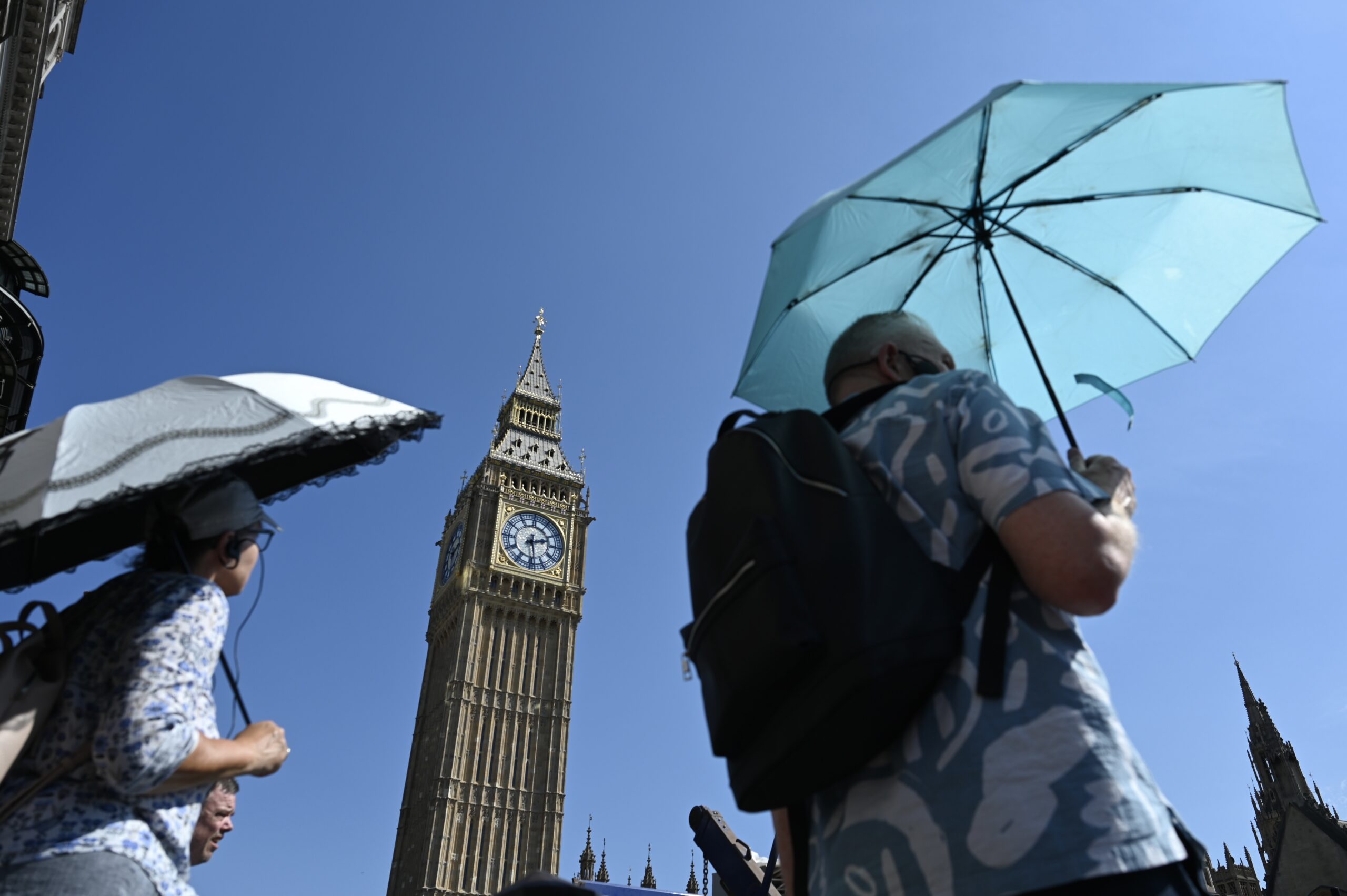
For a country accustomed to complaining about rain, it is quite a turnaround. But for Muslims, the sight of a dried-up river or parched field can also prompt something deeper than complaints about the weather.
It can prompt reflection. The Qur’an repeatedly draws our attention to rain as one of Allah’s signs.
“And it is He who sends down the rain after they had despaired and spreads His mercy.” – Qur’an 42:28
Rain is described not simply as precipitation, but as Allah’s mercy and anyone who has watched a completely dried-out landscape turn green after a few days of rain understands why.
In another beautiful verse, the Prophet Nuh (Noah) a.s. tells his people: “Ask forgiveness from your Lord; He is truly Most Forgiving. He will shower you with abundant rain.”
The verses continue by mentioning gardens and rivers. This connection between istighfar – seeking Allah’s forgiveness – and rain is particularly relevant during drought.
Drought can be a test. It can be a reminder. It can expose human weakness. It can have natural and environmental causes. And it can prompt people to reassess their relationship with their Creator.
The appropriate response is therefore not arrogance or certainty about why a particular drought has occurred.
It is humility.
Islamic guidance on the drought
The Arabic word Istisqa refers to seeking water – specifically, asking Allah swt to send rain during times of drought.
It is an established practice from the Sunnah of the Prophet Muhammad ﷺ.
Islamic Portal, which has published guidance specifically addressing the current English drought, says: “When there is a drought and there is a severe shortfall of rain and water to the point that there is no water, or the water is insufficient to meet the needs of the people, animals and agriculture, then Istisqāʾ is recommended. In some regions of the country, there is a drought and the insufficiency of water is having a material impact.
“Istisqāʾ means to seek water from Allah Almighty, which can be undertaken via different means. During the era of our beloved Prophet ﷺ, there was a shortfall of rain on several occasions.”
As the drought continues to affect large parts of England, an action list has been published by Islamic Portal. They advised:
1. Imams across the country should perform Istisqa during the Friday sermon, using some of the supplications mentioned in a Hadith:
اللَّهُمَّ اسْقِنَا، اللَّهُمَّ اسْقِنَا، اللَّهُمَّ اسْقِنَا
“O Allah, give us rain. O Allah, give us rain. O Allah, give us rain.”
اللَّهُمَّ أَغِثْنَا، اللَّهُمَّ أَغِثْنَا، اللَّهُمَّ أَغِثْنَا
“O Allah, grant us relief. O Allah, grant us relief. O Allah, grant us relief.”
الْحَمْدُ لِلَّهِ رَبِّ الْعَالَمِينَ الرَّحْمَنِ الرَّحِيمِ مَلِكِ يَوْمِ الدِّينِ، لَا إِلَهَ إِلَّا الله، يَفْعَلُ مَا يُرِيدُ، اللَّهُمَّ أَنْتَ الله، لَا إِلَهَ إِلَّا أَنْتَ الْغَنِيُّ وَنَحْنُ الْفُقَرَاءُ، أَنْزِلْ عَلَيْنَا الْغَيْثَ، وَاجْعَلْ مَا أَنْزَلْتَ لَنَا قُوَّةً وَبَلَاغًا إِلَى حِينٍ

“All praise belongs to Allah, Lord of the worlds, the Most Compassionate, the Most Merciful, Master of the Day of Judgement. There is no god but Allah; He does whatever He wills. O Allah, You are Allah; there is no god but You. You are the Self-Sufficient and we are the needy. Send down rain upon us, and make what You send down for us a source of strength and provision for a time.”
اللَّهُمَّ اسْقِ عِبَادَكَ وَبَهَائِمَكَ وَانْشُرْ رَحْمَتَكَ وَأَحْيِ بَلَدَكَ الْمَيِّتَ
“O Allah, give water to Your servants and Your animals, spread Your mercy and revive Your dead land.”
اللَّهُمَّ اسْقِنَا غَيْثًا مُغِيثًا مَرِيئًا مَرِيعًا نَافِعًا غَيْرَ ضَارٍّ عَاجِلًا غَيْرَ آجِلٍ
“O Allah, give us beneficial rain that brings relief, wholesome and abundant, beneficial and not harmful, soon and not delayed.”
It is a Sunnah of our beloved Prophet Muhammad ﷺ to perform Istisqa during the Friday sermon. This should also be repeated in subsequent weeks for as long as the situation persists.
2. These supplications should also be made individually and collectively.
3. If any town or city is significantly affected by drought, particularly in regions officially designated as drought areas, local scholars and mosques should consider arranging Salat al-Istisqa in an open space, following the practice of the Prophet ﷺ and the Muslims of his era. This is also an established Sunnah and has been practised by Muslims throughout Islamic history.
4. Muslims should turn to Allah Almighty, repent and seek His forgiveness.
The Qur’an records the words of the Prophet Nuh (Noah) عليه السلام:
“Ask your Lord for forgiveness — He is certainly All-Forgiving. He will shower you with abundant rain from the sky.”
— Qur’an 71:10–11
5. Everyone should avoid wasting water.
Muslims should remember that water is one of Allah’s great blessings and should use it responsibly. This is particularly important during a period of drought.
The Government has similarly urged people to take simple steps to reduce water consumption, noting that: “Small steps to reduce water consumption – such as turning off taps when brushing teeth or fixing a leaking toilet – can also really add up to conserve dwindling supplies until the next period of sustained rainfall.”