
CAGE International has accused the British government of “normalising Islamophobia” through its new definition of “anti-Muslim hostility”, arguing that the definition fails to protect Muslims from discrimination while allowing institutional prejudice to continue.
In a 23-page report titled A Critique of the UK Government’s “Anti-Muslim Hostility” Definition, the advocacy organisation claims the government’s approach is deliberately weak, excludes major Muslim organisations and fails to address the root causes of Islamophobia in Britain.
The report examines the definition introduced on March 8, 2026, following years of debate over how anti-Muslim discrimination should be officially recognised. The government now defines “anti-Muslim hostility” as criminal acts, prejudicial stereotyping and unlawful discrimination directed at Muslims or people perceived to be Muslim, while protecting freedom to criticise Islam as a religion.
But CAGE argues that the definition gives the appearance of protecting Muslims without introducing meaningful changes. It concludes: “The government’s definition of ‘anti-Muslim hostility’ does not fight Islamophobia, it normalises it.”
One of CAGE’s main criticisms concerns the consultation process used to develop the definition stating there was a “deliberate exclusion of the most representative Muslim voices.”

According to the report, the Muslim Council of Britain (MCB), which represents more than 500 mosques, schools and charities, was excluded from discussions. The government has maintained a policy of disengagement with the MCB since 2009.
Dr Wajid Akhter, Secretary-General of the MCB, criticised the lack of meaningful engagement with Muslim communities, stating that the organisation was unable to endorse the definition and argued that the government needed to earn the trust of British Muslims.
Subscribe to our newsletter and stay updated on the latest news and updates from around the Muslim world!
The report also alleges that ministers weakened recommendations made by their own working group, removing references to “racialisation” and abandoning the term “Islamophobia.”
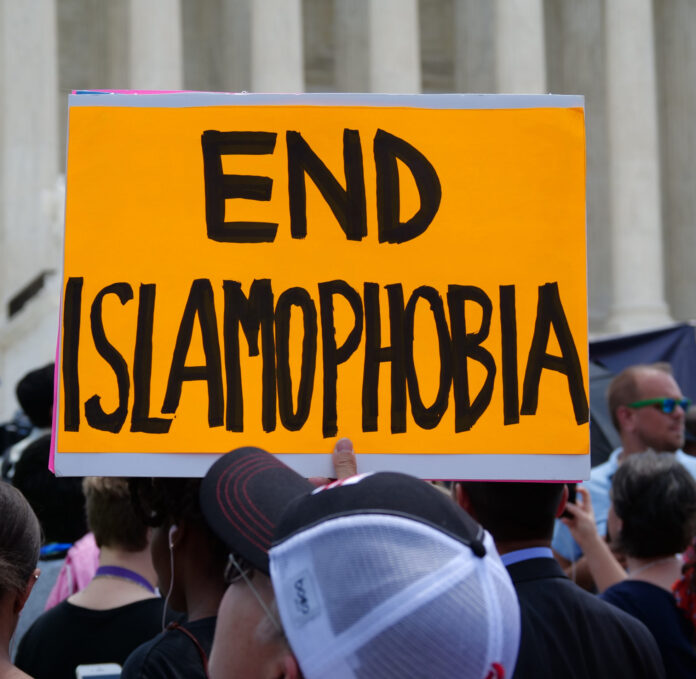
Why does the word ‘Islamophobia’ matter?
CAGE argues that replacing the word “Islamophobia” with “anti-Muslim hostility” prevents the government from recognising the wider forms of discrimination Muslims experience.
The organisation says Islamophobia includes not only physical attacks and verbal abuse but also institutional discrimination, negative media portrayals and government policies that disproportionately affect Muslims.
Majid Iqbal, CEO of the Islamophobia Response Unit (IRU), criticised the government’s wording. He explained that the term Islamophobia better captures the systemic and often unconscious nature of prejudice against Muslims continuing that the current definition “sets an intent threshold that most discrimination cases cannot meet.”
For example, a Muslim applicant rejected because of unconscious bias against their name may struggle to demonstrate intentional hostility. The definition is also non-statutory, meaning it does not create new legal protections or enforcement powers.
Double standards in tackling religious hatred
The report highlights what CAGE describes as unequal treatment of Islamophobia and antisemitism.
The British government adopted the International Holocaust Remembrance Alliance’s working definition of antisemitism in December 2016, just months after its introduction.
However, a definition of Islamophobia proposed by the All-Party Parliamentary Group on British Muslims in 2018 was rejected by the government in 2019. That definition described Islamophobia as a form of racism targeting expressions of Muslim identity.
CAGE also points out that the antisemitism definition includes 11 illustrative examples, while the government’s new anti-Muslim hostility definition provides none. As mentioned by the organisation, this demonstrates a lack of political willingness to address discrimination against Muslims.
CAGE also criticises the government’s Prevent counter-terrorism programme, arguing that it contributes to the suspicion and surveillance of Muslim communities.
It claims the new definition fails to address these institutional issues because it focuses on individual acts of hostility rather than wider government practices. The organisation also criticises the government’s Protecting What Matters strategy, which it says expands counter-extremism measures while offering Muslims limited protection against discrimination.
The report cites figures showing growing levels of anti-Muslim hatred.
According to statistics referenced from Tell MAMA, nearly 11,000 anti-Muslim incidents were recorded across 2023 and 2024, alongside a 73% rise in physical assaults. CAGE also references research by the Centre for Media Monitoring, which found bias in approximately half of the UK media coverage of Muslims examined in its 2025 report.
Meanwhile, the IRU investigated 906 incidents between 2021 and 2025, with discrimination accounting for 37% of its cases. CAGE argues that these figures demonstrate why stronger action is necessary.
Ultimately CAGE further encourages mosques, Muslim organisations and community groups not to endorse the current definition as in its conclusion, the report urges the government to restore the term Islamophobia in official language, remove the requirement to prove intent and involve Muslim organisations in developing future policies.
It also calls for practical examples of Islamophobia to be included in any definition and for stronger support for community-led organisations tackling discrimination.