



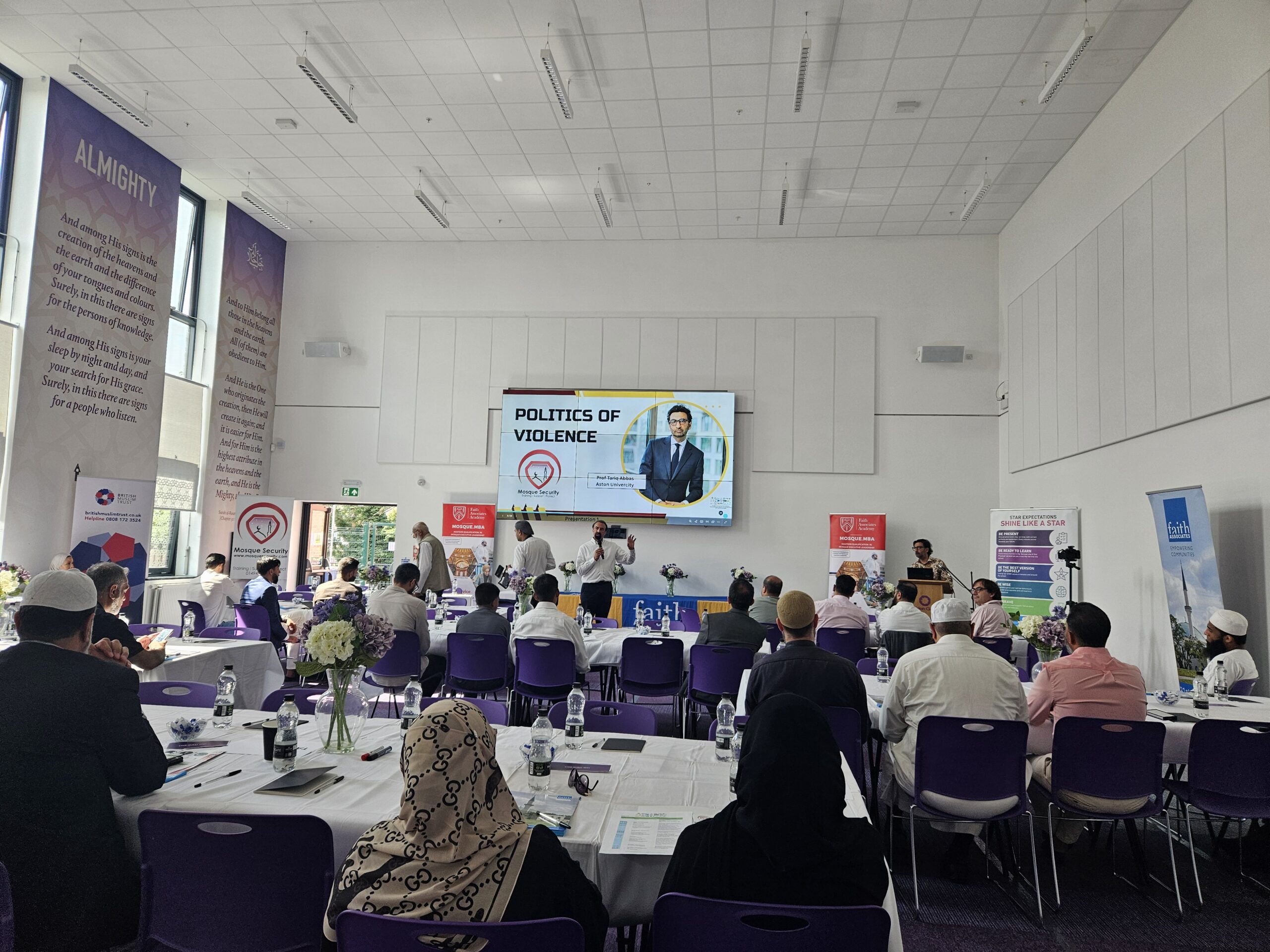
Mosque leaders gathered in Birmingham to brainstorm security strategies amid an alarming increase in far-right attacks on Islamic religious and community sites across the UK.
The event, organised by Faith Associates and titled “Mosque Security: Protecting Places of Worship,” was aimed at bringing imams, mosque council heads and other community leaders together to discuss the threat of far-right racism and Islamophobic hate crimes, as well as plan new ways of increasing security measures to better protect places of worship.
Over the past couple of years, Britain has seen an alarming increase in anti-Muslim hate crimes as far-right influencers, political parties and media platforms have pushed an obsessive Islamophobic agenda, which appears to have radicalised nationalists in Britain into taking criminal action.
Among the action plans discussed were better security training at mosques, positive media engagement and a renewed push for greater access to state funding for community protection.
The issue of unity within the British Muslim community was also highlighted as an area that needed urgent improvement, as imams from different cities felt that large parts of the community simply didn’t communicate or share resources enough.

Sheikh Rafiq Sufi of the Lancashire Council of Mosques suggested that Ummatic unity could be better achieved with a new umbrella organisation – a National Council of Mosques.
“We have been having these discussions for 20 years on how to tackle racism. The response has been very slow and we need to achieve better recognition from the establishment on the issue (the far-right threat). We need a National Council of Mosques.”
Subscribe to our newsletter and stay updated on the latest news and updates from around the Muslim world!
However, Imam Abu Bakr, founder of the Huddersfield Council of Mosques, disagreed with the strategy.
“One of the issues I’ve seen in my community is we don’t take these incidents (attacks on mosques) seriously enough until they happen to us directly. That’s been my experience with masajid around the country. We are very reactive. However, I don’t necessarily agree with a National Council of Mosques. We have loads of other umbrella groups already. If we don’t build up what we have in the community already, strengthen our unity, then how will anyone in government ever take us seriously?
“We ought to take inspiration from the Holy Prophet and create structured communities wherever we are located. It’s about building up the infrastructure that is already in place, working closer together and sharing our resources. We have the money and the resources, but what we lack is the Prophet’s understanding of what an Ummah should be.”
Disagreements over strategy were witnessed at the event, but all parties were in agreement on one issue: the threat of the far right was existential, and there was a stark difference in the way Islamophobia was treated in Britain compared to other forms of racism.
Mosques under attack
According to new data released by the government’s partner for monitoring anti-Muslim hatred, one mosque is attacked in Britain every five days.
The British Muslim Trust warned that attacks were gathering momentum and called for an urgent response from the government. More than 70 attacks on mosques in the UK have been recorded over the past year, including acts of intimidation, violence, property damage, harassment, anti-Muslim hate speech, online abuse and vandalism.
Data from the Home Office shows anti-Muslim hate crime in England and Wales rose by 19% in the 12 months to March 2025. The top three hotspots for attacks are London, Greater Manchester and the West Midlands.
There have been nine separate mosque attacks in London, and one mosque in Birmingham has suffered three attacks in the last 12 months.
The most recent attempted violent racist attack on Britain’s Muslims came on 13 July, when counter-terrorism officers arrested 12 people over an alleged extreme right-wing terror plot targeting one of Britain’s largest annual Islamic gatherings.
The event was brought to an early close after police warned organisers of a potential serious threat.
Another shocking example of Islamophobic violence occurred in Belfast, Northern Ireland, as anti-Muslim pogroms erupted in the city following a knife attack by an African refugee.
Groups of white racist mobs attacked Muslim homes, burned down halal shops, and footage went viral across Ireland showing racists assaulting or harassing Muslims on the streets.
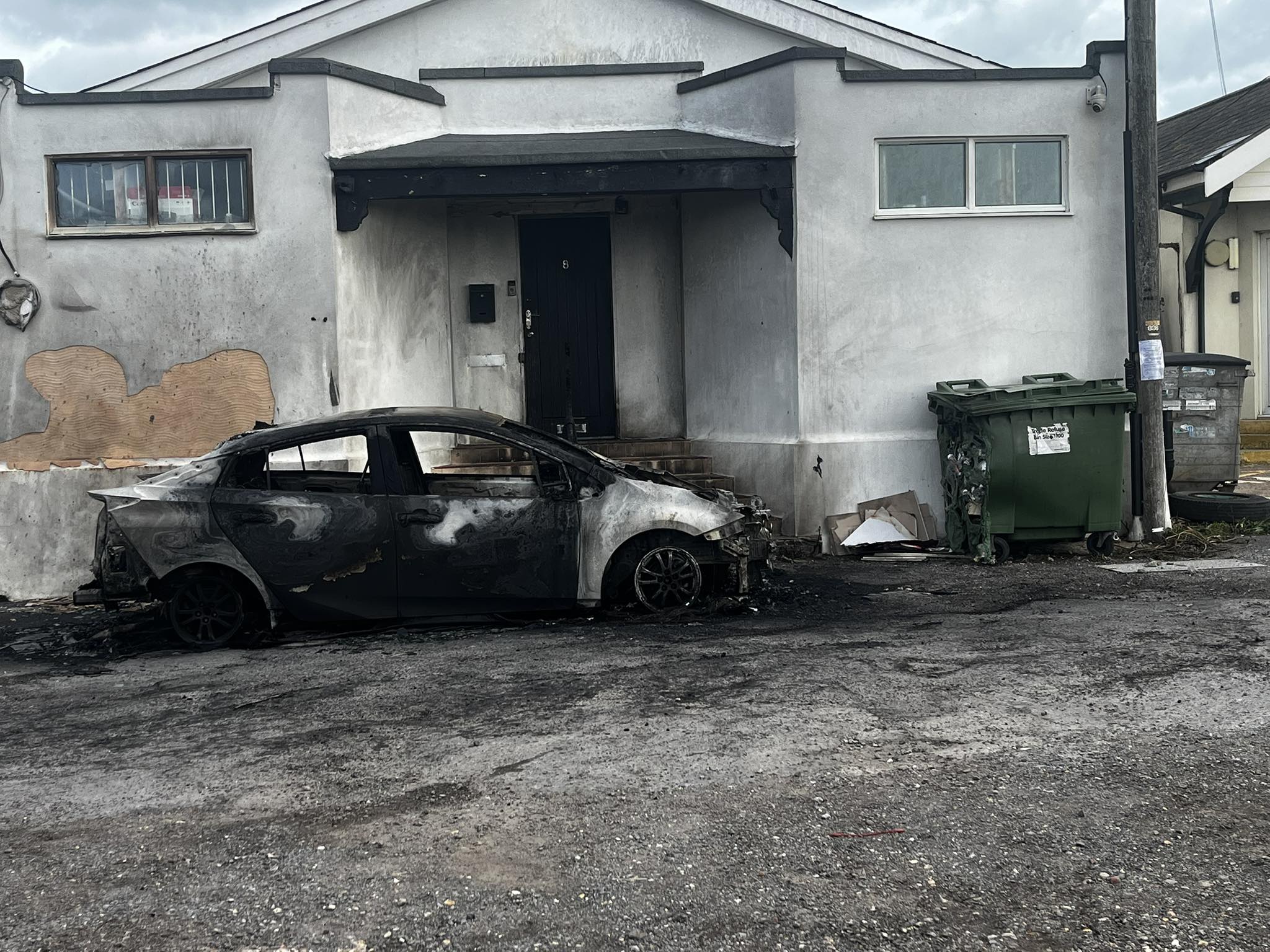
Another high-profile attack occurred on 4 October 2025, when two masked individuals allegedly sprayed an accelerant on the front door of the Peacehaven Community Centre & Mosque in England before setting it alight.
The attack was investigated as a religiously aggravated hate crime and later taken over by Counter Terrorism Policing South East.
Earlier this year, the government announced it would provide up to £40 million to mosques as part of the Protective Security for Mosques Scheme. The initiative would allow mosques to apply for funding for physical security measures such as CCTV, alarms, fencing and other security services.
Home Office guidance says mosques should apply for “security measures” if they have experienced or feel vulnerable to hate crime, or if there has been hate crime in the area towards other places of worship or their congregants. The guidance warns that applications that “do not include strong evidence or do not explain the risk clearly are unlikely to be successful”.
However, 5Pillars learned that various mosque leaders at the event complained that the funding has been “difficult to access” and that many mosques have yet to benefit from the scheme, despite the funds apparently having been made available months ago.