



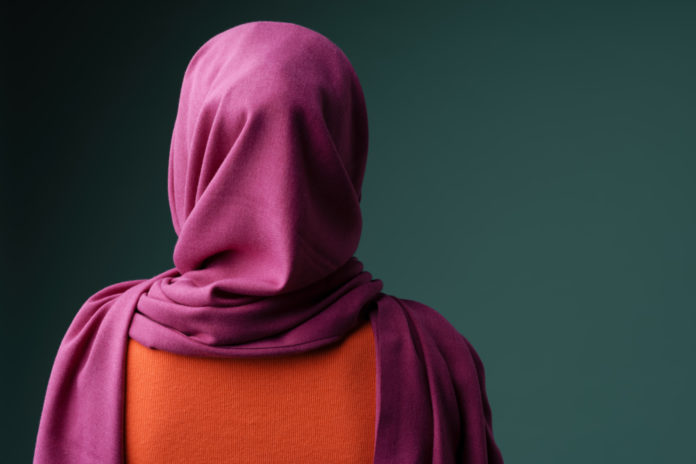
Muslims should stop minimising the obligation of hijab or deflecting to other issues and instead accept sincere advice with humility, recognising that every command of Allah deserves obedience, writes Maria Akbar.
Discussions on hijab are often met with defence and deflection. Some feel that it isn’t a topic that should be up for discussion as it’s deeply personal; others feel that there are “bigger” issues taking place in the community that go unaddressed whilst hijab is discussed.
Undoubtedly, hijab is a command from Allah, evidenced in the Quran and Sunnah. The decision to practice hijab is an individual one, like all other acts of worship in Islam. However, it is one that is apparent externally, similar to whether a man has his awrah covered or not.
When an individual omits this practice, not fulfilling the command of Allah, then it is a sin that is taking place in public and can be considered as openly sinning. Hence, it is open to judgement by others.
However, whether one practices the obligation of hijab or not does not necessarily reflect their level of faith. There are situations where individuals who do not wear a headscarf may be more God-fearing and well-versed in the deen than those who do. Despite this, they should be encouraged to do the right thing in accordance with what Allah has legislated. As Muslims, it is incumbent upon us to encourage one another to do good.

Enjoining the good
The purpose of our life on Earth is to worship Allah alone, and to live a life that is in accordance with the Quran and Sunnah as much as possible. In exchange for this, Allah will reward us with Jannah.
Subscribe to our newsletter and stay updated on the latest news and updates from around the Muslim world!
Allah tells us in the Quran to remind one another, as reminders benefit the believers (51:55). Therefore, we should not be offended when we are advised on the need to practice or perfect our hijab, as it is for the sake of our hereafter, even if it can be difficult to hear.
Furthermore, the concept of enjoining the good and forbidding the evil is an important and fundamental practice within Islam. By our very nature, we are forgetful and can make mistakes. So having other Muslims around who are reminding us of Allah’s command of practising the hijab is a blessing.

Importance of the delivery
However, when advice is given to sisters in an aggressive manner, it may be considered degrading or shaming.
So in order for the adviser to be able to penetrate the heart of the advised, the way in which the advice is given should be aligned with Islamic teachings.
In the Quran, Allah instructed Musa and Harun to speak to Firaun in a gentle manner so that he may be mindful (20:44). As well as this, the Quran tells us to advise in the best manner with wisdom (16:125).
When advising sisters on the practice of hijab, it should be done by individuals who themselves are of good character, and who present the advice sincerely, with wisdom.
Regardless, there may still be times when the advice will not be accepted by some.
Dangers of minimising the obligation of hijab
An argument that is given is that there are bigger issues for the Ummah to worry about than whether a woman is observing the hijab or not. This may be true when ranking issues in the community against crimes such as domestic violence or abuse.
However, we should not consider sins according to how we interpret their gravity in our own minds. One of the pious predecessors would say: “Do not look at the smallness of the sin, but look at the greatness of the One you have disobeyed.”
In a hadith recorded by Al-Bukhari, Abdullah bin Masud (may Allah be pleased with him) said: “The believer regards his sins as if he were sitting beneath a mountain, fearing it may fall upon him. The wicked person regards his sins as if they were a fly passing over his nose, which he can simply brush away.”
There is a danger associated with minimising the need to wear hijab, and persisting in this without repentance can cause hardening of the heart, making obedience increasingly difficult over time.
At the same time, communities must not neglect other serious issues such as child abuse and domestic violence. Addressing one issue should not come at the expense of ignoring another.
Some of these other issues within our communities impact the lives of many, and in some instances can push individuals away from Islam. Therefore, they should also be addressed, giving them their due weight.
Whispers of Shaytan
We should also be aware that it may be the whisperings of Shaytan that lead us to rejecting or rebuking sincere advice. Shaytan wants us to incline towards wrongdoing (12:53).
Therefore, minimising the obligation of hijab, or deflecting to other issues, may be Shaytan trying to misguide us from the path of Allah. We should ask ourselves if our reactions are due to sincerity or from our nafs.
Allah SWT tells us in the Quran that the rightly guided ones are those who listen to what is said and follow the best of it (39:18). In order to do that, we must possess a certain level of humility and sincerity to keep our hearts open to the truth and a desire to attain the good of this world and the hereafter.
Diseases of the heart
Arrogance and pride are diseases of the heart that can prevent us from fully accepting advice when it is presented to us. If sincere advice regarding hijab causes us to become defensive, then we must ask why. And if it is due to our own internal struggles, then we must look at spiritually curing that.
The increasingly degenerate society we live in makes it difficult to practice hijab, especially when vanity is championed and outer beauty is focused on. But as Muslims, we submit to the command and legislation of Allah.
Know that the greater the struggle against one’s own nafs (ego), the greater the reward. Minimising and continuously engaging in a sin whilst we know better can be a reason that it turns into a bigger sin on our scales on the Day of Judgement.
Islam does not demand perfection, but we should continually strive to obey Allah and repent when we fall short. Certainly, we will be recompensed for all that we do.