



A parliamentary debate yesterday triggered by a petition signed by more than 118,000 people saw Muslim MPs raise concerns about Israeli influence in British politics, while the overwhelming majority of MPs dismissed the petition as antisemitic.
“For millions of people in this country, the Government’s approach to Israel has defied basic logic, justice and humanity.” Those were the words of Independent MP Ayoub Khan during a parliamentary debate on Monday examining claims of pro-Israel influence on British politics.
The debate was triggered by a petition signed by more than 118,000 people calling for a public inquiry into pro-Israel influence on UK politics and democracy. Despite the significant public support behind the petition, MPs who backed greater scrutiny of Israel’s political influence were heavily outnumbered during the debate.
Analysis of the proceedings showed that MPs supportive of the petition were allocated approximately 15 minutes of speaking time, while MPs opposing the petition spoke for around 69 minutes. In effect, MPs defending Israel or rejecting the petition’s premise accounted for roughly 82% of the debate, while MPs supporting greater scrutiny received just 18%.
The imbalance reflected the broader mood inside Parliament, where speakers from Labour, the Conservatives, the Liberal Democrats, Reform UK and the DUP united in opposition to the petition despite the fact that broader public opinion is now anti-Israel.

Muslim MPs call for transparency
Several Muslim MPs and independent MPs used the debate to raise concerns about Britain’s relationship with Israel, political donations and lobbying.
Subscribe to our newsletter and stay updated on the latest news and updates from around the Muslim world!
Ayoub Khan began by stressing that criticism was directed at the Israeli state rather than Britain’s Jewish community.
“This is not about the Jewish community; it is about the state of Israel. We must be careful in our words and ensure that we do not conflate the two,” he told MPs.
Khan argued that Britain’s support for Israel despite the destruction in Gaza had caused millions of people to question the political forces shaping government policy.
“It is also said that the power of a lobby group is measured by how far a Government can be pushed beyond the limits of policy making,” he said.
“I think it is fair to say that for millions up and down this country, the Government’s approach to Israel has defied the most basic logic, justice and humanity.”
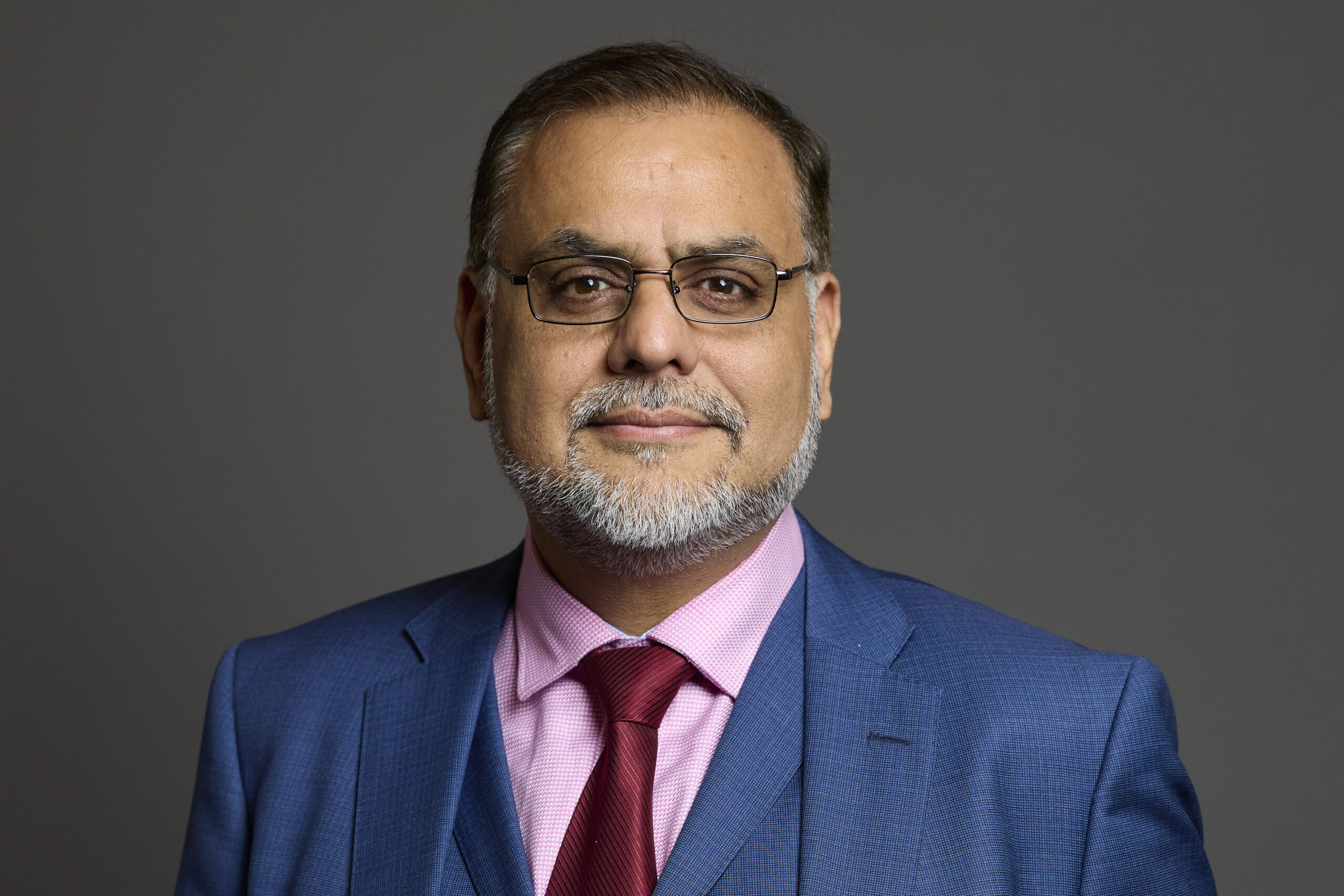
He cited continued arms sales, restrictions on pro-Palestine activism and what he described as the Government’s unwavering support for Israel despite accusations of genocide in Gaza.
“With every decision this Government have made, it is not only reasonable to ask questions about political influence in Britain, but necessary,” he added.
Labour MP Tahir Ali also argued that foreign influence should be scrutinised wherever it exists.
“British democracy is by the British people, for the British people and accountable to the British people,” he said.
“No foreign Government, no matter who they are, should abuse our system for privileges at the cost of British interests.”
Ali referenced the 2017 Al Jazeera investigation in which Israeli embassy official Shai Masot was recorded discussing plans to “take down” British politicians considered hostile to Israel.
“Over the past decade, the Israeli Government have been guilty of exactly that: meddling in our politics in the interests of what is ultimately a foreign nation,” he said.
Ali called for stronger lobbying regulations, improved disclosure requirements and a review of relationships between foreign governments and parliamentary bodies.
Questions raised over donations and lobbying
Independent MP Iqbal Mohamed focused on political donations and financial links between pro-Israel organisations and politicians.
Citing reporting by Declassified UK, Mohamed told Parliament that “13 of the then 25 members of the Labour Cabinet received hundreds of thousands in donations from pro-Israel donors” and that around 180 MPs had accepted such funding during their political careers.
“The 118,000 people who signed from across the country would like to hold our Government and our system to account for these donations,” he said. “What are they for?”
Mohamed argued that Britain routinely investigates alleged interference by Russia, China and Iran, but becomes reluctant to apply similar scrutiny to Israel.
“Britain claims to defend its democracy from foreign interference,” he said. “Yet when substantial evidence of foreign influence concerns Israel, our principles of transparency, scrutiny and accountability appear to vanish.”
Elbit Systems under the spotlight
Independent MP Shockat Adam used his contribution to highlight concerns surrounding Elbit Systems, Israel’s largest arms manufacturer, which maintains a significant presence in Britain.
Adam noted that Elbit supplies approximately 85% of Israel’s military drones and land-based military equipment and questioned the company’s access to government departments.
“It is deeply alarming that freedom of information disclosures reveal repeated meetings between Elbit executives and the Home Office,” he said. “If there is nothing to conceal, why are the details of previous lobbying being withheld from Parliament and the public?”
Adam also criticised what he described as the contrasting treatment of arms manufacturers and pro-Palestine activists.
“While the suppliers of war and genocide are granted meetings with Ministers, those opposing the machinery of war risk being treated as a threat,” he said.
Majority of MPs reject petition
Despite those interventions, the overwhelming majority of MPs who spoke during the debate rejected the petition’s premise.
Opening the debate, Conservative MP John Lamont argued that allegations of hidden pro-Israel influence echoed historic antisemitic conspiracy theories.
“The packaging has changed, but it is no less insidious in its implication,” he said.
Lamont argued that claims of covert pro-Israel control resembled historical accusations that Jews secretly controlled governments, institutions and public life.

Labour MP Alex Davies-Jones questioned why Israel had been singled out.
“There is something deeply uncomfortable about the idea that, out of nearly 200 countries, it is the world’s only Jewish state that needs a special parliamentary inquiry into hidden influence,” she said.
DUP MP Sammy Wilson described the petition as “yet another angle of the antisemitism that we are experiencing in this country”, while Reform UK leader Richard Tice said the motion was “antisemitic in its very motivation and at its core.”
Labour MP Peter Prinsley, one of Parliament’s Jewish MPs, argued that the petition repeated historical accusations that Jews exercised hidden control over politics.
“The idea that Jews exercise hidden influence over politics, democracy and society is not new; it is an ancient conspiracy theory repeatedly used to isolate Jews, undermine social cohesion and stoke hatred,” he said.
Government rejects inquiry
Responding on behalf of the Government, Cabinet Office Minister James Frith rejected calls for a public inquiry.
“The Government do not support a public inquiry solely on pro-Israeli influence,” he said.
Frith argued that the petition risked reinforcing “the same old antisemitic tropes of hidden forces and malign control” and accused it of applying a double standard to Israel.
The minister said concerns about foreign influence should be addressed more broadly rather than focusing specifically on Israel.
“The Government will always take legitimate concerns over foreign influence and interference in our politics and democracy very seriously,” he said.
“But I do not believe that the premise of this debate is to focus on those concerns.”
While the petition was overwhelmingly rejected inside Westminster Hall, its supporters can point to the fact that more than 118,000 people signed it, forcing Parliament to consider an issue that many politicians would rather avoid.
The debate ultimately highlighted the gulf between public concerns about Britain’s relationship with Israel and the views expressed by most MPs.