


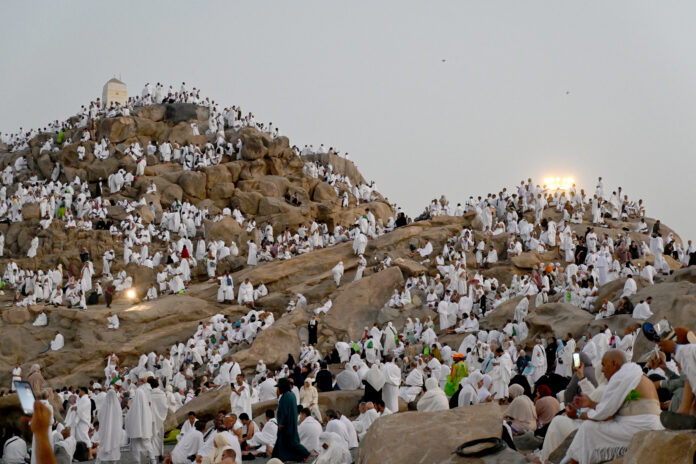
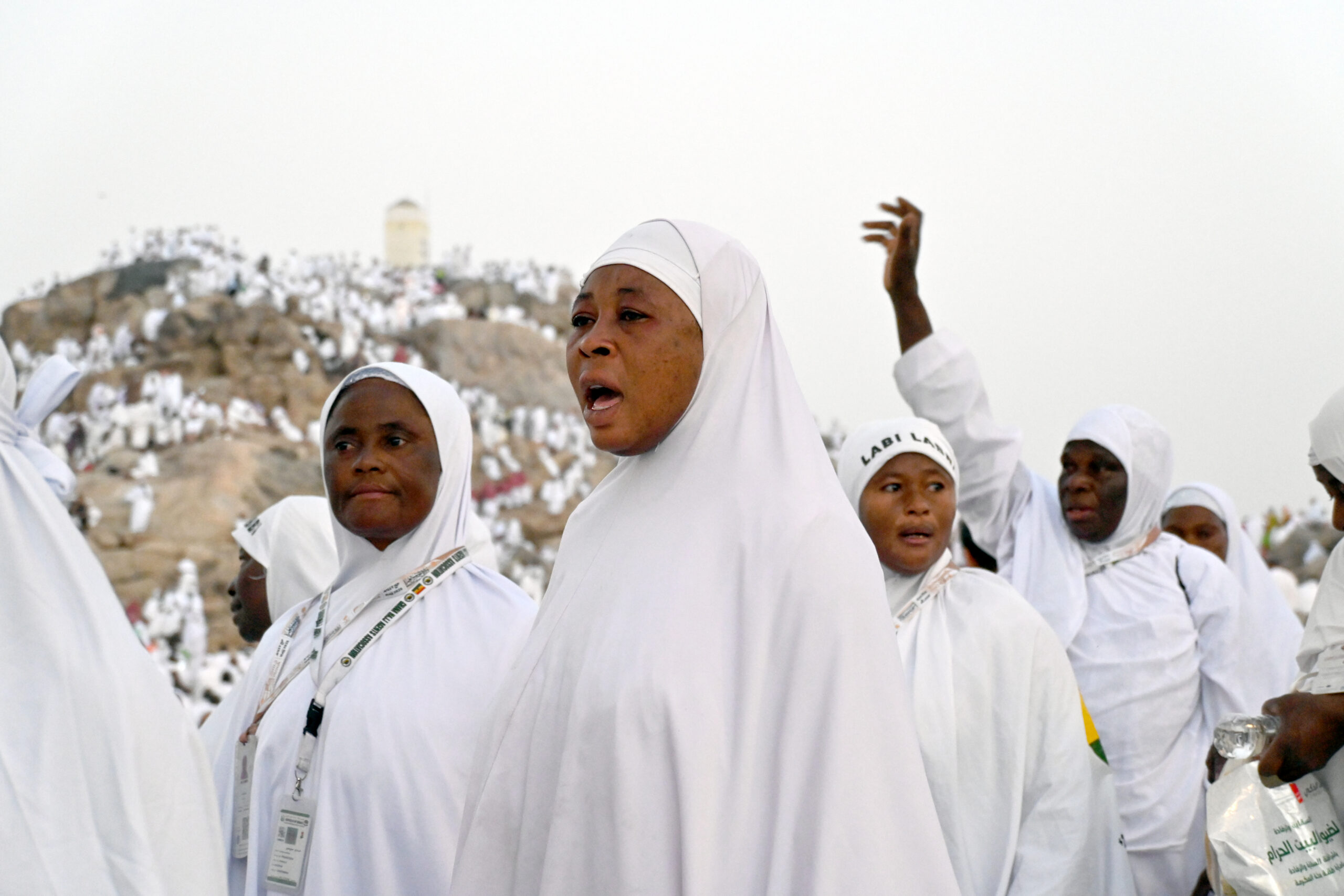
Around 1.8 million Muslim pilgrims have made their way to the plains of Mount Arafat in western Saudi Arabia, reaching the spiritual peak of the annual Hajj pilgrimage.
The gathering, which took place on Tuesday – the ninth day of Dhul-Hijjah – is widely regarded as the most significant moment of the entire pilgrimage, a day of prayer, reflection and supplication that holds deep religious meaning for Muslims around the world.
The journey to Arafat follows the Day of Tarwiyah, which began on Monday as pilgrims flowed into the sacred site of Mina, west of Makkah, marking the official start of Hajj rituals.
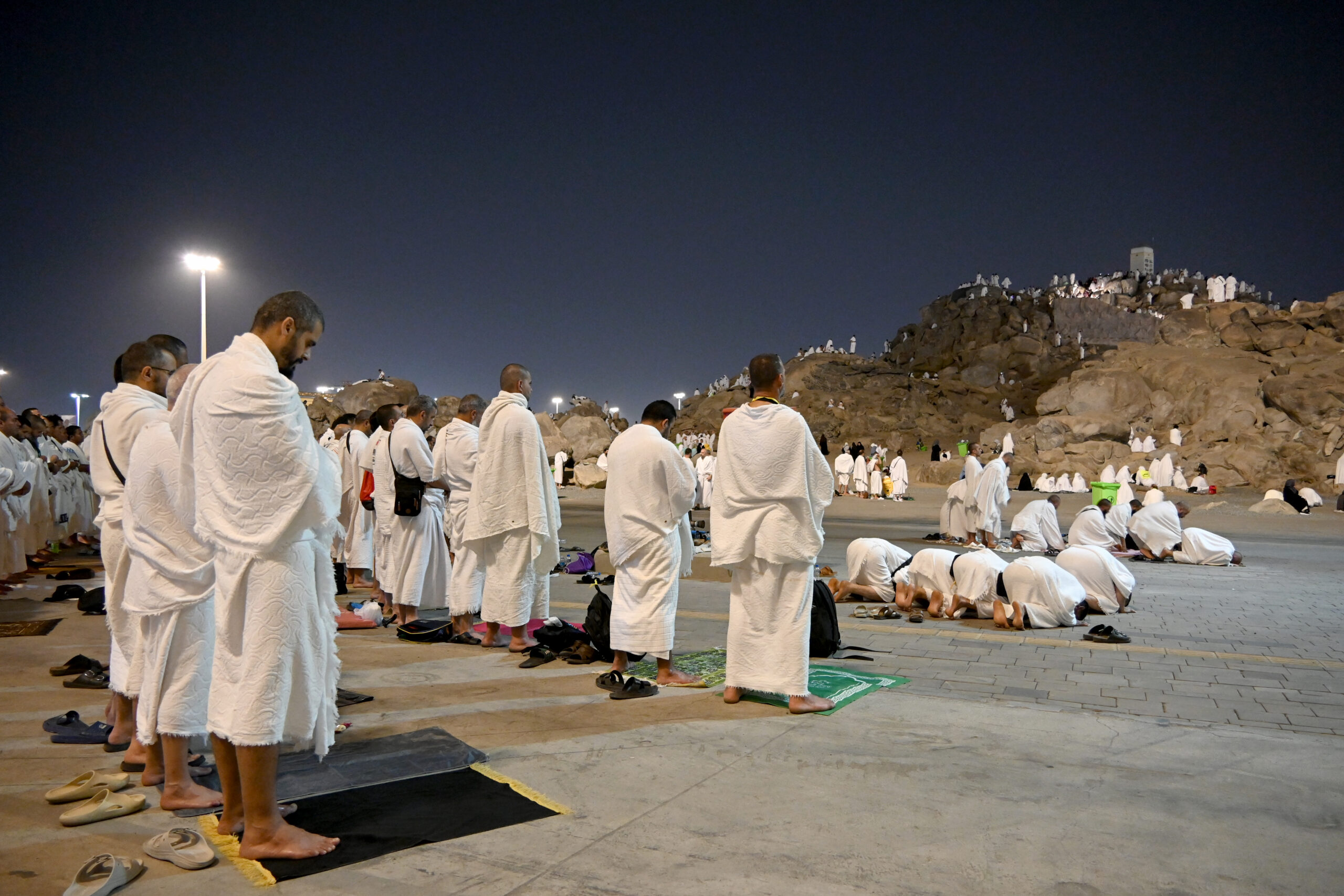
The Day of Tarwiyah, traditionally understood to be the day on which pilgrims spiritually “nourish themselves” with faith and piety, saw pilgrims spend their time in supplication and remembrance while reciting the Talbiyah prayer, performing the five daily prayers in shortened form before departing for Arafat after sunrise.
Pilgrim convoys were closely monitored by security forces deployed along routes and walkways throughout the journey, with Saudi authorities reporting smooth traffic flow across all major corridors, according to the Saudi Press Agency.

At Arafat, pilgrims performed midday and afternoon prayers in combined and shortened form at Namirah Mosque, following established Hajj practice.
As sunset approached, the vast crowds began moving on to Muzdalifah, where they performed the sunset and night prayers before remaining overnight ahead of the rituals of the following day.
Subscribe to our newsletter and stay updated on the latest news and updates from around the Muslim world!
Hajj rituals
The six-day season encompasses several major rituals, including the standing at Arafat, overnight stays at Muzdalifah, the symbolic stoning of the devil and the farewell circumambulation of the Grand Mosque in Mecca.
Each ritual carries profound spiritual significance, commemorating the trials of the Prophet Ibrahim (AS) and his family, and embodying the core principles of the Islamic faith.

Saudi Arabia recorded a continued rise in pilgrim arrivals for the 2026 Hajj season, with authorities significantly expanding their organisational and security infrastructure, incorporating surveillance technologies and crowd-monitoring systems to manage the movement of pilgrims and prevent unauthorised access to the holy sites.