


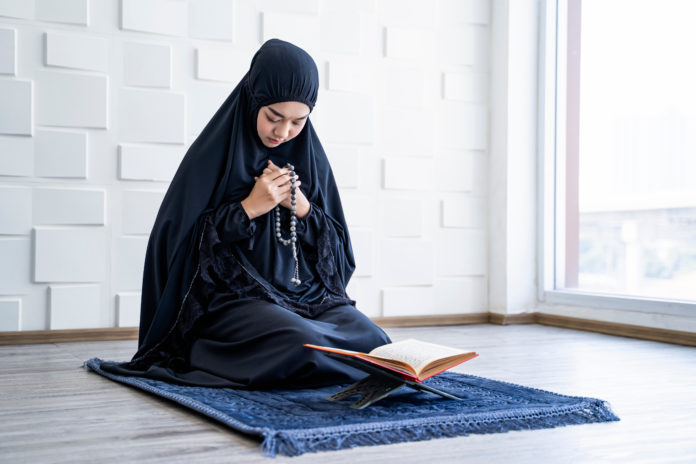
Maria Akbar argues that British Muslims are increasingly normalising non-adherence to hijab, presenting it as a “religious choice” when in fact it is an obligation on all adult Muslim women.
Let’s be clear – hijab is an obligation from Allah SWT upon Muslim women from the age of puberty.
But like every act of worship in Islam, there are guidelines and conditions that must be fulfilled in order to perform this wajib.
Islamic scholars have compiled these conditions from the Quran and Sunnah. The hijab should cover the entire body, be loose-fitting and opaque, not draw unnecessary attention or be perfumed, not resemble the clothing of men or disbelieving women, and not be worn as a display of vanity or fame.
Failing to meet these criteria means the obligation is not fulfilled and therefore constitutes disobedience to Allah.

An increasingly immodest world
In recent years, there has been a visible decline in the proper observance of hijab in the UK.
Subscribe to our newsletter and stay updated on the latest news and updates from around the Muslim world!
While some may observe certain aspects of hijab, others may not engage with it at all. For example, an individual may wear the head covering but show their arms, or wear modest clothes but not cover their hair.
It appears that the standard of what is considered acceptable is becoming lower in the increasingly immodest society we live in.
Calling this out is paramount. In fact, enjoining good and forbidding evil are central themes of Islam. The Sunnah encourages us to act when we see wrongdoing, and remaining silent about widespread actions can contribute to their normalisation.
Also, discussing the issue allows for a better understanding of the causes behind it and encourages meaningful solutions to help overcome these difficulties.
Furthermore, the ultimate care or concern that Muslims can have for one another is for their hereafter. Therefore, it is in the best interest of all to be advised and corrected.
As Muslim women, we need to be receptive, with open hearts, to advice and not allow emotions or ego to overcome our ability to accept it.
Hijab is NOT a journey
One of the issues is that, increasingly, individuals are referring to hijab as a “journey”.
This concept is used to justify their current practice or lack of it. Personal growth in practising Islam may be a journey, but the obligation of hijab does not change according to where we are on that journey.
Ultimately, hijab is a commandment from Allah that comes with requirements that must be observed.
Islam recognises that every person struggles with shortcomings. However, the public display of sin is discouraged, and openly neglecting an obligation should not be trivialised.
A person may be struggling internally with their practice of hijab, but that struggle should not lead to abandoning it in public without recognising its seriousness.
Social media corruption
In addition, social media has played a part in normalising not wearing hijab amongst Muslim women. It has given a platform to people without knowledge to make claims, share doubts, thoughts, and personal opinions that can influence others negatively, especially the youth.
Furthermore, it has increased vanity through the availability of thousands of products, all intended to perfect our outer appearances. This focus on external beauty as something central in our lives has increased vanity and self-conceit.
It is in the nature of women to be beautiful and to beautify themselves, but, as with everything in Islam, this needs to be done within the limits set by Allah and not by an ever-changing society.
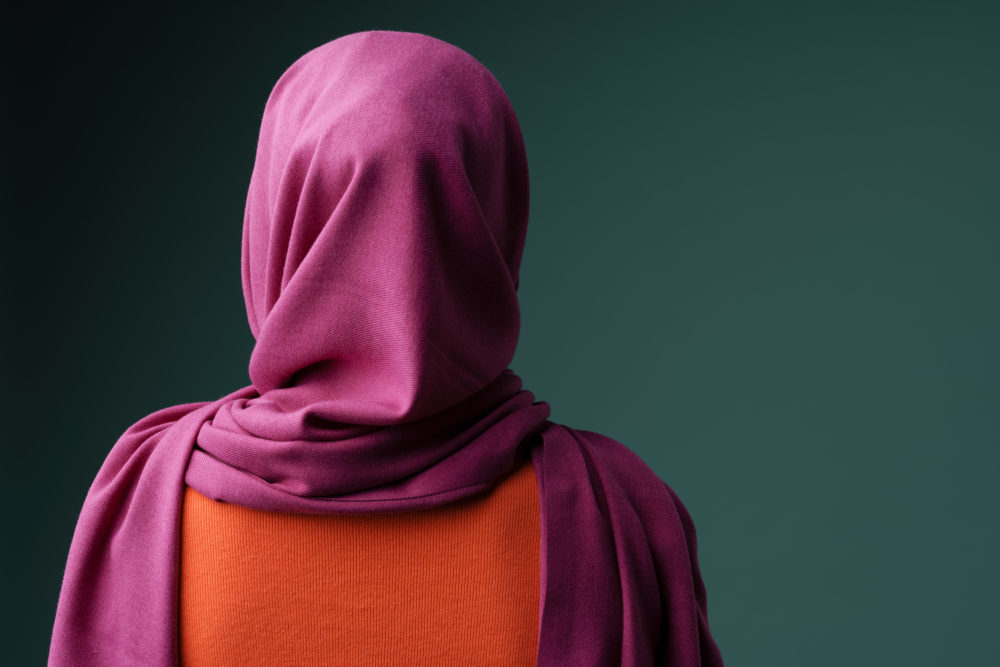
Islam does not encourage us to become solely obsessed with our outer appearance, and becoming consumed by physical appearance alone is a rabbit hole which may lead to the removal of hijab.
Another contributory factor is the society we live in. Today, immodesty is considered normal amongst the masses. However, around 50 years ago, modesty was more common.
This contributes to the struggle of observing hijab, as wearing it means standing out as different in an increasingly immodest society.
But as Muslims, we do not follow the trends of society that change based on the baseless whims and desires of man. Instead, we follow the command of Allah, which is consistent for all Muslims at all times, from the time of the Prophet (SAW) until the Day of Judgement.
Checking your intention
In order to be motivated to do the correct thing despite the struggle of doing so, we must remind ourselves why we are doing it. This will strengthen us beyond the limited worldly reasons tempting us otherwise.
We observe hijab for the sake of Allah because it is what Allah has ordered us to do. It is a form of obedience to Allah. Not observing hijab is disobedience to Allah. At times, individuals may not wear hijab due to reasons such as culture or their spouse. However, we need to remind ourselves of our reason for existence, and that is to worship Allah alone.
Obeying Allah by wearing hijab is a means of earning His pleasure and reward, and we do not obey the creation in disobedience to Allah.

Further to this, wearing hijab for those who struggle can be framed with the intention of jihad. As Muslim women in the West, we face a daily internal jihad against our own nafs when wearing hijab to obey Allah in the immodest society we live in.
It is not easy to observe it, but the greater the struggle, the higher the reward that awaits. As well as this, it is a display of our faith, which provides an opportunity for da’wah through our character, as people will be aware that we are Muslim.
Finally, to overcome these struggles, we must centre the observance of hijab on seeking the sake of Allah alone. This gives us a purpose that transcends any limited worldly reason and gives us the strength to do the right thing.
We must also remind ourselves of the reward that awaits in the hereafter as a motivating factor.
For those who do not wear it, or who struggle with certain aspects of it, the very least that should be done is to acknowledge that it is a sin and repent for it with the intention of wearing it.
May Allah make it easy for us all and keep us steadfast. Ameen.