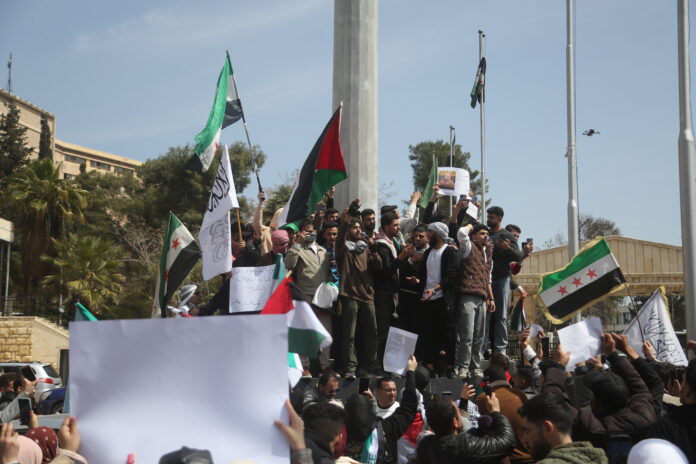
The United Arab Emirates (UAE) has strongly condemned and denounced what it called the acts of “rioting,” “vandalism,” and “attacks” targeting its embassy and the residence of the Head of Mission in Syria. The UAE reaffirmed its categorical rejection and condemnation of such unacceptable acts, including those directed against its national symbols.
In a statement, the Ministry of Foreign Affairs stressed the UAE’s categorical rejection of such destructive practices, emphasising the necessity of protecting diplomatic premises, missions, and their personnel in accordance with international laws and norms, particularly the Vienna Convention on Diplomatic Relations, which guarantees the inviolability of diplomatic premises and the protection of diplomatic staff.
The UAE called on the Syrian Arab Republic to uphold its obligations to protect the embassy and its personnel, investigate the circumstances surrounding these attacks, prevent their recurrence, and take all necessary legal measures to hold the perpetrators accountable.
Diplomatic response
The United Arab Emirates on Saturday strongly condemned “rioting and attacks” targeting its diplomatic mission and the residence of its head of mission in the Syrian capital, Damascus.

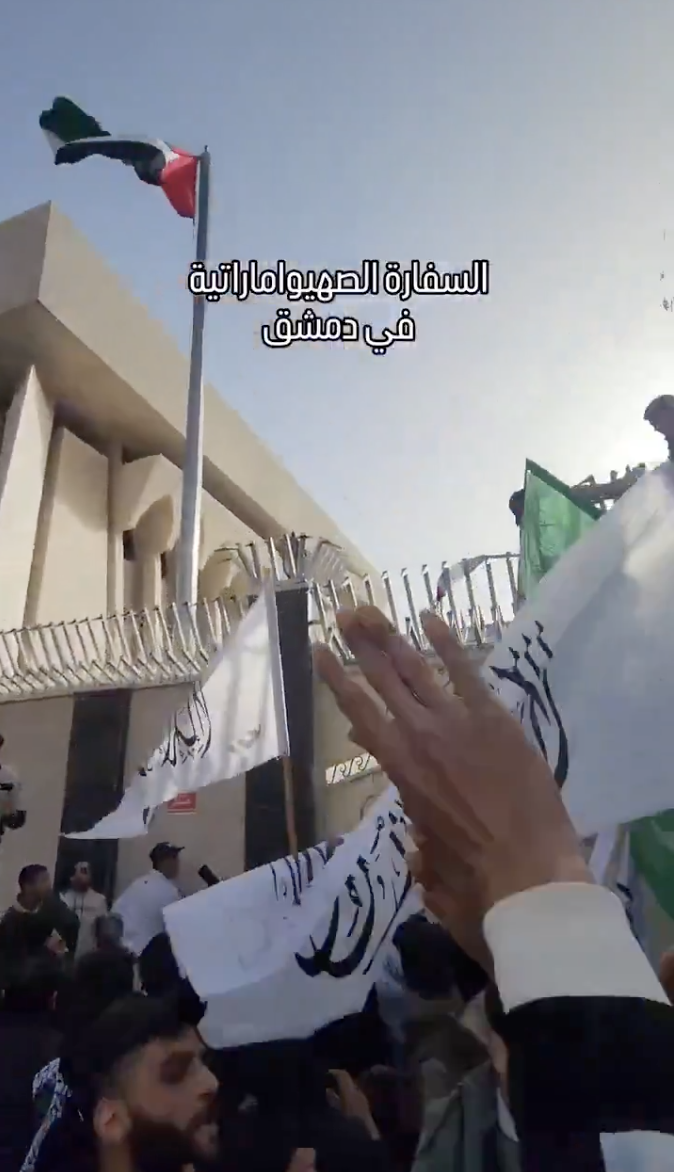 In a statement, the UAE Foreign Ministry said it “strongly condemns and denounces acts of vandalism and attempted damage to property and attacks” against its embassy and the residence of its envoy.
Subscribe to our newsletter and stay updated on the latest news and updates from around the Muslim world!
The ministry also expressed its rejection of “unacceptable insults toward the country’s national symbols,” stressing the UAE’s firm opposition to such actions.
It urged the Syrian authorities to ensure the protection of diplomatic missions and their staff in accordance with international law, particularly the Vienna Convention on Diplomatic Relations, which guarantees the full immunity of diplomatic premises and personnel.
The UAE also called on Syria to investigate the incident, prevent its recurrence, and take all necessary legal measures against those responsible.
Qatar was also quick to condemn the incident, a fellow Arab Gulf country which has close ties to Damascus.
“The State of Qatar expresses its strong condemnation and denunciation of the riots and attacks targeting the Embassy of the sisterly United Arab Emirates (UAE) and the residence of its head of mission in Damascus as well as the violation of the inviolability of diplomatic missions that accompanied them. The Ministry of Foreign Affairs affirms that targeting diplomatic premises constitutes a flagrant violation of international law, stressing the need to hold the perpetrators of these acts accountable and ensure that such acts are not repeated.
“The Ministry reiterates the State of Qatar’s full solidarity with the UAE, emphasising the importance of taking the necessary measures to guarantee the protection of diplomatic missions and ensure the safety and security of their personnel, in accordance with the provisions of international law and the Vienna Convention on Diplomatic Relations.”
The UAE has come under fire in recent times over their close relationship with Israel and efforts to target and smear Muslim groups which they disagree with. Their efforts, combined with Dubai’s passionate defence of normalisation with Tel Aviv, has earned them a reputation as a “Zionist Arab regime” or a Muslim country which is hostile to Islamic causes including the Palestinian cause.
Protest background
The incident followed a protest held on Thursday by some Syrians outside the UAE Embassy in Damascus, where demonstrators demanded the release of faction leader Issam Buwidani, alleging that he is being held by UAE authorities. There has been no official comment from Abu Dhabi on these claims.
Buwidani is a figure associated with armed factions that entered Damascus with Syrian opposition forces in late 2024, contributing to the overthrow of Bashar al-Assad’s regime.
The protest appeared to escalate into acts targeting diplomatic property, prompting condemnation from UAE officials and renewed calls for adherence to international norms governing diplomatic protection.
Meanwhile, Syria’s Foreign Ministry reaffirmed in a statement its “firm and consistent position rejecting any attack or attempt to approach embassies and diplomatic premises accredited in Syria.”
It stressed that such sites are protected under international law and diplomatic conventions and represent symbols of relations between states and peoples.
The ministry also expressed its “categorical rejection and condemnation of any slogans or actions that insult states or undermine their symbols,” saying such behaviour contradicts principles of mutual respect and international cooperation.
While affirming citizens’ right to express their views, the Syrian Foreign Ministry emphasised that this right must be exercised “within the framework of the law and with respect for public order, without actions that could threaten stability or diplomatic missions.”