


Afghans marked Eid under a temporary lull in hostilities following a fragile ceasefire agreement with neighbouring Pakistan.
The truce comes after weeks of escalating violence, cross-border accusations, and rising civilian casualties reported on both sides.
Afghanistan confirmed the sighting of the Shawwal crescent moon in multiple locations, leading authorities to announce that Eid al-Fitr would be observed on Thursday.
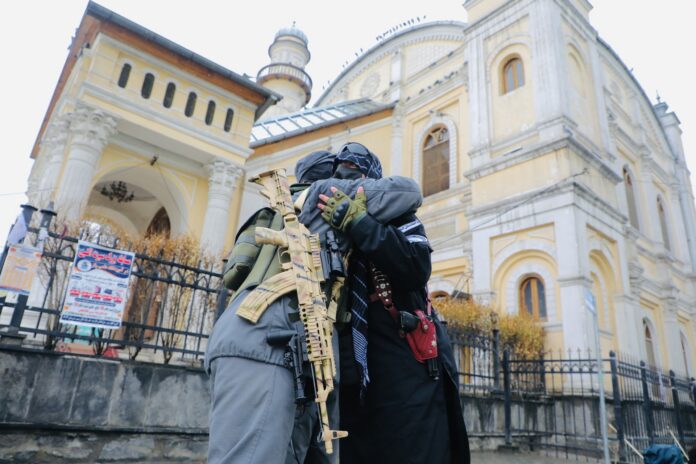
The declaration prompted nationwide preparations, with mosques hosting Eid prayers under heightened security as communities gathered to mark the end of Ramadan.
The pause was intended to allow celebrations to proceed without further escalation.
Despite the truce, the security environment remained tense, with authorities maintaining a visible presence in key areas.

Mosques and public gathering spaces were placed under heightened protection during Eid prayers and festivities.
Officials in both countries described the arrangement as temporary, with no clear indication of a long-term de-escalation.
Subscribe to our newsletter and stay updated on the latest news and updates from around the Muslim world!
The agreement has been framed as a humanitarian pause rather than a resolution to ongoing disputes.

Civilian toll reported amid ongoing tensions
Recent reporting indicates significant civilian casualties in the weeks leading up to the ceasefire.
Between February 26 and March 16, 76 civilian deaths and 213 injuries were recorded in Afghanistan.
An additional and highly disputed incident was reported in Kabul at the Omid Addiction Treatment Hospital.
Afghan authorities claim that Pakistani airstrikes on Monday night killed 408 people, though these figures have not been independently verified.
Pakistan has not confirmed responsibility for that specific incident. The contrasting accounts reflect ongoing mistrust and sharply differing narratives between the two sides.
Both governments have traded accusations in recent months, with Islamabad alleging that Afghanistan provides safe haven to militant groups operating against Pakistan.
Kabul has consistently rejected these claims, denying any support for cross-border militancy.
Fragile peace
The Eid ceasefire has been described as fragile, with no formal long-term framework announced to sustain the pause in fighting.

China has welcomed the temporary ceasefire between Afghanistan and Pakistan, praising the mediation efforts of Türkiye, Saudi Arabia, and Qatar in helping facilitate the agreement.
Chinese officials said they hope both sides will maintain restraint, return to dialogue, and work towards a comprehensive and lasting cessation of hostilities.
Beijing also stated that it has engaged with both countries through its own diplomatic channels and remains prepared to play a constructive role in supporting further de-escalation and regional stability.
Observers note that such temporary agreements have previously failed to hold beyond short periods.
The timing of the ceasefire coincides with Eid celebrations, a period often used to facilitate humanitarian pauses in conflict zones.
Religious occasions have historically provided limited windows for reduced violence in similar disputes.
For now, the situation remains uncertain as both sides continue to express security concerns.
While Eid prayers proceeded with increased safety measures, underlying political and security tensions remain unresolved.
Without sustained diplomatic progress, the ceasefire is widely viewed as a short-term armistice rather than a durable settlement.