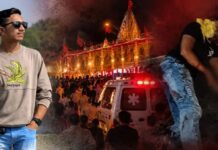



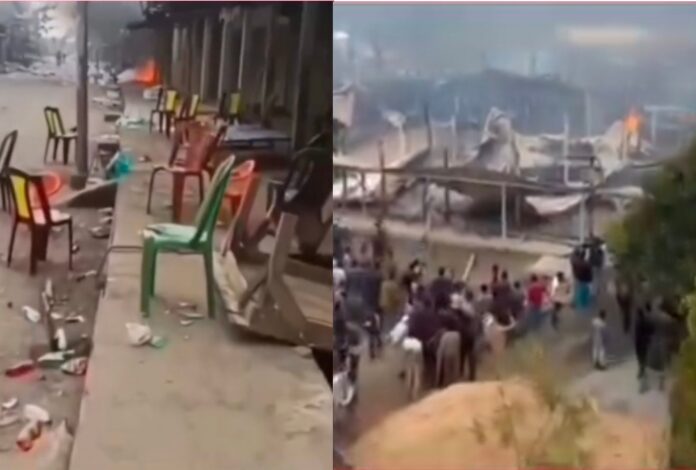
Muslim families have fled their homes in India’s northeastern state of Meghalaya after two men were killed, dozens of shops burned and a mosque set ablaze amid sectarian violence linked to a local election dispute.
Residents in parts of West Garo Hills district said many Muslim families began quietly leaving their homes before sunrise on March 10, packing what they could and heading towards neighbouring Assam or nearby villages.
“Women and children have left the area entirely,” one resident told 5Pillars, requesting anonymity due to security concerns. “People are scared and don’t know what will happen next.”
Brutal violence first erupted in the area during the nomination period for elections to the Garo Hills Autonomous District Council (GHADC), a local governing body that administers tribal areas in Meghalaya under special constitutional provisions.
Two Muslim men, Khairul Islam and Ashraful Islam, were later found dead following the unrest. Both were residents of West Garo Hills.

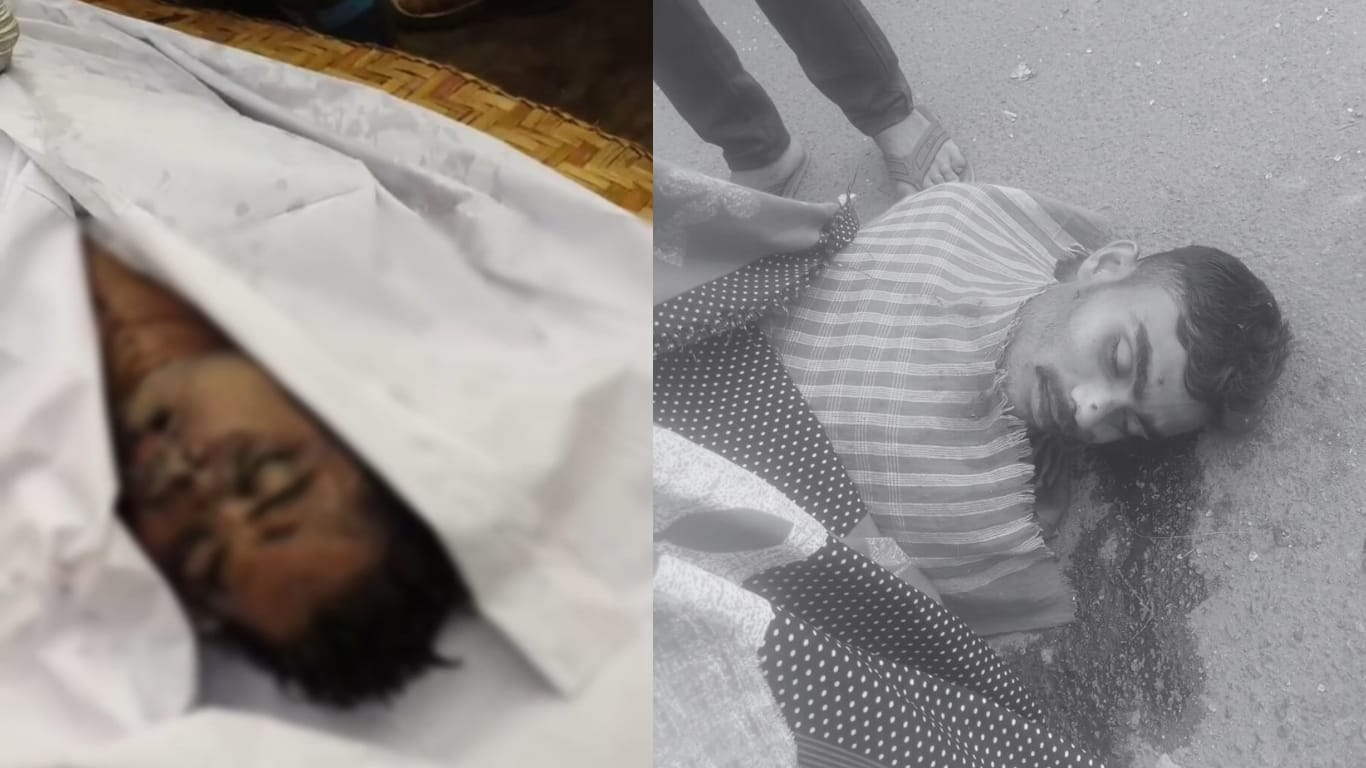
According to post-mortem findings, one of the victims died after being attacked with a sharp weapon, while the other suffered fatal gunshot injuries from a country-made firearm.
Authorities imposed curfew restrictions amid the violence, suspended mobile internet services for 48 hours and deployed army units to conduct flag marches in the affected areas.
Subscribe to our newsletter and stay updated on the latest news and updates from around the Muslim world!
“With the presence of the armed forces, we feel a little relieved now,” another local resident told 5Pillars. “But many families who fled have not yet returned and the atmosphere is still tense.”
The GHADC elections, originally scheduled for April 10, 2026, to elect 29 members of the council, have now been postponed until further notice.
Election dispute sparks tensions
The unrest began on March 9, the first day candidates could file nominations for the council election.
According to local accounts, tensions escalated when a former legislator and district council member, Esmatur Momineen, arrived at the district magistrate’s office in the town of Tura to submit his nomination papers.
Momineen, who is not from a recognised tribal community, was reportedly confronted by a group of tribal activists who opposed non-tribal candidates participating in the election.
Witnesses said he was surrounded and beaten.
“Why have you come here? What business do you have here? We will not allow non-tribals to stand for election,” people shouted at him, according to a resident who spoke to 5Pillars.
Momineen reportedly insisted that the law allowed him to contest the election. However, tensions quickly spread through surrounding areas as groups of Garo tribal men began mobilising.
Some residents alleged that members of militant or pressure groups may have been present during the unrest, including individuals linked to the Garo National Liberation Army (GNLA) and activists associated with the Federation of Khasi-Jaintia and Garo People (FKJGP).
However at present, authorities have not confirmed these claims.
Businesses and mosque targeted
During the violence, several properties belonging to Muslims were attacked, according to residents and local reports.
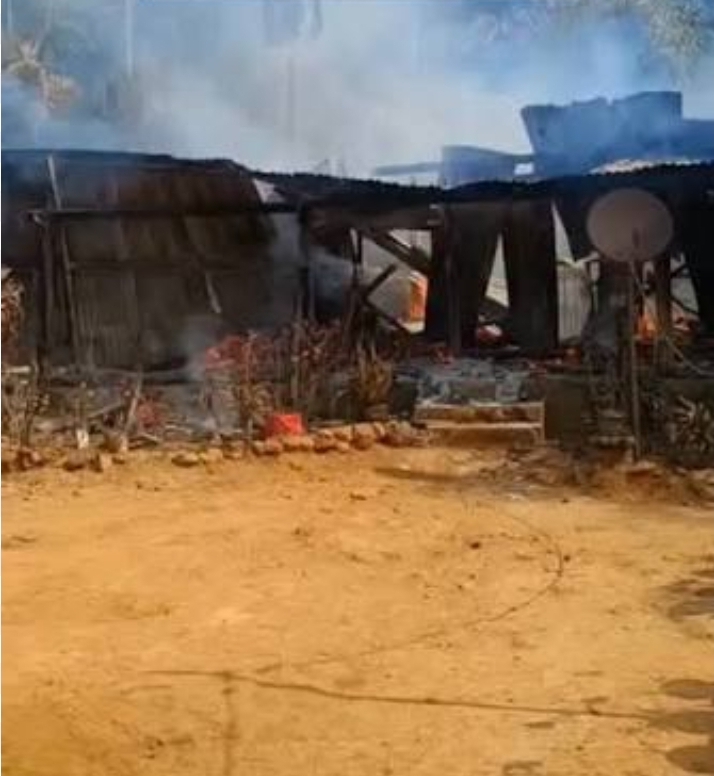
Shops owned by Bengali-origin Muslim traders in the Chibinang and Tura market areas were vandalised and set on fire. More than 30 shops were reportedly damaged or burned.
A mosque was also set ablaze and its imam was allegedly assaulted.
One resident claimed that a nearby Hindu temple remained untouched during the attacks.
“They deliberately avoided damaging the temple,” the resident told 5Pillars. “But Muslim homes and shops were targeted.”
Videos circulating on social media appear to show a Garo community leader calling Muslims in West Garo Hills “illegal immigrants from Bangladesh.”
In the footage, the speaker can be heard shouting: “This is not your land. ‘Allahu Akbar’ will not work here.” Similar rhetoric about migration and citizenship has appeared in political debates in parts of India’s northeastern states in recent years.
Muslims in Meghalaya
Although Meghalaya is widely seen as a predominantly Christian tribal state, Muslims make up around 4.4% of the population, according to India’s 2011 census.
Many Muslims in the region are Bengali-speaking families whose ancestors migrated during the British colonial period or around the time of the 1947 Partition of India.
There are also smaller groups of Khasi Muslims, indigenous people who converted to Islam generations ago but continue to follow local cultural traditions.
However, ethnic and political tensions between tribal communities and non-tribal residents have periodically led to unrest in the state since Meghalaya was formed in the early 1970s.
Issues such as migration, land ownership and political representation remain sensitive topics in the region.
For now, many Muslim families who fled West Garo Hills remain displaced and uncertain about when — or if — they will be able to safely return to their homes.
Legal dispute over election eligibility
At the centre of the dispute is a controversial notification issued earlier this year by the Garo Hills Autonomous District Council.
The council had required candidates to present a Scheduled Tribe (ST) certificate when filing nomination papers. Scheduled Tribes are indigenous communities officially recognised under India’s constitution.
The requirement effectively barred non-tribal candidates from contesting the election.
However, the Meghalaya High Court later struck down the rule, stating that it had been introduced without following proper legislative procedure.
The ruling reopened the question of whether non-tribal candidates could legally participate in district council elections.
To understand the dispute, it is important to note that Meghalaya’s tribal regions are governed under the Sixth Schedule of the Constitution of India. This special constitutional framework gives indigenous communities a degree of self-governance over land, local laws and local administration.
Autonomous district councils like the GHADC operate under this system.
While many seats in India’s state legislatures can be reserved for Scheduled Tribes, the rules governing district council elections are more complex and have been the subject of repeated legal and political disputes.