


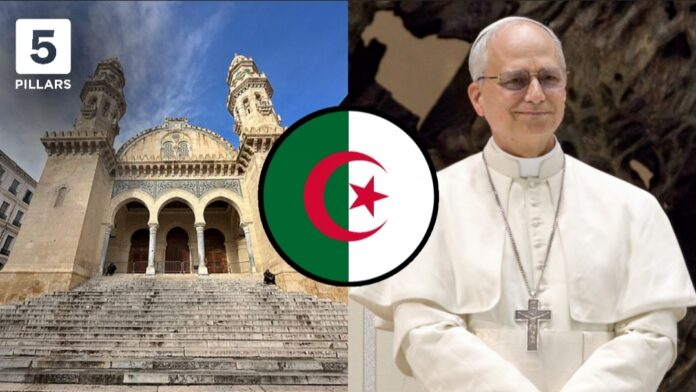
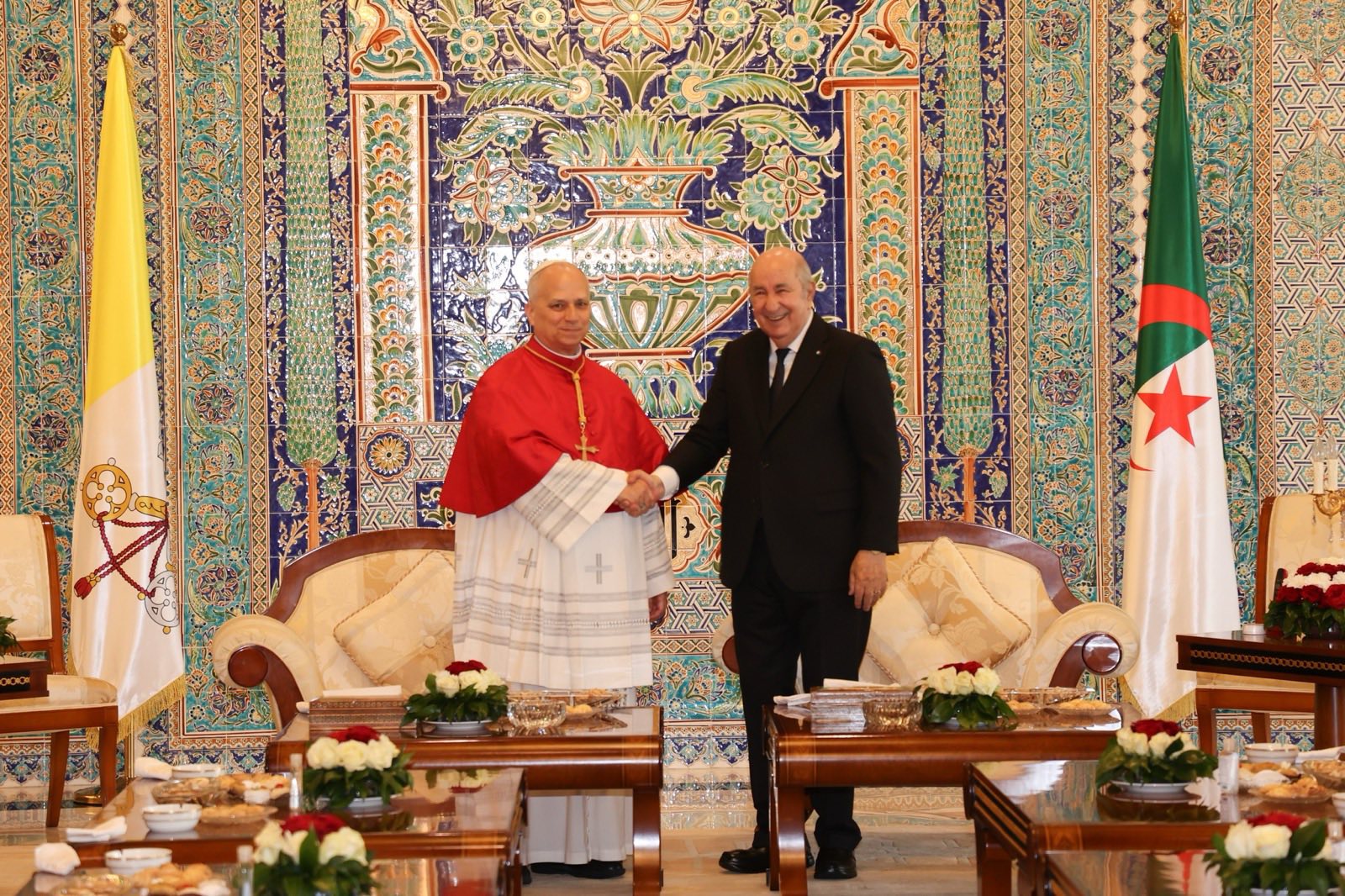
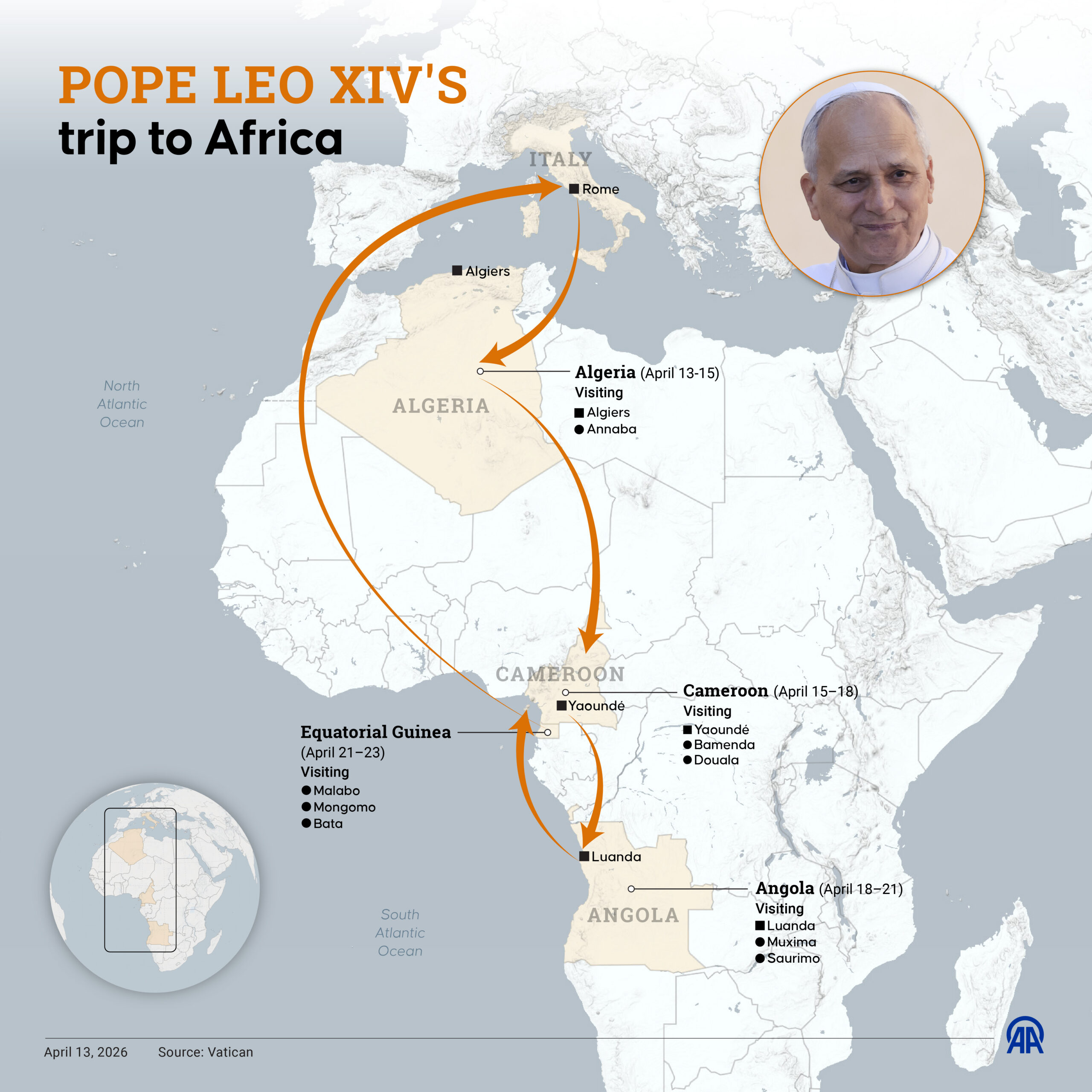
Pope Leo XIV has begun a high-profile visit to Muslim Algeria to promote Muslim-Christian coexistence as part of a wider tour across Africa.
During his visit, the Pope emphasised dialogue between religions and called for stronger cooperation across faith lines.
He also made several indirect references to the war in the Middle East, highlighted migration issues, urging European nations to show greater compassion towards African migrants.
“The future belongs to men and women of peace, to those who refuse the logic of violence and instead choose the path of dialogue, patience, and mutual understanding… Peace is not built with force or imposed from above, but grows quietly in hearts that are willing to listen, to forgive, and to recognise one another as brothers and sisters,” he said.
“Faith in God must never be used to justify division or hatred; rather, it should open us to others, helping us to see in every person a dignity that cannot be taken away… In a world still marked by injustice and inequality, we must reject every form of domination and indifference, and instead choose solidarity, justice, and care for the most vulnerable.”

During his time in Algiers, Pope Leo XIV met senior Algerian officials and imams.
He also visited the Great Mosque of Algiers, one of the largest mosques in the world, in a symbolic gesture towards Muslim–Christian dialogue.
Subscribe to our newsletter and stay updated on the latest news and updates from around the Muslim world!
The Pope later travelled to Annaba, historically known as Hippo, where he visited ancient Christian sites linked to Saint Augustine.
Algeria is 99% Muslim country, with Islam deeply embedded in its identity, institutions and public life.
The Catholic community is small, largely made up of foreign workers and a limited number of local adherents.
Africa is becoming very important for the Catholic Church, since it’s growing quickly there.
But Algeria also has personal and historical meaning because Saint Augustine, an important Christian figure, came from what is now Algeria. The Pope is visiting places connected to him.
Colonial shadows
The presence of a Catholic leader in Algeria inevitably recalls the legacy of French colonisation of Algeria.
France invaded Algeria in 1830, establishing a colonial system that lasted over a century.
During this period, Catholic institutions were closely tied to French authority.
Churches were built across Algerian cities, often symbolising colonial dominance rather than purely spiritual outreach.
The central Mosque of Algiers was converted into a Church.
Missionary efforts were also part of the colonial framework. While large-scale conversion of Muslims was limited, there were clear attempts to spread Catholicism among the local population.
For many Algerians, religion and resistance became intertwined.
Islam served as a unifying force against colonial rule, preserving identity in the face of cultural and political pressure.
This history continues to shape perceptions today. Any visit by a Catholic figure is viewed through the lens of that past, even when framed in terms of dialogue and peace.
Soft power
Beyond history, the Pope’s visit reflects the Catholic Church’s evolving role in Africa.
The continent is one of the fastest-growing regions for Christianity, making it strategically important for the Church’s future.
By visiting Muslim-majority countries like Algeria, the Vatican signals a willingness to engage beyond its traditional strongholds.
This approach positions the Church as a global moral actor rather than a purely Western institution.
Migration is another key theme. Algeria serves as both a destination and transit route for African migrants heading towards Europe.
The Pope’s comments on migration align with longstanding Vatican calls for humane policies and shared responsibility.
There are also calls for greater civil society freedoms within Algeria, including space for religious minorities to practise more openly.
While framed in universal terms, such statements can carry political weight in a tightly controlled environment.
The visit therefore raises important questions. Is this purely about interfaith harmony, or does it reflect a broader effort to expand influence in historically Muslim lands?
While the official narrative centres on peace and cooperation, the deeper context cannot be ignored.
Algeria’s history with France, the legacy of missionary activity, and the geopolitical importance of Africa all shape how this visit is understood.
Security tensions
Throughout the visit, the Vatican emphasised engagement with Muslim leaders and wider Algerian society, rather than focusing solely on the country’s small Catholic minority.
However, the trip unfolded under tight security following reported incidents in the city of Blida, around 50 kilometres from the capital.
Reports emerged of two attempted suicide attacks on the same day as the Pope’s arrival, targeting security infrastructure.
Authorities have not fully confirmed the details, but security forces were said to have intervened before one device detonated.
No group has claimed responsibility, and the motive remains unclear, though the timing raised concerns about the risks surrounding such a high-profile visit.
The incidents prompted heightened security measures across key locations, with restricted movement and a visible security presence during the Pope’s engagements.
Despite this, the Vatican confirmed that the visit would continue as planned, signalling an intent to project stability and resilience.