

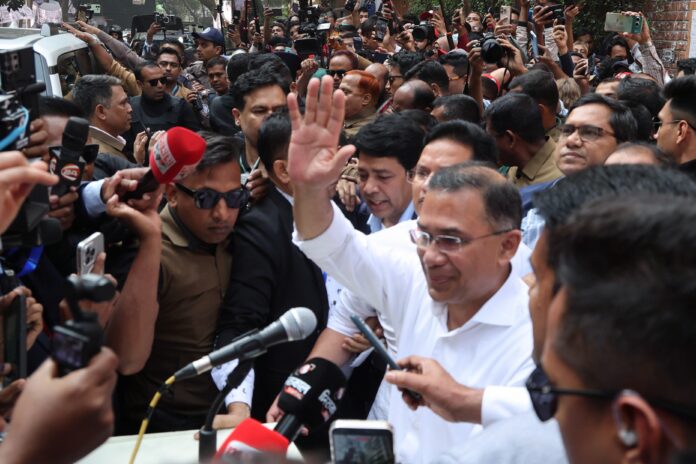
The leader of the Bangladesh National Party (BNP), Tarique Rahman, has officially taken the oath of office as the 11th Prime Minister of the 173-million Muslim-majority South East Asian nation.
On Tuesday, Rahman became Bangladesh’s 11th Prime Minister following the BNP’s victory in last week’s historic general elections.
A total of 297 lawmakers from the BNP and its main political ally, Jamaat-e-Islami, also took their oaths on Tuesday, forming the 13th parliament of Bangladesh.
Bangladesh’s President Mohammed Shahabuddin administered the oath to Rahman in a ceremony held in front of the parliament building in the capital, Dhaka.
The elections marked a historic turning point in Bangladesh’s recent history, being the first since the 2024 student-led uprising that led to the removal of long-time ruler Sheikh Hasina.

The nationwide protests resulted in the collapse of the Awami League’s 15-year rule under Hasina.
An interim government had governed Bangladesh since August 8, 2024, three days after former Prime Minister Sheikh Hasina fled to India.
Subscribe to our newsletter and stay updated on the latest news and updates from around the Muslim world!
The BNP declared a landslide victory in the general election, winning 209 of the 300 seats in the Jatiya Sangsad, according to local media. Voter turnout exceeded 60 percent, significantly higher than the 42 percent recorded in the previous election.
Who is Tarique Rahman?
Tarique Rahman, 60, is the leader of the BNP and the son of former Prime Minister Khaleda Zia and former President General Ziaur Rahman.
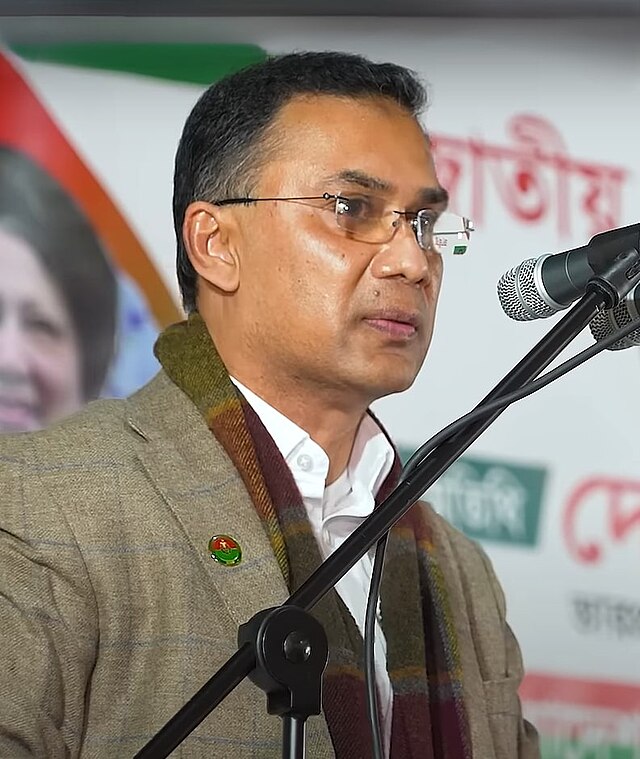
Rahman had previously been living in the UK in self-imposed exile for 17 years before returning to Bangladesh in December 2025.

Various analysts have highlighted the challenges Rahman faces in building upon the political legacy of his mother, Khaleda Zia.
“Zia earned her political stature through resilience, sacrifice and a firm stance against authoritarianism,” said Sumaiya Rabeya, a political scientist at Tunku Abdul Rahman University.
Exile in London
A significant portion of Rahman’s political life was spent in exile in London, home to a large Bangladeshi Muslim diaspora.
Despite residing abroad, Rahman retained a central decision-making role within the BNP.
Rabeya argued that his continued leadership from thousands of miles away created a “visible leadership vacuum on the ground.”
Rahman left Bangladesh with his family in 2008 for medical treatment after being released from prison while facing multiple charges, including corruption.
He had been arrested on March 7, 2008, amid widespread civil unrest that led to the establishment of a military-backed caretaker government in January of that year.
Rahman’s return to Bangladesh at the end of 2025 marked a significant turning point against the backdrop of prolonged political instability.
Now in office, Rahman faces high expectations after pledging to build a Bangladesh where “terrorism, corruption and discrimination are eliminated.”
“We are taking office at a time when we have to start our journey through a fragile economy, ineffective constitutional institutions and a weak law and order situation left by a fascist regime. However, if the people’s strength is with us, no obstacle can stop us,” Rahman said in his first speech following the election.
“National unity is our strength; division is our weakness,” he added.
Sheikh Hasina’s overthrow