


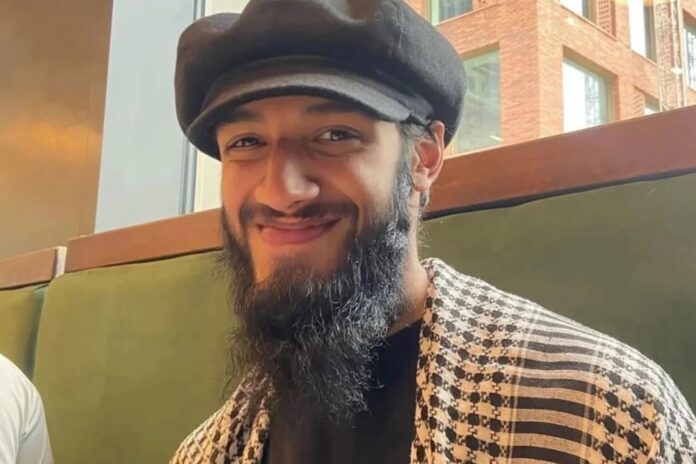
Muhammad Umer Khalid, the last of the hunger strikers known as “Prisoners for Palestine”, has ended his hunger and thirst strike and agreed to a slow re-feeding process following dangerous health complications such as organ failure and possibility of cardiac arrest.
Last week, Muhammad Umer Khalid decided to escalate his hunger strike to include a thirst strike if his demands — which include immediate bail and an end of prison restrictions on calls, visits and mail — were not met.
But Khalid ended his dry hunger strike on Sunday and is drinking and eating again after he was hospitalised in a critical condition after experiencing multiple organ failure. He is currently being taken care of “as best as possible”, according to campaigning group Prisoners for Palestine.
“Although he [Khalid] has shown an incredible sense of steadfastness and an incredible sense of willingness to suffer for the Palestinian people, he was successful in his hunger strike,” Saeed Farouky, a spokesperson for Prisoners for Palestine, said.
According to Farouky, most of Khalid’s demands were accepted and met as the prisoner’s Governor met with him and agreed to review the conditions of his incarceration.

As well as having his needs met, Prisoners for Palestine were adamant about not neglecting the fact that Khalid, as well as seven other prisoners, are being allegedly “grossly mistreated” on a daily basis.
Such mistreatment allegedly includes withholding communications, not allowing certain prisoners to express their religion, and disallowing prisoners from receiving the medical care they require.
Subscribe to our newsletter and stay updated on the latest news and updates from around the Muslim world!
Victory for the hunger strikers
The greatest victory of the hunger strike, according to Farouky, is that they were able to “reinvigorate a movement on the streets”, which he described as an “uprising”.
“The state thought they could crush dissent in this country, not only against Palestinians, but what we’ve seen since the beginning of this hunger strike is an incredible upsurge in the country’s refusal to watch from a distance the genocide of the Palestinian people.”
There have been countless protests organised for the hunger strikers, the largest of which resulted in over 86 arrests, according to the Met Police, on charges of aggravated trespass on January 24.
Medical mistreatment
Dr James Smith, a lecturer at UCL and emergency physician who has been supporting the hunger strikers and their families through medical advice since the start of the strikes in November, expressed ongoing concern over the strikers’ medical care.
In a conference on Tuesday January 7, Dr Smith said: “There is clear evidence now, based on the treatment of Umer and other hunger strikers, that they have not had access to timely, comprehensive, and high-quality care that is in keeping with established guidance for the treatment of individuals who embark on a hunger strike.”
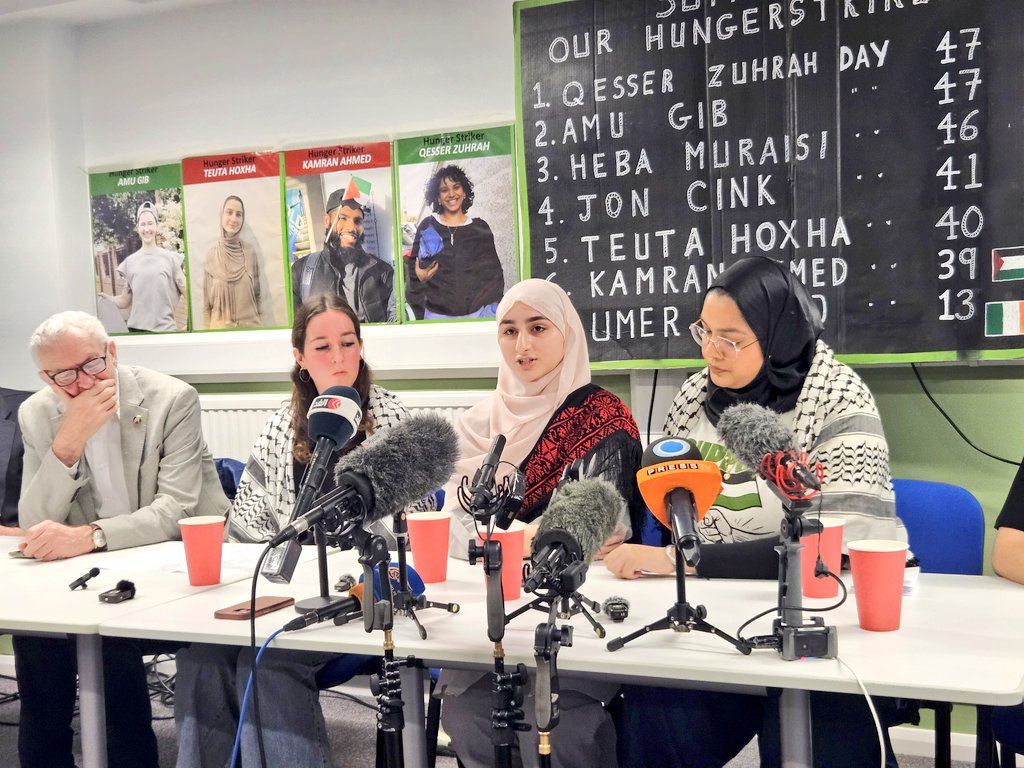
Dr Smith also said that the legal team for the hunger strikers now have “very strong grounds” to press ahead with an enquiry into their alleged mistreatment.
Khalid’s hospitalisation
According to Dr Smith, Khalid was admitted to hospital during the early hours of Sunday and transferred to a critical care unit, which was “indicative of the seriousness of his medical condition”.
At the time of Khalid’s hospitalisation, there were “profound concerns” over the potential of multi-organ failure. His heart was also beating very slowly, and medical professionals feared that there was a risk of cardiac arrest.
Khalid has since been released from hospital back to prison since he ended his dry hunger strike.
Dr Smith expressed his ongoing concern for general medical care within the prison system in the UK, which he said was demonstrated to be “substandard” based on the treatment of the hunger strikers.
“We are calling now for the prison to ensure that Umer has access to comprehensive medical support during the re-feeding period,” Dr Smith said.
Judging from Khalid’s first hunger strike, after which he became very unwell, prison staff offered him biscuits and protein shakes, which allegedly indicated that there was no clear re-feeding plan in place for him.
Future hunger strikes
Farouky, the spokesperson for Prisoners for Palestine, said that the first six hunger strikers who had ended their strike made it clear that it was a “pause”, not an end.
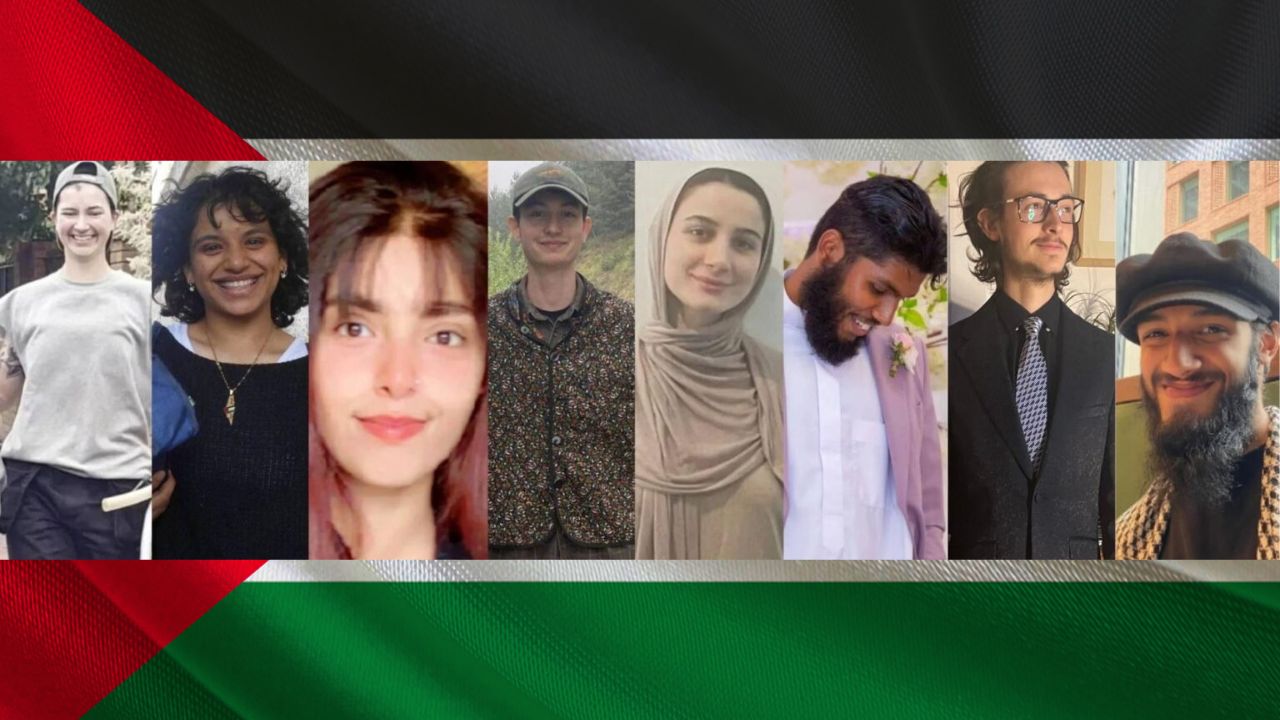
Three of the hunger strikers, Heba Muraisi, 31, Kamran Ahmed, 28, and Lewie Chiaramello, 22, ended their strike on January 14 following a major demand of theirs being met.
The UK government decided not to award a £2 billion Ministry of Defence contract to Israeli arms company Elbit Systems UK.
The Prisoners for Palestine group said the government’s refusal to grant the contract fulfilled a central demand of the hunger strike.
Muraisi had been striking for 73 days, Ahmed for 66 days, and Chiaramello for 46 days when they decided to “pause” their strikes.
The Prisoners for Palestine have been detained without trial for over a year after allegedly attacking Israeli weapons factory Elbit Systems in solidarity with Palestine on August 6 2024.