


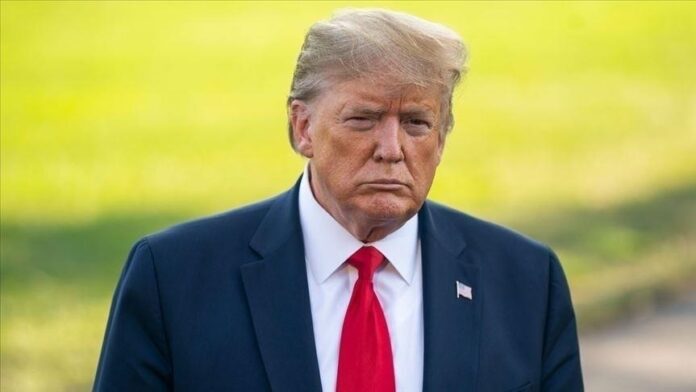
Blogger Najm Al-Din argues that Donald Trump is not seeking world dominance, but rather hegemony over the Western hemisphere. In turn, this will push other major powers to assert regional control.
Following the military action in Venezuela and capture of President Nicolás Maduro, Trump’s attack against a sovereign nation and brazen threat to annex several Latin American countries has upended a core tenet of the rules-based order, which prohibits the use of unauthorised force against any state.
With the U.S. President declaring Greenland as the next target in Washington’s crosshairs, such a move could implode the post-WW2 security architecture.
While many view Trump’s belligerence as a prelude to WW3, I believe it’s more likely to herald an era of high-stakes brinkmanship where major powers consolidate their spheres of influence as the world veers towards multipolarity.
In the coming decade, these countries will pursue hemispheric dominance through hard power, diplomatic manoeuvres and economic leverage, with an implicit understanding that such competition will not allow for the formation of a single, dominant global hegemony.

The new Monroe Doctrine
For America, this means asserting strength through an expanded application of the Monroe Doctrine.
Subscribe to our newsletter and stay updated on the latest news and updates from around the Muslim world!
According to this ideology, the geographic area designated for exclusive U.S. control stretches from the Aleutian Islands in the north to Antarctica in the south, including Central and South America, the Caribbean, and the Pacific and Atlantic approaches.
This is central to Washington’s National Security Strategy, which involves denying foreign adversaries any military, economic or strategic foothold in resource rich areas close to home.
By reasserting the Monroe Doctrine in Venezuela, Trump has disrupted the strategic footprints of Russia and China, by re-routing millions of barrels of Venezuelan oil away from Beijing, paralysing the tankers that China and Russia used to bypass previous sanctions and seizing lucrative assets and resources under a new U.S. backed interim leadership.
Having secured Venezuela’s crude oil and reinforced the role of the petrodollar in global markets, Trump is likely to sabotage Iran’s oil infrastructure to further disrupt China’s access to cheap energy, now that the U.S. has a buffer against potential disruption to energy supplies in the Persian Gulf.
Is Greenland next?
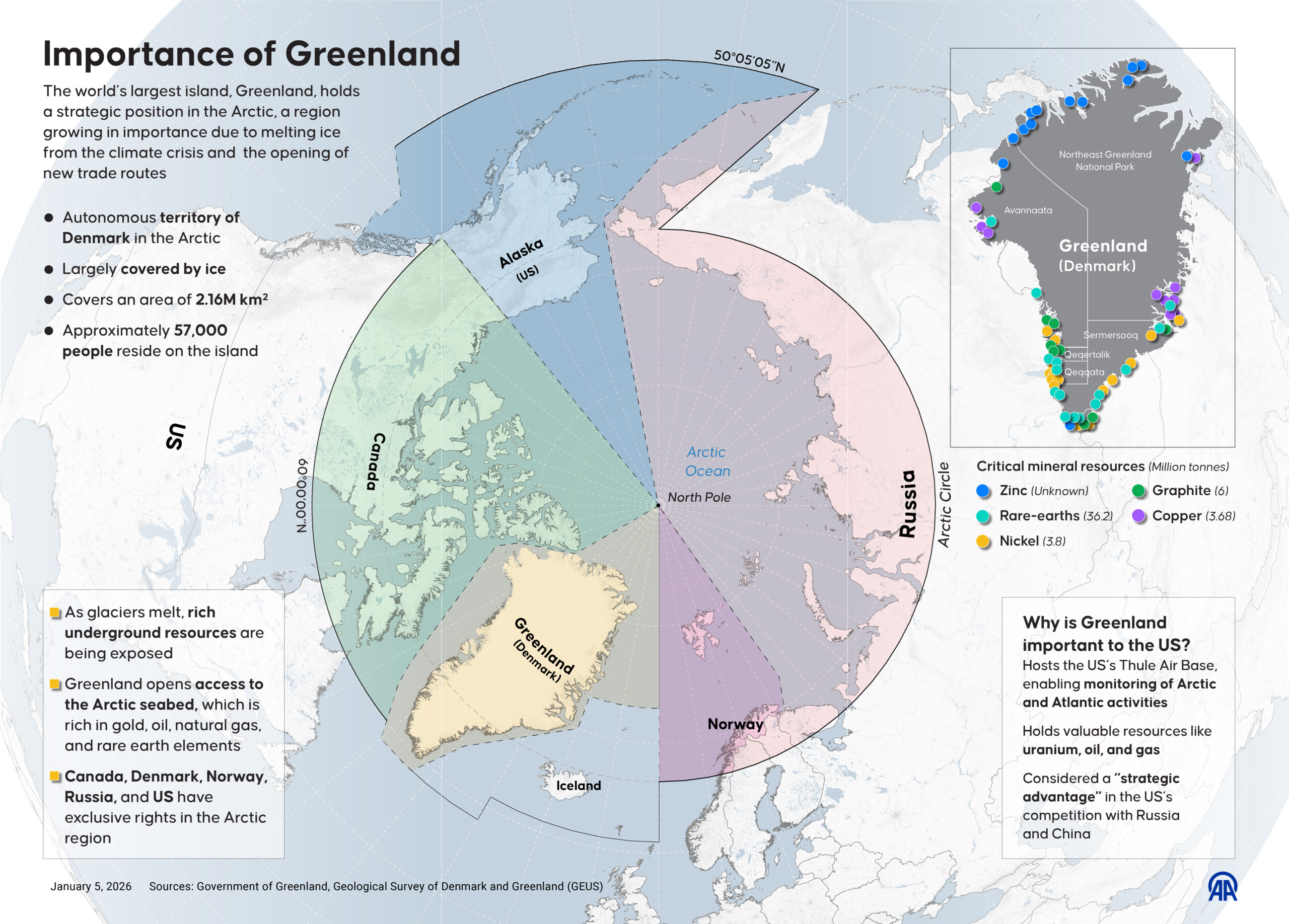
Trump has now prioritised the acquisition of Greenland as a national security priority.
This is driven undoubtedly by Greenland’s vast rare earth minerals as well as its strategic location for Arctic security, as the country sits on the shortest flight path for Russian launched ICBMs toward the U.S., allowing Washington to expand its missile interceptor system.
Furthermore, it permits the building of radar installations to monitor Chinese and Russian vessels passing through the GI UK Gap (Greenland, Iceland, and the United Kingdom), a primary gateway for enemy naval forces entering the North Atlantic.
Since Greenland holds some of the world’s largest deposits of rare earth oxides which are essential for manufacturing batteries and defence systems, this can reduce Washington’s reliance on Chinese processed minerals and prevent China from establishing a Polar Silk Road once Arctic ice melts and the Northwest Passage opens.
The annexation could mark the dissolution of the NATO alliance, as its chief protector would become an aggressor against a signatory, thus shattering the credibility of collective defence and accelerating calls for the EU to reduce its security dependency on the U.S.
Although European leaders have backed Denmark’s sovereignty, Trump will simply use the threat of tariffs to coerce them into negotiations, fuelling greater dependency on American energy, as Europe weans away from Russian and possibly even Middle Eastern energy due to the escalation of threats in the Red Sea and Strait of Hormuz.

Russia and Ukraine
With geopolitical dynamics altered, Russia is likely to use the reassertion of the Monroe Doctrine to legitimise its own territorial ambitions, especially after the Kremlin recently praised the U.S. National Security Strategy for aligning with Moscow’s worldview.
With the facade of international law unmasked, Putin will pave the foundations for reciprocity by ignoring sovereignty in Russia’s “near abroad,” insisting that Ukraine should be off-limits to malign actors like NATO and intensifying his grip on post-Soviet states such as Georgia, Belarus and Central Asian countries as a buffer against western expansion.
Not only are these regions critical for circumventing sanctions, they help project power into the Mediterranean, Asia, and Africa and are intrinsically linked to Black Sea infrastructure, which is key to Russia’s neo-imperial identity and ambition to reconstitute the old Soviet empire by leading a Eurasian pole to compete with the West and China.
As U.S. priorities shift westward, European nations are likely to bolster mutual defence treaties, knowing that the continent may have to share the burden for managing Russian aggression.

China eyes Taiwan
Trump’s gunboat diplomacy has also afforded Beijing a powerful template for expanding its naval reach into the First and Second Island Chains and expanding influence in the Indo-Pacific.
Buoyed by Trump’s transactional approach to foreign policy, the CCP can use the thorny issue of Taiwan’s reunification with the mainland as a bargaining chip against American actions in Venezuela and beyond.
Instead of escalating to an all-out amphibious invasion, a more viable option for China would be to impose a naval blockade on Taiwanese ports to force the government into favourable negotiations with Beijing before asserting legal authority over its waters.
By establishing a zone of peace in the South China Sea, a major bottleneck for the People’s Liberation Army would be removed, granting Beijing unfettered access to the Pacific, where China can control the primary maritime approaches to Japan, South Korea and the Philippines and use economic leverage to enforce its will on neighbouring states. Furthermore, capturing Taiwan’s cutting-edge semiconductor infrastructure will leapfrog China into technological preeminence in the AI revolution.
If China can successfully advance its Global Governance Initiative to reshape international norms and press ahead with yuan-based trade mechanisms as an alternative to western-led frameworks, this may herald a multipolar currency system where the petrodollar coexists with other currencies in a fragmented economic landscape, collapse the U.S. security umbrella in the Indo-Pacific and signal an end to unipolarity.
Greater Israel
As the international order devolves into rigid spheres of influence, nations with the most notorious track record against Muslims such as Israel and India will take the evolving multipolar landscape as a cue to pursue their own expansionist designs, by leveraging the breakdown of the U.S.-led order to normalise a permanent state of militarism.
Tel Aviv is already agitating for surgical strikes against Iran, whilst funding a covert digital campaign to promote the return of the pro-Zionist Pahlavis, effectively emboldening domestic opposition and endorsing regime change.
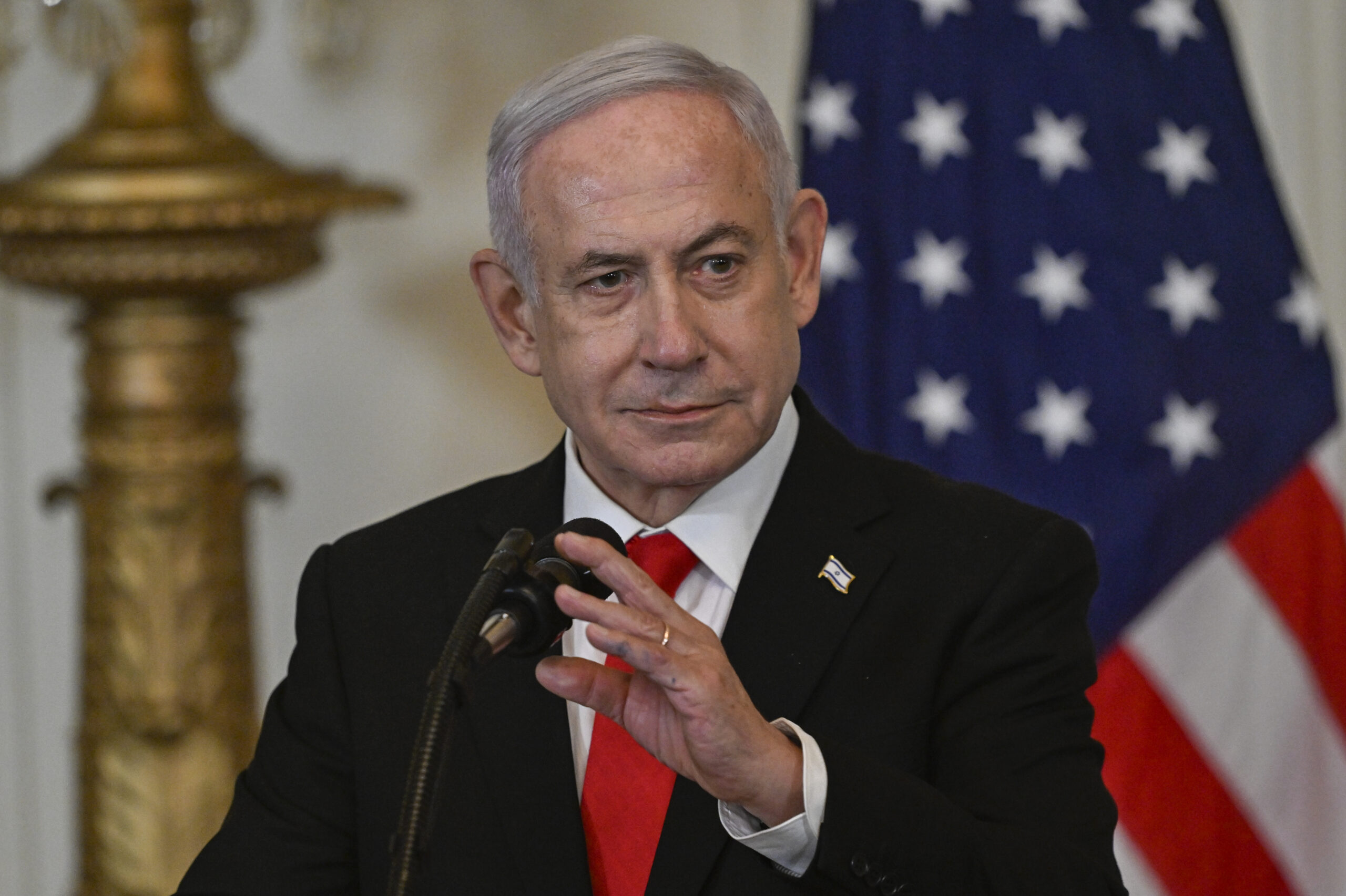
Furthermore, Netanyahu has made no secret of furthering settlement activity in the West Bank, exploiting existing fault lines in Syria and Lebanon through the creation of demilitarised zones and cultivating nodes of power outside Israel’s immediate neighbourhood, by establishing a strategic presence in Somaliland, deepening military footprint along strategic choke points like the Red Sea and Bab el-Mandeb Strait and positioning Israel as a future maritime power.
The Zionists are building a regional architecture designed to fragment and isolate Muslim-majority neighbours in pursuit of “Greater Israel” and cement its role as a vital node in a new transcontinental trade corridor like the India-Middle East-Europe Economic Corridor (IMEC).
Meanwhile, India is increasingly adopting a security-first posture in South Asia.
In addition to deepening intelligence ties with Israel as part of its zero tolerance policy against neighbouring threats, Modi is likely to invoke the plight of religious minorities and counterterrorism to justify diplomatic pressure and militarisation on Bangladesh and Pakistan’s borders and leverage Indian control of upstream water to restrict river flows in both countries, largely due to the growing anxiety among Indian policymakers of a revival in “Islamism” throughout the subcontinent and a burgeoning Pakistan-Bangladesh-China axis following the fall of the pro-India Sheikh Hasina government.
In a world where what’s good for the goose is good for the gander, the Muslim world must urgently rethink its approach to politics as some of the staunchest enemies of Islam prepare to act with impunity in their immediate vicinity.