


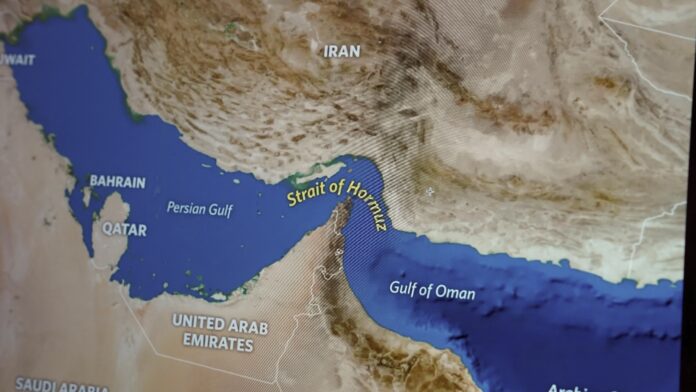
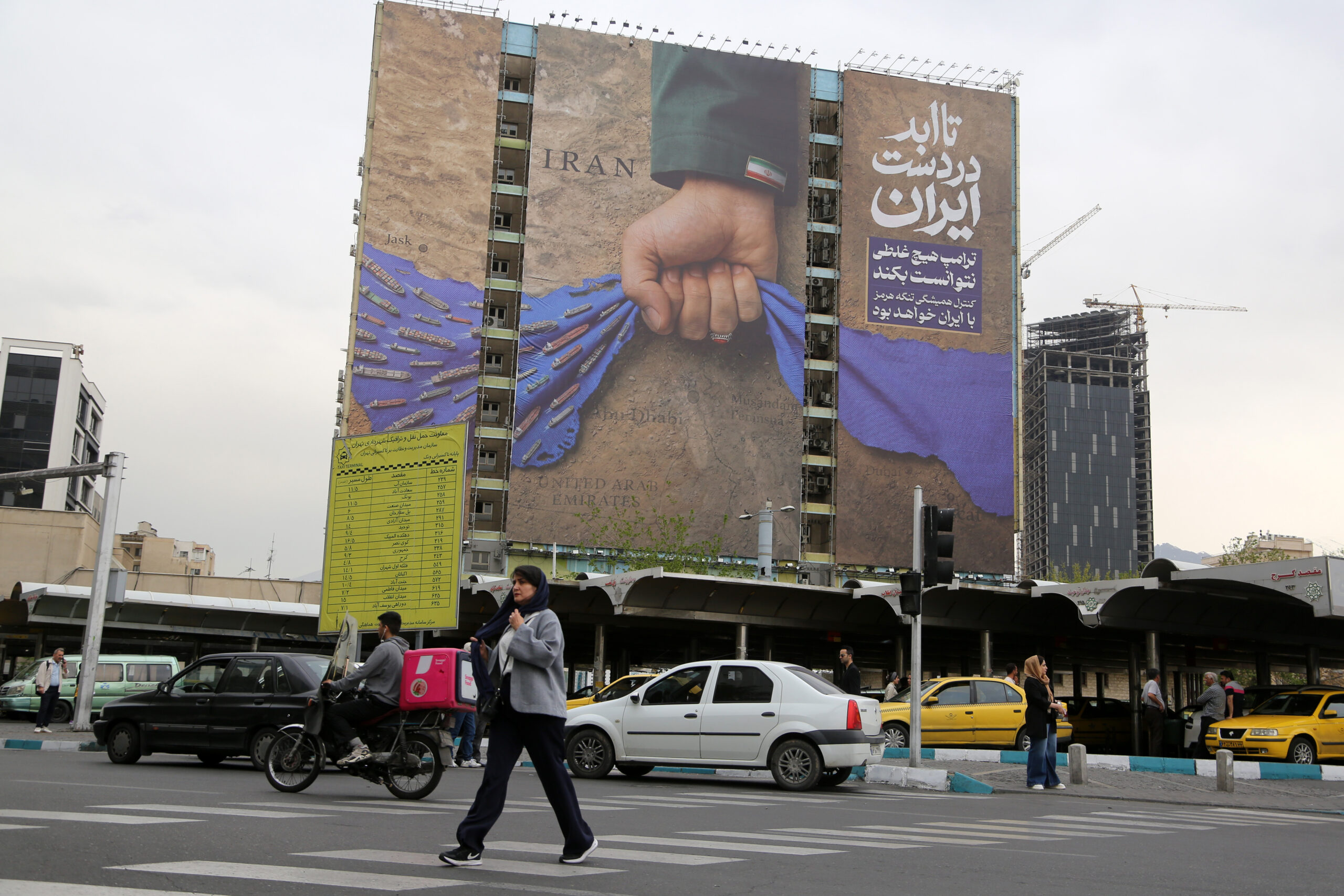
The closure of the Strait of Hormuz is a global crisis, but as energy routes falter the United States is strengthening its role as a key supplier, while Israel is advancing its ambition to become a vital trade and energy corridor, argues blogger Najm Al-Din.
With diplomatic efforts to reopen the Strait of Hormuz deadlocked, the world faces the most severe energy supply disruption in history.
The de facto closure of this critical chokepoint has triggered a global economic shock, halting a quarter of the world’s seaborne oil and a fifth of its liquefied natural gas (LNG) trade.
Brent crude and European gas prices have hit record highs, while global food security faces collapse as a third of fertilizer components typically traverse the Strait.
With the IMF downgrading its growth forecast, many energy-dependent nations face technical recessions by late 2026. As threats to other vital waterways such as Bab al-Mandeb intensify — fueling projections of global stagflation — it is crucial to recognise that certain international actors have vested interests in maintaining these chokepoint blockades.

USA
A key beneficiary of long-term disruptions in the Strait is the USA.
Subscribe to our newsletter and stay updated on the latest news and updates from around the Muslim world!
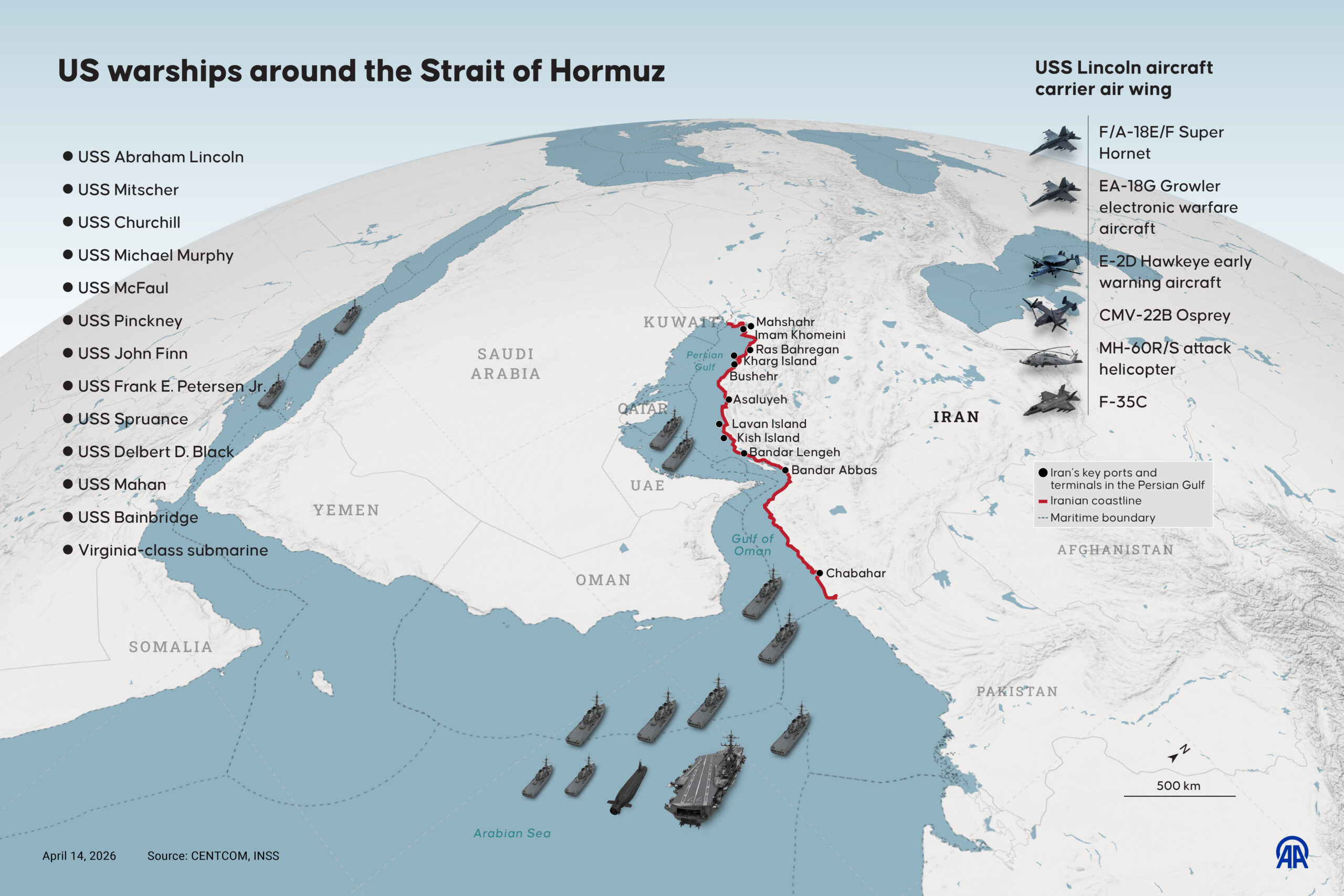
Trump’s recent decision to blockade it is portrayed as a callous maneuver, yet it facilitates a central pillar of Washington’s strategy to contain China, long seen as the primary threat to the U.S.-led international order.
As the world’s largest oil importer with roughly half its crude and a third of its LNG passing through the Strait, a US naval blockade directly targets Beijing’s primary vulnerability: its extreme dependence on seaborne energy imports.
Beyond causing immediate supply shocks that threaten China’s industrial output, this energy inflation raises input costs for its manufacturing-heavy economy, ultimately slowing growth relative to the U.S., which is cementing its status as a net energy exporter.
As the Trump administration aims to decouple supply chains and protect domestic industries from Chinese competition, depriving Beijing of cheap hydrocarbons is a key strategy to thwart its regional primacy and global power projection.
Malacca Dilemma
US deterrence against China’s regional rise is not limited to the Strait of Hormuz.
Last week’s signing of the Major Defense Cooperation Partnership (MDCP) with Indonesia grants Washington critical surveillance and access near the Strait of Malacca, through which 80% of China’s oil imports flow.
Beyond defence, the deal seeks to reorder economic relations, reducing dependence on Chinese supply chains while nudging Jakarta toward U.S.-aligned standards for infrastructure, replacing Chinese contractors.
By expanding his strategic footprint and strengthening ties with a key ASEAN nation, Trump has secured significant leverage for upcoming talks with President Xi.
He will likely leverage the recent MDCP signing to force concessions in the South China Sea, exploiting Beijing’s “Malacca Dilemma” by threatening their energy supply lines and economic stability under the guise of maritime security.
Energy provider
Beyond curbing Beijing’s hegemonic ambitions, Trump has every incentive to fuel disruptions in the Strait of Hormuz, as the instability positions the U.S. as the primary energy alternative for European and Asian nations hit hardest by blockades.
As Middle Eastern supplies falter, U.S. LNG exports surged to 11.7 million metric tons in March 2026, with Europe absorbing 64% of that volume. To cement this market capture and consolidate energy leverage over its allies, the U.S. is set to add 3.5 billion cubic feet of daily LNG capacity by year-end, paving the way for record-breaking export volumes.
The economic windfalls are clear: U.S. LNG sellers are raking in tens of millions per cargo and will leverage this crisis to lock in long-term contracts during supply shocks, ensuring their expanded capacity remains utilized for decades. Even as Europe pivots to renewables, American exporters will be jockeying to cement the U.S. shale industry as a vital, long-term energy supplier.
Currently, America’s struggle to remain a consistent net exporter of energy stems from a mismatch between domestic production and refinery capabilities.
The light, sweet oil produced via fracking is ill-suited for older American refineries designed for the heavy, sour crude imported from the Middle East, Canada, and Venezuela.
Because upgrading this infrastructure is costly and time-consuming, US companies often find it more profitable to export high-quality light oil while importing cheaper heavy crude tailored to their machinery. Furthermore, due to a lack of pipeline connections between central US oil fields and both coasts, it is often cheaper to ship oil from overseas than to transport it across the country.
In its bid to remain a net energy exporter, the US may capitalize on Middle Eastern shipping disruptions by expanding LNG capacity and investing in Gulf Coast refinery upgrades to process domestic light, sweet oil.
Furthermore, by accelerating pipeline and export terminal construction, the US aims to move interior energy to the coast. With the Strait of Hormuz threatened, a Trump administration would likely waste no time seizing market share by tapping the Strategic Petroleum Reserve (SPR) and anchoring Canadian heavy crude to US facilities to ensure a steady supply that bypasses regional chokepoints.
Although Trump’s Strait of Hormuz policy risks global recession, rising consumer costs at home, and damage to US manufacturing, he remains convinced the US can better withstand short-term economic shocks compared to its adversaries and is betting on this approach to solidify the US as a dominant energy player in the Atlantic Basin.
Israel
America’s partner in crime also has strategic incentives for sustaining the collapsing maritime traffic in the Strait of Hormuz, as Israel envisions a future as the primary alternative gateway for global energy and trade to secure its ambition of becoming a regional superpower.
During the 2023 UN General Assembly, Netanyahu spoke about a “New Middle East” which would inaugurate an unprecedented era of diplomacy and regional normalisation with Gulf states through the expansion of the Abraham Accords. This vision seeks a collective Arab-Israeli front against Iran and its proxies, while connecting Europe, the Middle East, and India via the IMEC (India-Middle East-Europe Economic Corridor) trade corridor.
The diplomatic impasse at the Strait of Hormuz, coupled with threats to the Bab al-Mandeb, has created an urgent global need to bypass Iranian-controlled chokepoints. In this scenario, multi-modal networks like IMEC can transform Israel into a strategic hub connecting the Indian Ocean to the Mediterranean, marking Tel Aviv’s entry into the scramble for Eurasia and directly challenging Egypt’s monopoly over transcontinental trade.
A functional Eilat-Ashkelon energy corridor would transform Israel into a central node in the global energy system.
By rerouting trade through Israeli ports, this pipeline would neutralise competitors, sideline Iran, and offer a strategic alternative to the Suez, granting Israel unprecedented leverage over maritime traffic and fundamentally altering regional energy geopolitics.
Furthermore, with IMEC explicitly framed as a competitive alternative to China’s BRI, the US will be a chief stakeholder, hoping to prevent nations from becoming solely dependent on Chinese-built infrastructure.
Multipolarity
While there may be a method to Trump’s approach, there is also a possibility that the U.S. strategy to blockade the Strait of Hormuz could backfire by accelerating a multipolar world, weakening the petrodollar and empowering alternatives like the petroyuan.
Prolonged disruptions risk forcing Asian and European nations into bilateral energy deals, undermining America’s role as a global security guarantor and paving the way for a new, China-aligned security architecture.
Moreover, this shift could compel Israel to hedge against the U.S., leveraging a multipolar reality to move beyond its status as a Washington protectorate, even as both nations maintain current tensions as part of a broader strategic calculus.