

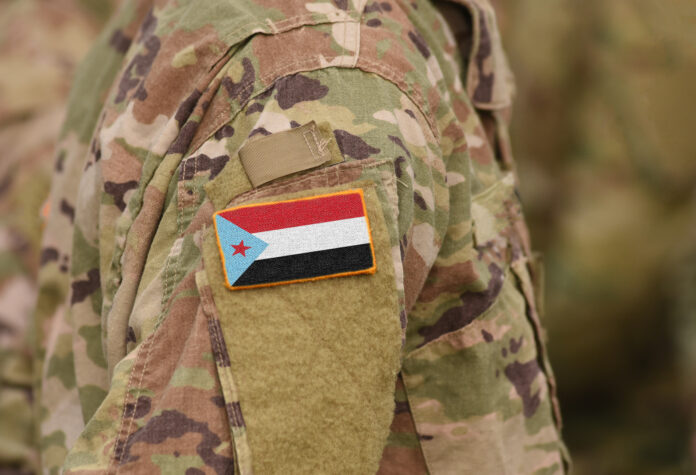
Saudi Arabia and the UAE look set to face off in south Yemen after Saudi jets strike UAE-backed southern separatist forces amid the groups major territorial grab throughout the Hadhramaut region.
Southern Yemen is facing a new surge in political and military tension after southern separatists accused Saudi Arabia of launching air attacks, deepening divisions in the Arabian Gulf.
Recent days have seen a sharp escalation between Yemen’s Southern Transitional Council (STC) and Saudi Arabia, a country that has long backed forces fighting against the Houthi AnsarAllah movement, which controls the north.
The STC claimed Saudi warplanes targeted its allied Hadhrami Elite forces in eastern Hadramout province, following a brief but intensifying confrontation over control of the territory and its resources.
According to the STC, the air attacks took place in the Wadi Nahb area, with strikes reported at 8am and again at 9:15am.

The strikes came shortly after Saudi Arabia publicly urged the STC to withdraw from Hadramout and al-Mahra, two eastern provinces seized by the separatists earlier this month, adding that Saudi-backed forces would confront the STC if they failed to comply.
The Saudi-led coalition in Yemen warned on Saturday that it would immediately respond to any military movements by separatists backed by the United Arab Emirates that undermine de-escalation efforts in the southern region of Yemen, as the United States urged diplomacy.
Subscribe to our newsletter and stay updated on the latest news and updates from around the Muslim world!
“Any military movements that violate these efforts will be dealt with directly and immediately in order to protect civilian lives and ensure the success of restoring calm,” said Brig. Gen. Turki al-Maliki, a coalition spokesman, according to the Saudi Press Agency.
Al-Maliki also accused the Southern Transitional Council, or STC, separatists of “serious and horrific human rights violations against civilians,” without providing evidence.
U.S. Secretary of State Marco Rubio said in a statement on Saturday that his country was “concerned by recent events in southeastern Yemen” and urged restraint and diplomacy to reach “a lasting solution.” He also expressed gratitude “for the diplomatic leadership of our partners, the Kingdom of Saudi Arabia and the United Arab Emirates.”
Rising tensions
Yemen, engulfed in a civil war for more than a decade, sits divided as the Iran-aided Houthis control much of the northern regions, while a Saudi-UAE-backed coalition supports the internationally recognised government in the south.
However, the UAE also aids southern separatists who call for South Yemen to secede once again from Yemen.
Their advance has given them control over nearly half of Yemen’s territory, including oil-producing regions that border Saudi Arabia and Oman.
The move is seen as the UAE’s bid to ditch the coalition and position its STC proxy as the most important player in the south. Saudi and their UN-recognised government are now largely pushed out of significants unless they can mount some sort of fight back to reestablish control of the south.
Although Saudi Arabia has bombed Yemen many times in recent years, Saudi strikes have targeted the north and Houthi-run areas. The strike on STC positions in south Yemen is the first of its kind, laying the ground for a possible proxy fight between Saudi and UAE-backed forces.
Yemen has traditionally been seen by Riyadh as a key region in its sphere of influence, however, the Houthi takeover in 2014 and the UAE’s separatist advances have seen Saudi’s influence vastly reduced, much to Riyadhs frustration.
Deadly power struggle
Experts say Yemen is now facing a three-way competition for control between the Houthis in the north, the Saudi-backed internationally recognised government based in Aden, and the STC in the south and east.
This rivalry threatens to undo the fragile calm that followed a UN-brokered truce in 2022.
Yemen’s civil war began in 2014 when the Houthis seized Sanaa, prompting a Saudi-led intervention the following year.
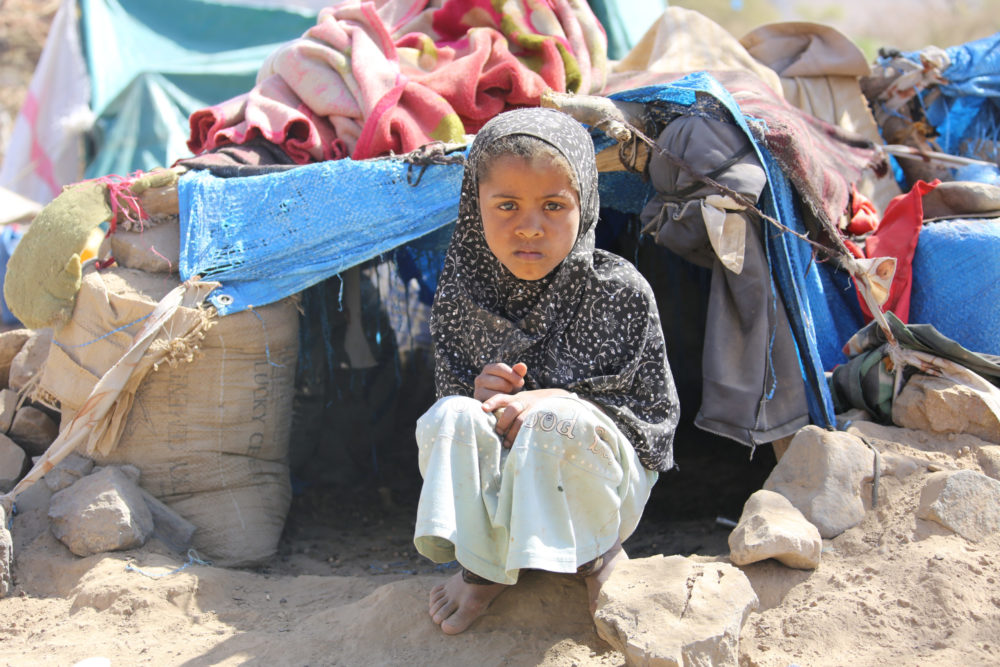
Years of fighting have killed hundreds of thousands and created a severe humanitarian crisis. While large-scale combat has eased, the latest separatist advances have completely changed the country’s political landscape, raising fears that the conflict could once again intensify.
Israel’s recent bid to recognise a breakaway territory in Somalia known as Somaliland has also been speculated as a potential base for future Israeli interference or aggression in Yemen.
Yemen’s Houthis attacked Israel numerous times over the past two years in support of Gaza amid the genocide. Israel struggled to retaliate due to the distance and lack of intelligence on Yemen. However, Somaliland could be an idea launchpad for future attacks or espionage on Yemen.