


A Turkish Islamic charity has launched a global fundraising campaign aimed at countering Islamophobia and supporting new Muslims, as millions of international visitors pass through Istanbul each year.
KİM Vakfı, also known as the Centre for Cross Cultural Communication, has launched the campaign on LaunchGood to expand its long-running educational outreach at some of Türkiye’s most visited Islamic heritage sites.
Istanbul is one of the world’s most visited cities, attracting tens of millions of tourists annually. For many visitors from Europe, North America and elsewhere, it is their first direct encounter with Islamic history, culture and practising Muslim communities.
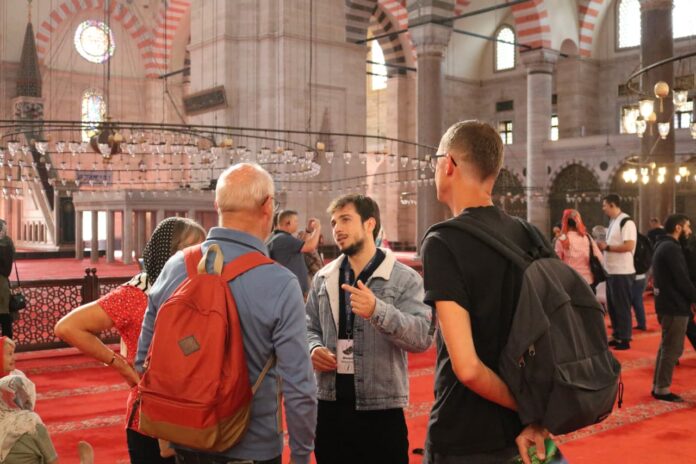
KİM Vakfı said it uses this setting to address misconceptions about Islam through face-to-face conversations, guided cultural tours and educational materials delivered by trained volunteers. The organisation said its approach is non-coercive and focused on dialogue rather than debate.
According to the charity, it engages with around 50,000 non-Muslim visitors each year across major heritage sites in Türkiye, offering accessible explanations of Islamic beliefs, history and values for international audiences.

New Muslim support
A central part of the initiative is the New Muslim Care programme, which supports individuals who choose to explore Islam further following these interactions. The programme provides structured learning, mentoring and assistance with community integration, particularly for those returning to countries where Muslim communities may be small or socially marginalised.
Subscribe to our newsletter and stay updated on the latest news and updates from around the Muslim world!
Ubaidullah Tanrıöver, the organisation’s general director, said dozens of people each month formally embrace Islam after engaging with KİM Vakfı volunteers. He said many require guidance and reassurance after taking their Shahada, adding that the programme aims to ensure they are not left without support at a critical point in their lives.
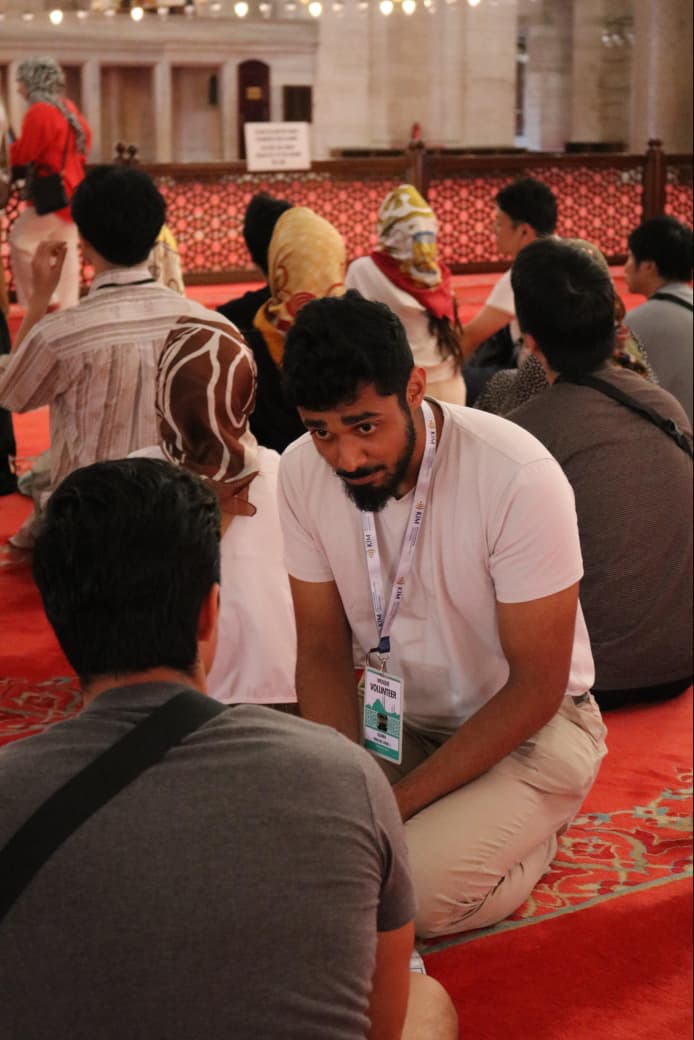 The programme also seeks to help participants develop the confidence to explain their faith clearly in their home countries, where public understanding of Islam may be limited.
Mustafa Karaca, president of KİM Vakfı, described Islamophobia as a global issue driven largely by misinformation. He said fear often stems from a lack of knowledge, and that the organisation’s work focuses on replacing stereotypes with understanding through education and engagement.
Ahmet Söylemez, the charity’s social media coordinator, said volunteers frequently encounter visitors who arrive with negative assumptions about Islam. He said some visitors believe Islam is oppressive or extremist, but leave with a more nuanced understanding even if they do not convert.
Fatih Özkan, a long-time volunteer, said interest from Western visitors has increased since October 7, following Israel’s war on Gaza. He said some visitors have expressed a desire to understand the beliefs and values that sustain Palestinians during the conflict, leading to broader questions about Islam and Muslim communities.
Participants in the New Muslim Care programme have reported similar experiences. Luqman, from the Czech Republic, said the programme helped him navigate the early stages of his life as a Muslim. Elizabeth, from Germany, said it gave her confidence to represent Islam positively within her local community. Camila, from Bolivia, said the experience helped her find a new sense of direction.
KİM Vakfı said the LaunchGood campaign would help sustain its existing work and allow it to expand internationally, supporting more new Muslims and engaging wider audiences. The charity has appealed to individuals and community groups to support what it described as a practical effort to reduce prejudice and encourage informed engagement with Islam.
Founded more than 16 years ago, KİM Vakfı is a Türkiye-based non-profit organisation working in education, humanitarian assistance and community outreach. The organisation said it operates with a focus on transparency, ethical governance and constructive social engagement.