



Two Bangladeshi youths were shot dead on Friday after crossing into Indian territory near the India–Bangladesh border, incidents that once again raise concerns over the use of lethal force by Indians along the sensitive frontier.
The killings occurred around noon near the Damdama border area in Companiganj, a rural sub-district of Sylhet in northeastern Bangladesh, according to Bangladeshi border guards and police officials.
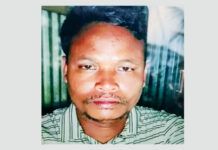
The victims were identified as Mohammad Ashiqur Rahman, 19, and Mosaid Ali, 22, residents of Purbo Turung village, a border community where many families depend on informal cross-border activities linked to forests and orchards for survival.
Bangladesh’s Border Guard Bangladesh (BGB) said the incident took place approximately 1.5 kilometres inside Indian territory, in an area dotted with betel nut plantations owned by members of the indigenous Khasi community.
Bangladeshi officials said the two youths were shot in separate circumstances inside Indian territory.

According to Border Guard Bangladesh (BGB) and local authorities, Ashiqur Rahman was shot by armed Khasi guards while collecting firewood inside India, and his body was later brought back to Bangladesh by local residents.
Mosaid Ali, meanwhile, was shot by India’s Border Security Force (BSF) in the Radne area, close to the international boundary. His body remains in the custody of Indian authorities at a BSF camp in Toka, Bangladeshi officials said.
Subscribe to our newsletter and stay updated on the latest news and updates from around the Muslim world!
Lt Col Nazmul Islam, commanding officer of BGB’s 48 Battalion in Sylhet, said initial information suggested both youths had crossed the border in search of basic livelihood opportunities.
“They were inside Indian territory collecting forest produce and betel nuts when the shooting occurred,” he told reporters. “One was shot by local guards, while the other was fired upon by the BSF.”
Bangladeshi police said Ashiqur died at the scene, while Mosaid was critically wounded and later succumbed to his injuries.
Officer-in-Charge Shafiqul Islam of Companiganj Police Station said Mosaid was brought back across the border in an injured condition and taken to Companiganj Upazila Health Complex, a government-run hospital, where doctors declared him dead.
Both bodies were later sent to MAG Osmani Medical College Hospital in Sylhet for post-mortem examinations. Police said a case would be filed in connection with the deaths.
Indian authorities had not issued any public statement addressing the shooting or clarifying the circumstances under which lethal force was used.
Bangladeshi officials said they were in contact with the BSF to secure the repatriation of Mosaid’s body, which remains at the BSF’s Toka camp inside India.
A heavily guarded but deadly border
The India–Bangladesh border stretches more than 4,000 kilometres (2485 miles) and is one of the longest and most heavily guarded land borders in the world.
Despite fencing, surveillance systems and regular patrols, villagers living along the frontier frequently cross informally to collect firewood, graze cattle or harvest betel nuts — locally known as supari — a key cash crop in the region.
Human rights organisations have long criticised India’s border enforcement practices, accusing the BSF of using excessive and often lethal force against unarmed Bangladeshi civilians accused of trespassing or smuggling.
According to Ain o Salish Kendra (ASK) a leading Bangladeshi human rights and legal aid organisation established in 1986, at least 28 Bangladeshis were killed in border-related violence involving Indian border forces and Indian citizens between January and November this year.
Rights groups say many of those killed were engaged in routine livelihood activities rather than organised criminal operations.
Dhaka has repeatedly raised the issue with New Delhi through diplomatic channels, urging restraint and calling for non-lethal measures in border management.
Bangladesh and India maintain close diplomatic ties, and both governments have previously pledged to bring border deaths to zero. However, incidents such as Friday’s shooting continue to test those commitments.
Bangladeshi officials said they were seeking clarification from Indian counterparts and stressed the need for a transparent investigation into the use of force.
As of Friday night, authorities on both sides of the border were holding meetings to coordinate the return of the remaining body and prevent further escalation in the area.