


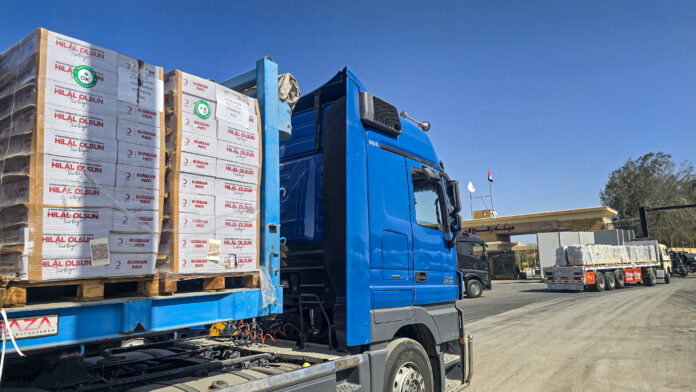
The Gaza Government Media Office announced on Tuesday that only 986 aid trucks carrying humanitarian aid have entered Gaza, much lower than the number agreed under the ceasefire.
According to phase one of the agreed ceasefire deal, a total of 6,600 aid trucks were meant to enter the Gaza Strip.
However, the media office said that only 986 have entered the besieged enclave since the ceasefire took effect.
The 6,600 trucks were supposed to have entered by Monday 20 October, 10 days after the ceasefire was officially agreed to by Hamas and Israel.
According to the statement by the media office, since the ceasefire took effect, the average number of trucks that have entered Gaza has not exceeded 89, despite the 600 trucks that are supposed to enter each day.

“This reflects the continuation of the Israeli occupation’s policy of suffocation, starvation, and humanitarian blackmail imposed on more than 2.4 million residents in Gaza,” said the statement.
Closure of border crossings
Subscribe to our newsletter and stay updated on the latest news and updates from around the Muslim world!
The World Food Programme (WFP) said that food deliveries to Gaza have increased since the ceasefire, but still remain far below the agency’s target of 2,000 tonnes per day.
They stated that the limited access through the border crossings, particularly the Rafah Border Crossing, has massively hindered their efforts to reach people facing hunger and starvation, especially in the north of Gaza.
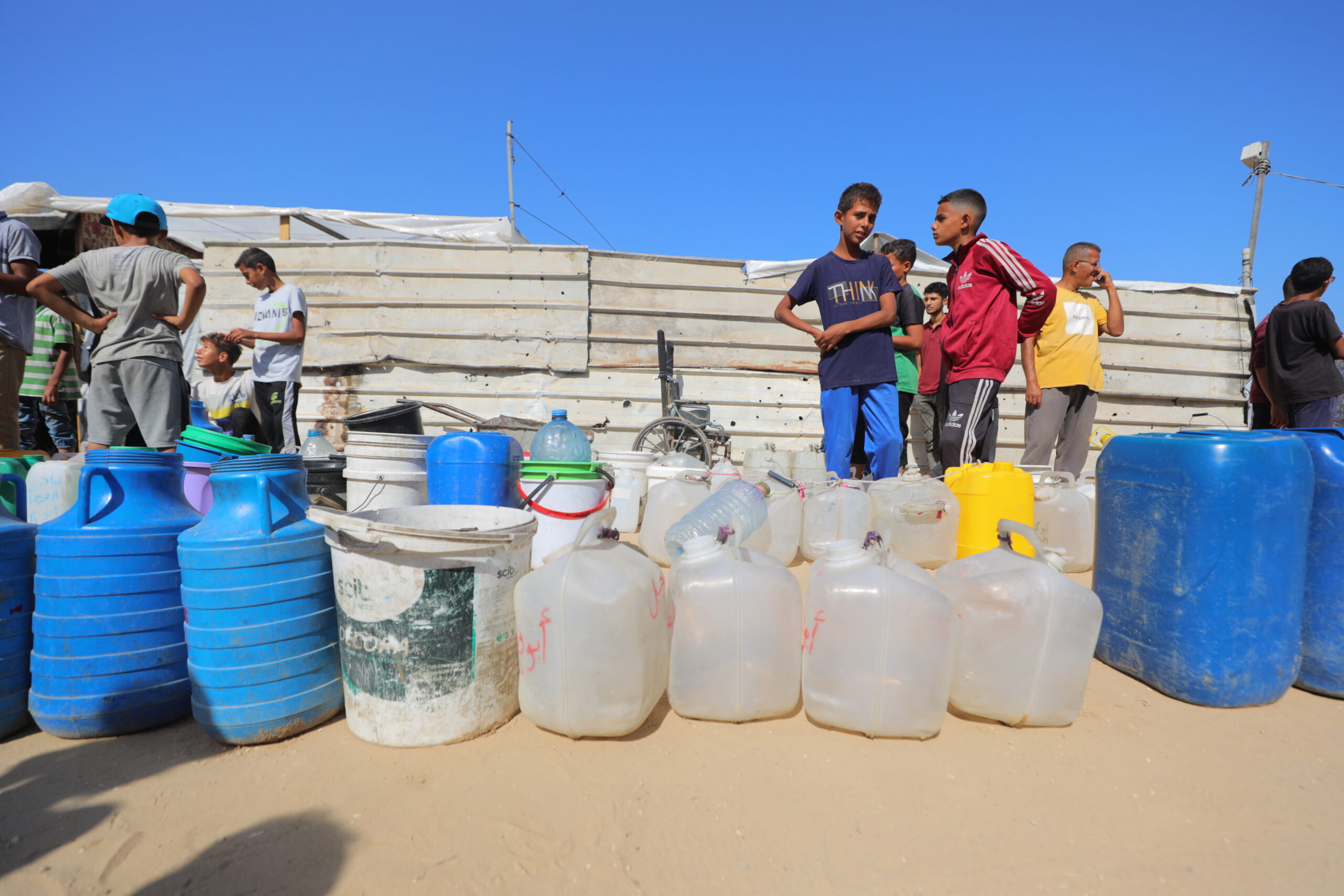
Currently, the WFP spokesperson Abeer Etefa, said that around 6,700 tonnes of food has entered Gaza, only enough to feed half a million people for two weeks.
Authorities in Gaza have stressed that the situation remains dire in the strip, and that these limited quantities are well below the essential needs of the people, who are “in urgent and dire need of the immediate and consistent entry of at least 600 aid trucks daily”.
The statement continued, adding that the aid needed included “food, medical supplies, relief materials, operational fuel, and cooking gas, to secure the basic necessities of life with dignity”.
The WFP currently only has 26 active distribution points but has a target of reaching 145 if conditions allow.
Etefa highlighted the growing needs of “women, elderly people, and female-headed households”, which remain priorities in the distribution of the already scarce aid.
Despite this, pregnant women, nursing mothers, and malnourished children are still not receiving enough aid, with supplies being extremely limited.
UNRWA
Market prices are slowly starting to decrease after inflation skyrocketed during the two-year genocide, but food remains largely out of reach for most people as prices remain extremely expensive.

The UN humanitarian chief, Tom Fletcher, has urged Israel to open more border crossings for the entry of vital humanitarian aid.
He said: “We need more crossings open and a genuine, practical, problem-solving approach to removing remaining obstacles.
“Throughout this crisis, we have insisted that withholding aid from civilians is not a bargaining chip. Facilitation of aid is a legal obligation.”
The United Nations Relief and Works Agency (UNRWA) – the largest organisation providing aid to Palestinians – has faced severe restrictions by Israel.
The agency, which is responsible for the delivery of aid, says it has enough food aid in its warehouses in Jordan and Egypt to supply the entirety of Gaza for three months.
However, despite the ceasefire, Israeli authorities have continued to block them from entering Gaza for over seven months now.
As of early October, at least 463 people, including 157 children, have died from starvation due to Israel’s blockade on the Gaza Strip.
The death toll in Gaza has also continued to rise as Israel has committed over 80 violations of the ceasefire since October 10, according to Palestinian media. Nearly 100 Palestinians have been killed and over 230 injured, showing just how fragile the ceasefire is.
This adds to the more than 70,000 Palestinians who have been killed in Gaza during Israel two-year genocide by Israel