


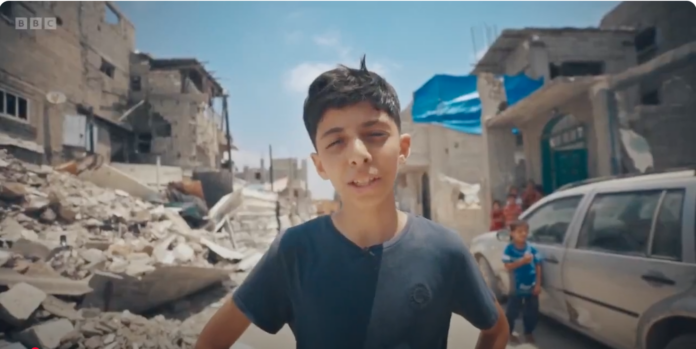
The UK broadcasting regulator Ofcom has found the BBC guilty of a “serious breach” of broadcasting rules after it failed to disclose that the narrator of its Gaza documentary, Gaza: How to Survive a Warzone, was the son of a Hamas official.
The ruling marks the first time the broadcaster has been sanctioned and ordered to issue an on-air apology since 2009.
The media regulator concluded that the BBC’s omission was “materially misleading.” Ofcom said the failure to disclose the narrator’s family link meant viewers lacked “critical information which may have been highly relevant to their assessment of the narrator and the information he provided.”
“Trust is at the heart of the relationship between a broadcaster and its audience, particularly for a public service broadcaster such as the BBC,” Ofcom said. “This failing had the potential to erode the significantly high levels of trust that audiences would have placed in a BBC factual programme about the Israel-Gaza war.”
The regulator added that misleading the audience is “among the most serious” breaches that can be committed by a broadcaster.

BBC accepts responsibility
The BBC said: “The Ofcom ruling is in line with the findings of Peter Johnston’s review, that there was a significant failing in the documentary in relation to the BBC’s Editorial Guidelines on accuracy, which reflects Rule 2.2 of Ofcom’s Broadcasting Code.
Subscribe to our newsletter and stay updated on the latest news and updates from around the Muslim world!
“We have apologised for this, and we accept Ofcom’s decision in full. We will comply with the sanction as soon as the date and wording are finalised.”
The documentary was removed from iPlayer in February after the boy’s family links emerged.
The BBC told the Ofcom investigation it had “publicly acknowledged a serious breach in its own editorial standards”, and had “undertaken to implement a series of measures to ensure future compliance with its own standards and those of the Ofcom Code.”
In July, an internal review carried out by the BBC’s director of editorial complaints and reviews, Peter Johnston, found that the programme breached the corporation’s editorial guidelines on accuracy.
The BBC’s internal review found that three members of the production company knew of the father’s position in the Hamas-run government in Gaza, but no-one within the BBC knew this prior to broadcast. It criticised the BBC’s own team for not being “sufficiently proactive” with initial editorial checks, and for a “lack of critical oversight of unanswered or partially answered questions” ahead of broadcast.
The review also said it had seen no evidence “to support the suggestion that the narrator’s father or family influenced the content of the programme in any way.”
Ofcom’s broader concerns
Ofcom’s report said the narrator “occupied a unique and prominent position in the programme, acting as a trusted guide to viewers.”
“Given the highly contested context of the Israel-Gaza war and the narrator’s central role as the editorial voice of the programme and trusted guide to the viewer, we considered the omission of important information about his familial connection to the Hamas administration to be very problematic.”
It added: “Had viewers been made aware of this information, they may have evaluated the commentary provided by the narrator in a substantially different manner.”

Ofcom said it was “clear that the BBC held editorial responsibility for the programme as broadcast.”
“We considered the BBC’s failure to carry out rigorous compliance checks and provide adequate editorial oversight of a documentary detailing the experiences of Palestinian people living through a highly contentious conflict resulted in a serious omission, which had the clear potential to mislead viewers”, they concluded.
Production company response
HOYO Films, the independent production company that made the documentary for the BBC, said it takes Ofcom’s findings “extremely seriously and [we] apologise for the mistake that resulted in a breach of its code.”
“We are pleased that the ruling was in line with Peter Johnston’s review, which found that there was no inappropriate influence on the content by any third party, it was impartial, fairly edited and all payments were legitimate.”
The company added that the documentary “remains a vital account” of the Gaza conflict, and that the contributors “deserve to have their voices heard.”
Ofcom has ordered the BBC to broadcast a prime-time statement of its findings on BBC Two at 10pm (BST), with a date to be confirmed. It is the first time the BBC has been ordered to make an on-air apology since the Jonathan Ross and Russell Brand incident in 2009.