Afghan and Pakistani forces traded heavy fire along the border last night as tensions escalated following an airstrike on Kabul, which Pakistan has remained silent on.
Afghanistan has said nine of their soldiers were killed in overnight border clashes with Pakistan following an airstrike on the Afghan capital earlier this week. The Pakistan Army have confirmed that 23 of their soldiers were killed in the skirmishes.
Heavy cross-border shelling and artillery were used in the escalation, merely a day after Afghan officials accused Pakistan of violating its airspace and carrying out an airstrike. On Thursday night, a market in the Margha region of the Paktika province bordering Pakistan was bombed.
Islamabad has neither confirmed nor denied the Islamic Emirate’s claims that they were behind the airstrike, but stated that it will do whatever is necessary to protect its citizens following a recent surge in terrorist attacks linked to the Tehreek-i-Taliban Pakistan (TTP).
TTP is a Pashtun militant group with strong ties to Afghanistan that operates along the Afghan–Pakistan border. Pakistan has outlawed them as a terrorist group, and have accused Kabul of failing to prevent TTP from carrying out attacks in Pakistan – allegations which Afghanistan has denied.

Zabihullah Mujahid, the spokesman of the Islamic Emirate of Afghanistan, said a “significant amount” of Pakistani weapons fell into the hands of Afghan forces following the clashes, according to Afghanistan’s TOLO News agency.
Mujahid also said that nine Afghan soldiers were killed in the operations and a further dozen were injured. According to Mujahid, more than 20 security posts belonging to Pakistan were taken over by Afghan forces.
Subscribe to our newsletter and stay updated on the latest news and updates from around the Muslim world!
Border tensions reach highest in years
The overnight border clashes mark the most serious escalation of tensions between the two neighbouring countries in recent years.
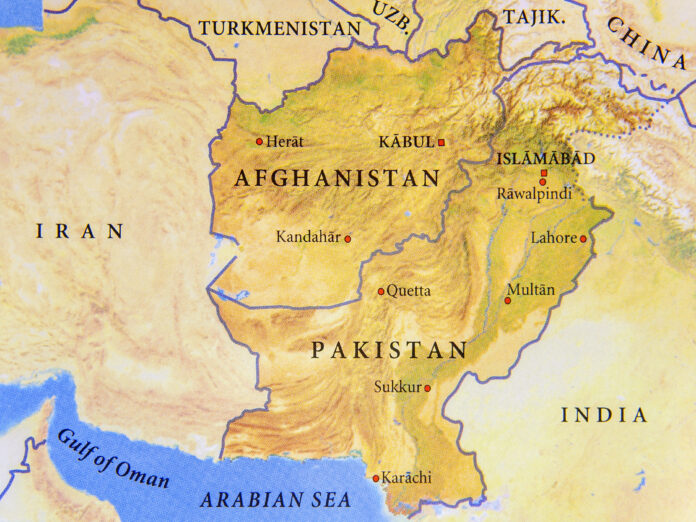
Heavy artillery fire was reported across the eastern border provinces of Afghanistan, including Khost, Nangarhar, Paktika, Paktia, and Kunar — the province recently hit by a devastating 5.2 magnitude earthquake.
A statement released by the Defence Ministry in Kabul concluded that its attacks were launched “in response to repeated violations of Afghanistan’s airspace and airstrikes carried out on Afghan territory by the Pakistani military.”
Afghan forces “conducted successful retaliatory operations targeting Pakistani security outposts along the Durand Line. These operations concluded at midnight (local time),” the statement added.
Foreign intervention halts the clashes
Mujahid went on to say that Afghan forces halted their operations at the request of Saudi Arabia, Qatar, and several other Arab Muslim leaders who urged the two countries to restrain themselves.
Saudi Arabia has recently signed a close defensive alliance with Pakistan, and thus led the diplomatic efforts to stop the clashes between the two sides.

“The Kingdom [of Saudi Arabia] calls for restraint, avoiding escalation, and embracing dialogue and wisdom to contribute to reducing tensions and maintaining security and stability in the region,” a Saudi Foreign Ministry statement said.
Neighbouring Iran also commented on the clashes, with Foreign Minister Abbas Araghchi urging the two sides to show “restraint”, adding that “stability” between the countries “contributes to regional stability”.
Qatar also urged both sides to prioritise dialogue, diplomacy, and work on containing their differences in a manner that de-escalates tensions.
Recent Indian-Afghan diplomatic meeting
The recent tensions coincide with Afghan Foreign Minister Mawlawi Amir Khan Muttaqi’s trip to India to meet his counterpart, Subrahmanyam Jaishankar.

Muttaqi and Jaishankar released a joint statement, with the latter expressing “his deep appreciation to Afghanistan for its strong condemnation” of the Pahalgam attack this April in Indian occupied Kashmir. The attack left 26 dead and ensued with four days of military escalation between India and Pakistan.
However, Islamabad raised “strong reservations” over the statement on Saturday, a day before the airstrike took place on Kabul. Pakistan’s Foreign Minister said: “The reference to Jammu and Kashmir as part of India is in clear violation of the relevant UN Security Council resolutions and the legal status of Jammu and Kashmir.”
Historic tensions over the Durand Line
Pakistan and Afghanistan share a 2,640 km (1,640 miles) border, drawn up by the then Foreign Secretary of British India, Sir Mortimer Durand, in 1893 – known as the “Durrand Line”.
The line has been a source of contention ever since it was drawn, as it cut right through the Pashtun tribal heartlands, dividing many of the tribes — with calls for “Pashtunistan” almost being realised following the 1947 Partition of British India.
Pakistan has recognised the official border between the two nations, which was formally imposed in 1947, while Afghanistan has firmly rejected it.
The Islamic Emirate of Afghanistan have refused to officially recognise the Durand Line as an official border to this day.