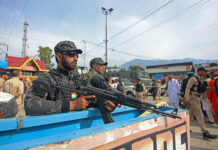




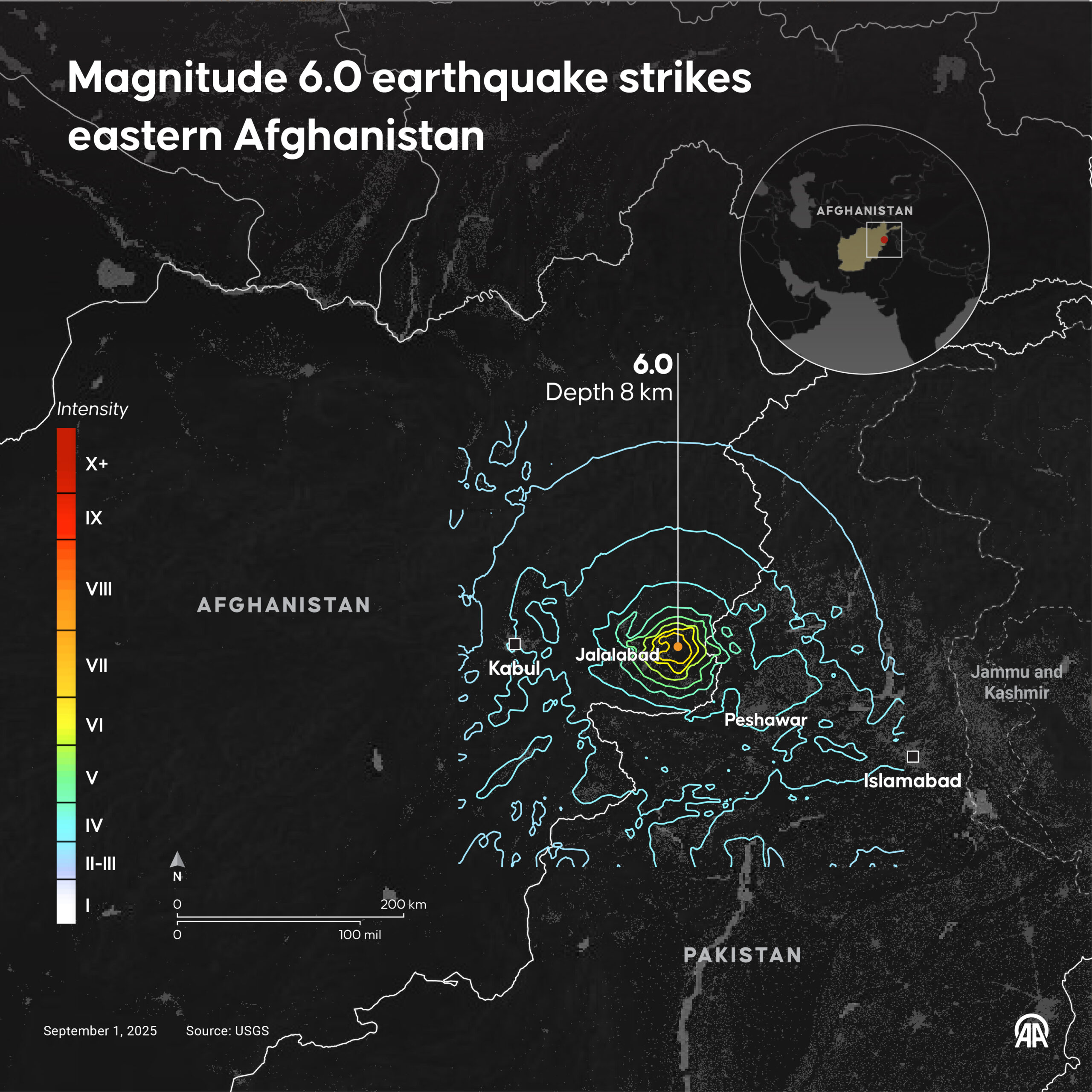
The death toll from a 6.0 magnitude earthquake that struck eastern Afghanistan on late Sunday has risen sharply to over 1,400.
Rescue operations have now entered their third day, following the devastating earthquake that hit on Sunday in Kunar province.
According to the Islamic Emirate of Afghanistan spokesman Zabihullah Mujahid, the worst-hit Kunar province alone reported 1,411 deaths, with 3,124 injured, and a further 5,412 houses destroyed.
The number of total people affected, however, could be in the hundreds of thousands.
Another IEA spokesperson said that relief supplies and humanitarian aid started arriving last night in the remote areas of the province.

The situation is being worsened by a fresh 5.2 magnitude earthquake that also struck on Tuesday, affecting the already devastated area merely 48 hours after the main shock.
Tuesday’s earthquake was also reportedly felt in neighbouring northwestern Pakistan.
Subscribe to our newsletter and stay updated on the latest news and updates from around the Muslim world!
Difficulty in delivering aid
Due to the mountainous terrain and damaged roads in Kunar province, humanitarian and governmental organisations are struggling to deliver aid, as well as bring much-needed rescue and relief teams into the area.
“We are sending relief goods by vehicles where possible, but in areas cut off by the earthquake, helicopters are being used to transport supplies and evacuate the injured to hospitals,” said an IEA official.
“Locals refused to leave because the bodies of their loved ones were still under the rubble. We then started distributing tents and other essential items,” the official added.
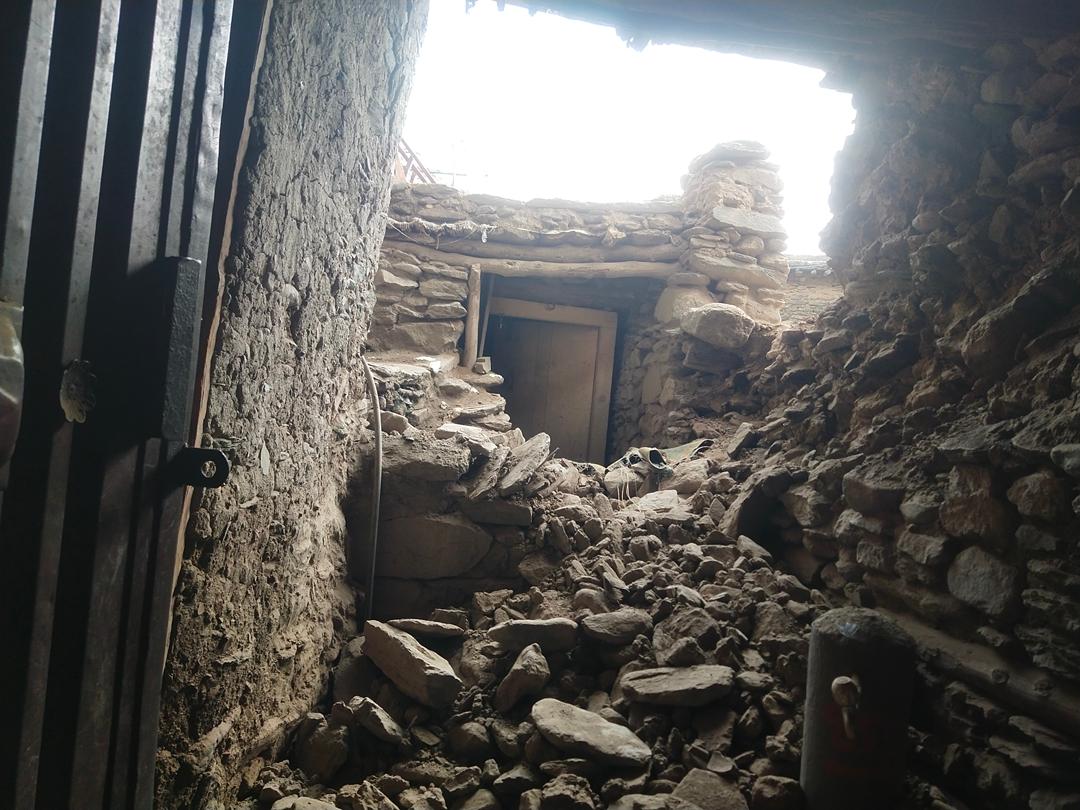
The level of destruction has been deemed catastrophic enough for numerous humanitarian agencies to state that the affected areas require urgent international support.
If not enough vital aid is delivered, they warn, the crisis can worsen rapidly.
The neighbouring nations of Pakistan, Iran, China and India, as well as other Western nations, have all agreed to send aid to Afghanistan.
‘A crisis within a crisis’
On Tuesday, UN Humanitarian Coordinator for Afghanistan, Indrika Ratwatte, said that the earthquake has hit Afghanistan at a time where they are already dealing with other crises.
“The impacted individuals could go up to almost into the hundreds of thousands,” Ratwatte said.
The death toll is yet to include data from the neighbouring three provinces which were also affected, Nangarhar, Laghman and Panjshir.
Once the relevant authorities share data, the death toll is expected to increase further.
“So, looking at the stats, looking at the remoteness and the topography, which is extremely challenging and remote, potentially the impacted individuals could go up to almost into the hundreds of thousands. So far, we know around 12,000 individuals have been directly impacted in these provinces,” Ratwatte said.
According to Ratwatte, the inhabitants of the provinces as a whole number around 3 million people, citing that it was quite high in density.
Ratwatte said that 20 emergency assessment teams have been deployed to affected areas.
However, the challenge of actually reaching the affected areas still remains, due to the damaged and limited roads of the remote province.
As of now, helicopters are being deemed as one of the only options for delivering aid, as aircrafts are unable to reach the area.
Looking at the wider context, Ratwatte described how the earthquake constituted a “crisis within a crisis.”
Just this year, we’ve had over 1.7 million Afghans returning from Iran and Pakistan. This year we’ve had a drought with very low rainfall, impacting 70% of the population. On top of that, devastating funding cuts for the humanitarian and basic assistance programs in this country,” she said.
The earthquake has hit at a time when already vulnerable communities are already dealing with external stressors.
This is the third major earthquake to hit Afghanistan since the Taliban returned to power in August of 2021.