



A large mob of Hindutva thugs armed with bamboo sticks stormed a Muslim-majority neighbourhood in India’s eastern state of Odisha, vandalising shops and vehicles in one of the city’s worst outbreaks of communal violence in years.
The attack took place on the evening of 6 October in Cuttack’s Dargah Bazaar, where the mob, many draped in saffron shawls went on a rampage, targeting the Muslim community.
Locals claim the mob were chanting “Jai Shree Ram” (a slogan increasingly used by Hindu nationalist groups during sectarian attacks) and shouting derogatory Islamophobic slogans.
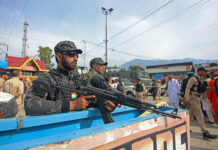
Police said at least 25 officers, including Deputy Commissioner of Police Khilari Rishikesh, were injured while trying to disperse the rampaging crowd.
In response to the unrest, a 36-hour curfew was imposed and internet services were suspended across the district from 5 October to 7 October.
Tensions began two days earlier during a Hindu durga idol immersion procession on 4 October. According to Muslim residents, participants stopped outside a local Sufi shrine, played loud music, passed lewd remarks at a Muslim girl, and urinated on the walls on the tomb. Stone-pelting followed, leaving five policemen injured.

Police arrested six men after reviewing CCTV footage, but Hindutva organisation Vishwa Hindu Parishad (VHP) later called a 12-hour strike, accusing police of failing to protect Hindus.
Subscribe to our newsletter and stay updated on the latest news and updates from around the Muslim world!
The next evening, a large Hindu mob entered Dargah Bazaar, where widespread vandalism took place.
The VHP, founded in 1964, is one of the key organisations within the Sangh Parivar, the Hindu nationalist family of groups led by the Rashtriya Swayamsevak Sangh (RSS). It is closely linked to the ruling Bharatiya Janata Party (BJP) and has long been accused of fomenting anti-Muslim violence, including its central role in the 1992 demolition of the Babri Masjid in Ayodhya.
At least 24 Muslim-owned businesses were set ablaze, alongside several food carts and vehicles. Residents said attackers deliberately targeted Muslim establishments while leaving Hindu shops untouched.
“I had closed my shop for lunch. When I came back, there was nothing left. The charred remains shook me to the core,” said Sohail, who lost property worth around 3 lakh rupees (£2,800).
“They looked for signs of religion – shops with ‘Om’ or ‘Jai Shree Ram’ written on them were not harmed,” said another trader.
Siddique, who ran a food cart, added: “That cart was the only way I could feed my family. They burnt it all. We had no role in the argument that broke out that day. What did we do to deserve this?”
Police used tear gas and batons to disperse the mob but many officers were chased and beaten. Six Muslims and eight Hindus were reportedly arrested.
Cuttack Police Commissionerate said: “The situation is under control. Offence reports have been registered and action will be taken against all miscreants involved.”
But activists accused the authorities of negligence. Dr Biswajit Gandhi of the Gandhi Peace Foundation said: “The police allowed the procession to enter the Muslim locality, where participants created a ruckus by urinating, attempting to damage religious structures, and provoking residents. This would not have happened if the police had stopped them earlier.”
He also accused the ruling BJP of encouraging sectarianism: “The authorities often act in favour of the majority community. Hate politics has played a major role in this attack.”
Odisha, where Muslims make up around 9% of the population, has historically seen fewer communal clashes than neighbouring states. But rights groups say incidents linked to Hindu nationalist organisations are increasing.
Across India, communal violence around religious processions has become more frequent under Prime Minister Narendra Modi’s government. Groups such as the VHP and Bajrang Dal are often accused of leading attacks in Muslim-majority neighbourhoods.
For many families in Cuttack, the violence has left lasting scars. “I feel unsafe as a Muslim. I have never seen something like this in my life,” said one resident.
Victims are now demanding compensation and justice, but with curfew restrictions easing, residents fear more unrest and say they have little faith that perpetrators will be held accountable.