


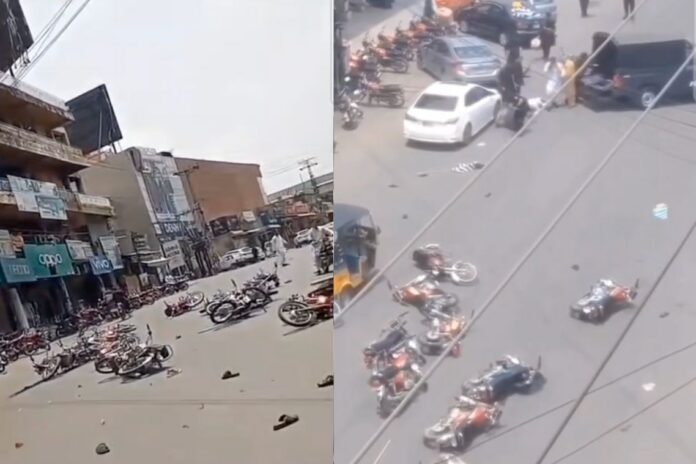
At least 24 people have been killed in two weeks of protests in Azad Jammu and Kashmir, as demonstrators clash with police over the political representation of Kashmiri refugees ahead of regional elections this month.
The violence and clashes came after protests broke out over the reservation of 12 legislative seats in Azad Kashmir’s 45-member Legislative Assembly that are reserved for refugees who migrated from Indian-occupied Kashmir to Pakistan.
Thousands of people marched towards the regional capital of Muzaffarabad as a result, expressing anger over the nearly quarter of assembly seats that are reserved for people living outside the territory.
The protests led the government to impose a shutdown on June 9, with officials saying at least 20 civilians were killed between June 6 and June 14, with over 100 injured in the violent clashes with police.
Four officers have also been killed and 525 people have been detained.

The violence and unrest erupted as a result of a protest planned by the Jammu Kashmir Joint Awami Action Committee (JAAC), a grassroots alliance of traders and civil society groups which was recently banned by the regional government under anti-terror legislation.
Thousands of the group’s supporters are camped on the outskirts of Rawalakot, about 62 miles (100km) south of the regional capital, Muzaffarabad.
Subscribe to our newsletter and stay updated on the latest news and updates from around the Muslim world!
Refugee representation controversy
The 12 seats which are reserved for Kashmiri refugees who do not live in Pakistani-administered Kashmir have been a contentious issue in the region.
The local elections, which are to be held on June 27, are being contested once again due to the fact that the rule effectively bars people living in Azad Kashmir from contesting the seats, which make up almost a quarter of the legislature.

The JAAC has called for the abolition of the reserved seats, arguing that they undermine local representation and that all seats should go to those who actually live inside the region.
The seats have existed for decades and are protected under the region’s constitutional framework, and a ruling by the Supreme Court of Azad Jammu and Kashmir has reinforced the fact that the seats are constitutionally protected and cannot be abolished.
The JAAC was banned earlier this month on June 5 under anti-terrorism laws, with authorities claiming that the group was “engaged in terrorism” and behaved “in a manner prejudicial to the peace and security of the state”.
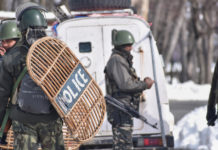
As a result, violent clashes erupted, with authorities accusing JAAC supporters of attacking police with firearms and petrol bombs.
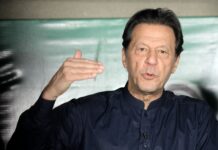
However, JAAC leader Shaukat Nawaz Mir differed in his account, instead accusing the authorities of carrying out a “massacre” against protesters.
“The state has begun a massacre of our people in Rawalakot,” Mir said in a video statement following the initial clashes two weeks ago.
Broader tensions over the years
The current unrest is built upon years of broader frustrations and tensions in the region.
Just last year there was another set of deadly clashes between security forces and the JAAC, which issued a list of 38 demands, of which 37 were accepted, but the issue of the refugee seats remains contested.
As the local legislative elections are scheduled to be held in a few days on June 27, the government has responded by shutting off main roads, blocking the internet, and restricting media access.
Locals are also reporting difficulty resuming their day-to-day lives, with complaints about accessing crucial supplies such as groceries and medicine.
“I have been searching for medicine everywhere, but I cannot find it. Even big stores are closed,” 64-year-old Muzaffarabad resident Muhammad Masqeen told AFP.
“For eight days, we have been going through very difficult times. Markets are closed, and there is very little to eat except vegetables,” said Sabar Hussain, 60.
As tensions continue to rise over the elections, authorities have shown no sign of easing restrictions or security measures, with additional forces deployed and further restrictions imposed in several areas as demonstrations are expected to continue.