



Lebanese armed group Hezbollah mourns for its slain leader Hassan Nasrallah one year after his assassination as the U.S. and Israel ramp up demands for the group’s disarmament, risking Lebanon’s plunge into a new and brutal civil war, reports Kamal Al Shami.
Lebanon’s Shia Muslims commemorated the one-year anniversary of Nasrallah’s death this week, with thousands of Hezbollah supporters gathering in Beirut and the Shia-majority south but the memorial came as the Lebanese government and army advanced unprecedented plans to disarm the armed group, raising fears of renewed conflict.
Hezbollah are an Iran-backed group which fought against Israel throughout 2024 amid the ongoing genocide in Gaza.
However, after Israel landed some substantial blows on the group, including decapitating its senior leadership, Hezbollah agreed to a ceasefire in November despite the fact Israel’s war on Gaza remains ongoing.
The decision was seen by many as Hezbollah pulling away from the fight due to the severe damage the group had sustained. Now, Beirut’s new U.S.-backed President is testing the waters for disarmament, a move the prominent Lebanese group continues to resist.
Nasrallah’s legacy and assassination
Nasrallah, who became Hezbollah’s Secretary General in 1992 after the killing of his predecessor, Abbas al-Musawi (also by Israel), was himself killed in September 2024 when Israeli airstrikes struck a Hezbollah complex deep underground in Beirut’s southern suburbs.
Subscribe to our newsletter and stay updated on the latest news and updates from around the Muslim world!

The attack, part of a wider escalation following Hezbollah’s entry into the Gaza war, butchered the movement’s senior leadership. Even his heir apparent, Hashem Safieddine, was killed by Israel just weeks later.
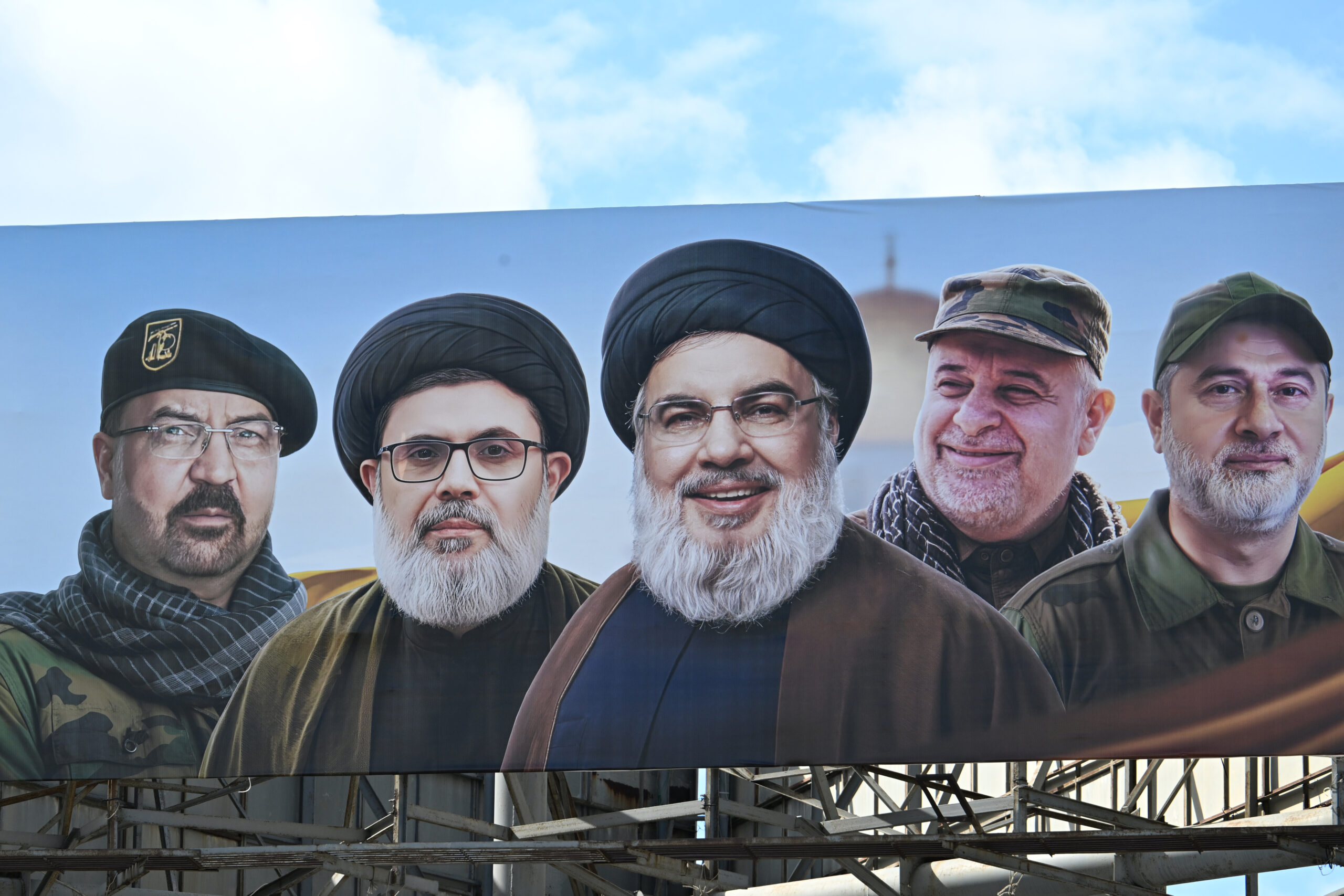
The assassination shook Lebanon. For more than three decades, Nasrallah had been the face of Hezbollah, Lebanon’s most powerful armed and political group.
Known for fiery speeches, Nasrallah transforming the Shia group from a mere militia into a powerful political and military actor, capable of playing kingmaker in Lebanese elections and waging wars on Israel.
Nasrallah’s leadership bound Hezbollah even more closely to Iran as he rose to become one of the region most famous figures and a major leader within the Iranian-led “Axis of Resistance.”
Israeli strikes continued after his death, with more than 4,000 Lebanese killed, including hundreds of children.
Israel justified its actions as targeting Hezbollah and its weapons depots, but the devastation left swathes of the country and its civilian infrastructure in ruins.
The one-year memorial
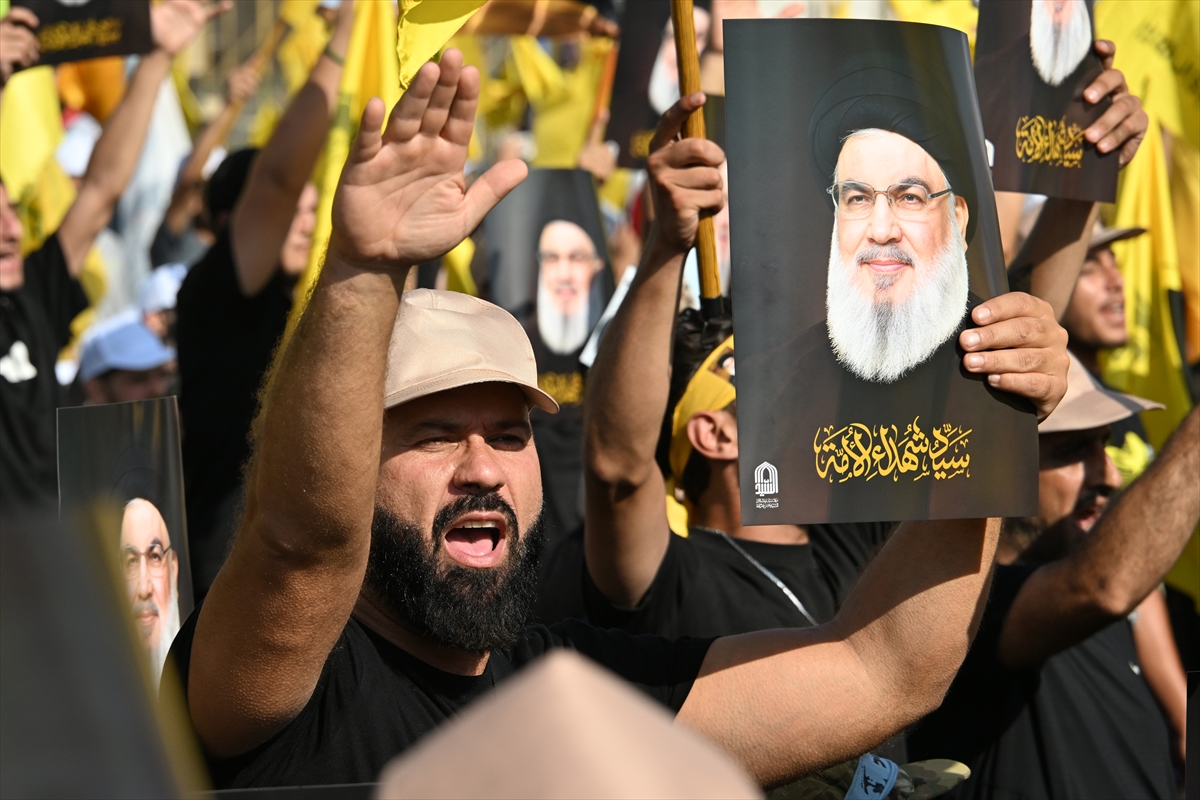
On Saturday, Hezbollah marked the first anniversary of Nasrallah’s killing with commemorations across Lebanon. Large crowds gathered in Beirut’s southern suburbs and in strongholds in the south and east of Lebanon.
Hezbollah projected Nasrallah and Safieddine’s portraits onto Beirut’s coastal cliffs in defiance of Prime Minister Nawaf Salam’s orders, angering opponents who accused the group of politicising public spaces.
The incumbent Secretary General Naim Qassem, delivered a speech warning that the movement would never disarm. He framed the confrontation with Israel as existential and insisted that Hezbollah remained capable of resistance.
The memorial coincided with Lebanon’s most serious attempt yet to dismantle Hezbollah’s military wing.
Earlier this month, the Lebanese army submitted a plan to the cabinet to bring all weapons under state control.
Information Minister Paul Morcos confirmed the cabinet welcomed the plan but kept details confidential. Prime Minister Salam said the army would report monthly on progress.
The disarmament plan followed heavy American and regional pressure. U.S. envoys Tom Barrack and Morgan Ortagus engaged in shuttle diplomacy, seeking a framework that links Hezbollah’s disarmament to Israeli withdrawal from positions in southern Lebanon.
Five ministers from Hezbollah and its ally Amal – another Shia political faction in Lebanon – withdrew from the cabinet session in protest, underscoring the fragility of the government’s consensus.
Risk of conflict
Despite suffering severe losses during the war with Israel, Hezbollah remains Lebanon’s most powerful armed group, with tens of thousands of fighters and deep support among the Shiite community.
The group insists it will not disarm while Israeli forces occupy Lebanese territory. Qassem has warned that any attempt to implement what he called an “American-Israeli order” risks civil war.
Supporters argue Hezbollah’s weapons are essential to defend Lebanon against Israel while critics say the group has dragged the country into destructive wars and undermined state sovereignty on the behest of Iran.
Maronite Patriarch Bechara Boutros al-Rahi accused Hezbollah of submitting Lebanon to “Iranian diktats” and urged reliance on the Lebanese army instead.
The United States welcomed the Lebanese army’s plan, stressing that Beirut’s credibility depends on translating principle into practice. Washington has also pledged continued support to the army, which remains heavily reliant on foreign aid.
Israel has demanded Hezbollah’s full disarmament and signalled it would prefer the Lebanese army to carry out the task.
Israeli Prime Minister Benjamin Netanyahu said Israel would coordinate a phased withdrawal from southern Lebanon but only if Hezbollah disarms. Israel has continued to attack Lebanon on countless occassion since the 2024 ceasefire was agreed. The attacks have been condemned by Lebanon as a severe violation to the deal but to little impact.
Iran, meanwhile, has vowed Hezbollah will “never be disarmed” and reaffirmed its readiness to support the armed group. The Lebanese foreign minister criticised Tehran’s position as a violation of Lebanese sovereignty.
European states have called for full implementation of U.N. Security Council resolutions requiring the disarmament of militias. The U.K. reiterated its support for the Lebanese Armed Forces “as the only legitimate military force in Lebanon.”
Hezbollah, like Hamas in Gaza, is a designated terror group in many western countries including the UK, making the political situation incredibly complicated to navigate between the various sides.
Conclusion
The Lebanese Armed Forces, with around 60,000 personnel, face enormous challenges.
The lack of arms and resources, reliance on U.S. and Gulf funding, and a constant struggle to even pay salaries amid the country’s economic collapse hampers the LAF from ever amounting to more than just armed street security. By contrast, Hezbollah retains thousands of trained and ideologically driven fighters and a sizeable arsenal which includes drones and long-range missiles.
Analysts warn that any forced disarmament could reignite sectarian conflict in Lebanon. Some propose gradual integration of Hezbollah fighters into the army, but this would carry heavy economic costs and face heavy resistance.
Parliamentary elections in 2026 may determine whether disarmament proceeds. A strong showing by Hezbollah and its allies could stall the process. For now, the movement insists Nasrallah’s legacy demands continued resistance, not surrender.
The first anniversary of Nasrallah’s death revealed the deep rift in Lebanon. For Hezbollah and its supporters, the commemoration was an act of defiance and a pledge to continue armed struggle but for the government and its international partners, it marked a pivotal reminder to restore state monopoly.
Whether Lebanon can navigate these opposing visions without sliding into renewed internal strife remains uncertain.