


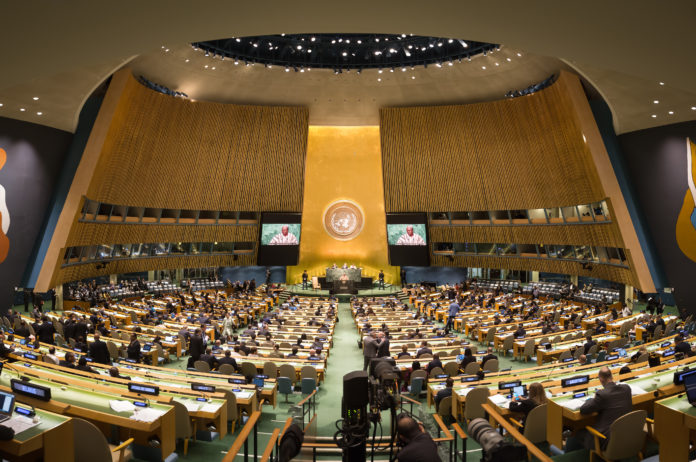
Jahangir Mohammed of the Ayaan Institute argues that the United Nations has devolved into a theatre of grandstanding, where world leaders deliver impassioned speeches that amount to little more than hot air.
The annual gatherings at the UN General Assembly, with their carefully crafted statements and diplomatic posturing, have become a hollow ritual, particularly when it comes to addressing the most pressing moral crises of our time.
Nowhere is this failure more glaring than in the face of an ongoing genocide unfolding before their eyes — a tragedy that leaves millions sickened, traumatised, and disillusioned with the inaction of global powers.
Blowing hot air
The leaders of the Muslim-majority world and Global South, often vocal in their criticism of Western hegemony, are not immune to this critique. Their fiery rhetoric, frequently aimed at the United States and Israel, resonates with many who feel the weight of historical injustices. Yet these words ring hollow when unaccompanied by meaningful action.

Slating the U.S. or Israel in speeches does nothing to alleviate the suffering of those caught in the crosshairs of violence. The question must be asked: is there an unwritten law that binds nations to inaction unless the U.S. gives its approval? If so, are these countries not merely prisoners of a U.S.-dominated global order, despite their claims of sovereignty and moral authority?
The duty to act in the face of genocide is not contingent on UN consensus or the blessing of a superpower. International law, including the 1948 Genocide Convention, places an obligation on every state to prevent and punish such atrocities. This responsibility is individual, not collective, and does not require a Security Council resolution or a nod from Washington.
Subscribe to our newsletter and stay updated on the latest news and updates from around the Muslim world!
Collective action
History offers a stark reminder of what collective action can achieve: when the Nazis committed crimes against humanity, the world united militarily to stop them. The Allied forces did not wait for bureaucratic approval or endless debates; they acted decisively to halt a moral catastrophe. Why, then, do we see such paralysis today?
The current suffering and genocide in Gaza is not a distant or abstract issue — it is a visceral reality broadcast across screens worldwide, searing itself into the conscience of ordinary people.
From the streets of London to the villages of the Global South, citizens feel a profound sense of helplessness and outrage. Yet the leaders of Muslim nations — as well as major powers like China and Russia — continue to trade with the perpetrators of this violence, offering little beyond condemnatory soundbites. This inaction is not just a failure of leadership; it is a betrayal of the very principles these nations claim to uphold.
To these leaders, I say: spare us the slogans and empty gestures. If you are unwilling or unable to act to stop this genocide, then step aside and let the Palestinian people fight for their survival and dignity.
Do not pretend to care with words while their homes are destroyed, their families torn apart, and their futures erased. The hypocrisy of feigned concern is as damaging as the violence itself, for it undermines the hope of those who look to the international community for justice.
The UN, with its lofty ideals, was meant to be a force for good — a platform to prevent atrocities and uphold human rights. Yet it has become a stage for performative diplomacy, where leaders posture for domestic audiences while the world burns.
If the nations of the world, particularly those who claim to champion the oppressed, cannot muster the courage to act, they must at least allow those under siege to defend themselves. To do otherwise is to perpetuate a cycle of suffering and complicity.
The time for words has passed — put up or shut up, and stop Israel’s genocide in Gaza.