



Six people were killed in a shooting by Palestinian gunmen in occupied East Jerusalem, Israeli authorities confirmed today, as violence surged across Palestinian territories under occupation.
Paramedics reported at least 12 others injured, including six in serious condition, after gunfire erupted at Ramot Junction in the morning hours.
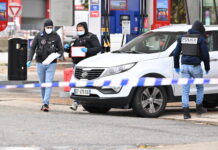
The Israeli police described the incident as a suspected “terror attack.” According to officials, two perpetrators arrived in a vehicle and opened fire at a bus station. They were shot dead shortly afterwards by a security officer and a civilian.
Several people at the scene were also lightly injured by glass and received treatment immediately.
In the aftermath, Israeli forces swiftly sealed all checkpoints between East Jerusalem and the occupied West Bank. Army Radio reported that four Palestinian villages in the Jerusalem governorate, Qatana, Biddu, Beit Inan and Beit Duqu, were placed under a military cordon and raided by Israeli troops.

Reinforcements were dispatched to the wider Jerusalem area as part of what the military called a search for “accomplices.”

The shooting comes amid Israel’s ongoing military onslaught on Gaza, described by Palestinians and international observers as genocidal in scale.
Subscribe to our newsletter and stay updated on the latest news and updates from around the Muslim world!
At the same time, the occupied West Bank has faced intensifying crackdowns from both the army and armed settlers.
Analysts and Palestinian journalists warned that the East Jerusalem attack would trigger harsh collective punishment against West Bank residents, a measure Israel has often used in response to Palestinian operations.
Prime Minister Benjamin Netanyahu cancelled his scheduled corruption trial appearance due to what his office described as urgent security developments.
Both he and far-right National Security Minister Itamar Ben-Gvir visited the scene. Netanyahu declared: “We are in an intense war against terror on several fronts. I want to send condolences to the families of the dead and to the wounded. A pursuit and encirclement of the villages from which the terrorists came is under way”.
The Palestinian Authority (PA), seeking to distance itself from the incident, reiterated its long-standing rejection of targeting civilians. From Ramallah, the PA’s presidential office said it “denounces all forms of violence and terrorism regardless of their source.”
This stance highlighted the deep division among Palestinians over armed resistance versus political engagement under occupation.
By contrast, Palestinian armed factions hailed the attack as a justified act of defiance.
Hamas issued a statement calling the shooting “a natural response to the crimes of the occupation and the genocide it wages against our people.” The group argued that Israel’s plans to “occupy and destroy Gaza City and desecrate Al-Aqsa Mosque will not pass without punishment” and urged further attacks across occupied territory.
The al-Quds Brigades, the military wing of Palestinian Islamic Jihad, echoed the sentiment, describing the attack as “a natural and legitimate response to the ongoing crimes of the Zionist enemy.”
The events in East Jerusalem illustrate the intensifying cycle of violence and retaliation gripping the region.
For Palestinians, the attack underscores growing anger over the mass killing and destruction in Gaza, combined with constant harassment in the West Bank.
For Israelis, it represents a deadly escalation of insecurity within occupied Jerusalem itself.
Observers note that while the PA publicly condemns such shootings, groups like Hamas frame them as acts of resistance. The divergence reflects wider questions confronting Palestinians: whether liberation can be pursued through armed struggle, diplomacy, or a combination of both.