


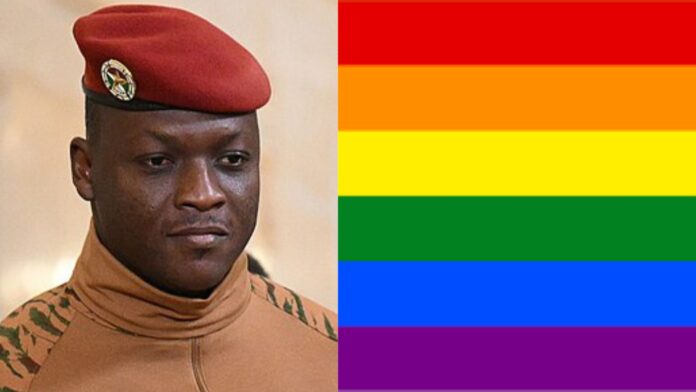
The Muslim-majority West African state of Burkina Faso has passed a law criminalising homosexuality, introducing prison sentences of up to five years alongside financial penalties.
The legislation was unanimously adopted on Monday by 71 unelected members of the transitional parliament and announced by Justice Minister Edasso Rodrigue Bayala on state broadcaster RTB.
He said those convicted of “homosexual or similar practices” would face two to five years in prison, as well as fines.
Bayala added that foreign nationals convicted under the law could also be deported.
The legislation is expected to come into effect immediately and, according to officials, forms part of a wider reform of family and citizenship laws that will be rolled out with a public awareness campaign.

The bill now awaits the formal signature of military leader Captain Ibrahim Traoré, who seized power after two coups in 2022.
Since then, the junta has pledged to stabilise the Sahel nation amid worsening insecurity.
Subscribe to our newsletter and stay updated on the latest news and updates from around the Muslim world!
Wider African trend
The move represents a major shift for Burkina Faso, which until now had been one of just 22 African states where same-sex relations were not criminalised.
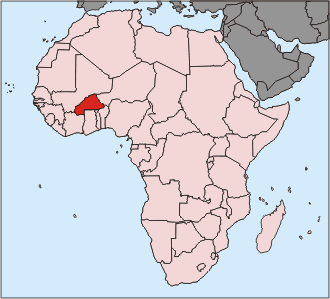
The country, which gained independence from France in 1960, did not inherit colonial-era anti-homosexuality laws, unlike many former British territories.
Burkina Faso remains a socially conservative and religious nation, with fewer than ten percent of the population identifying as non-religious.
Analysts say this environment has made the country more receptive to laws reflecting traditional and religious views on sexuality.
Neighbouring Mali, also ruled by a military junta, criminalised homosexuality in 2024. Ghana and Uganda have also toughened their laws in recent years, drawing widespread criticism from the West.
Christian-majority Uganda’s legislation is considered the harshest on the continent, introducing the death penalty for what it calls “aggravated homosexuality” and life sentences for consensual same-sex relations.
Ghana’s parliament passed a similar bill last year, though the then-president declined to sign it into law. Nigeria already enforces strict anti-homosexuality laws.
Western international institutions have reacted strongly. The World Bank suspended loans to Uganda after the adoption of its anti-LGBTQ law, although the ban has since been lifted.
Supporters of the law present it as a defence of cultural and religious values in a country facing insecurity and external pressure.
Officials have pledged to conduct awareness campaigns to familiarise citizens with the new measures.
The passage of the bill distances Burkina Faso further from Western-imposed human rights norms but draws it closer to regional allies such as Mali, with whom it has deepened ties in recent years.
Ibrahim Traoré
Captain Ibrahim Traoré has become a charismatic and youthful figurehead, often compared to Burkina Faso’s revolutionary leader Thomas Sankara for his anti-imperialist and Pan-African rhetoric.
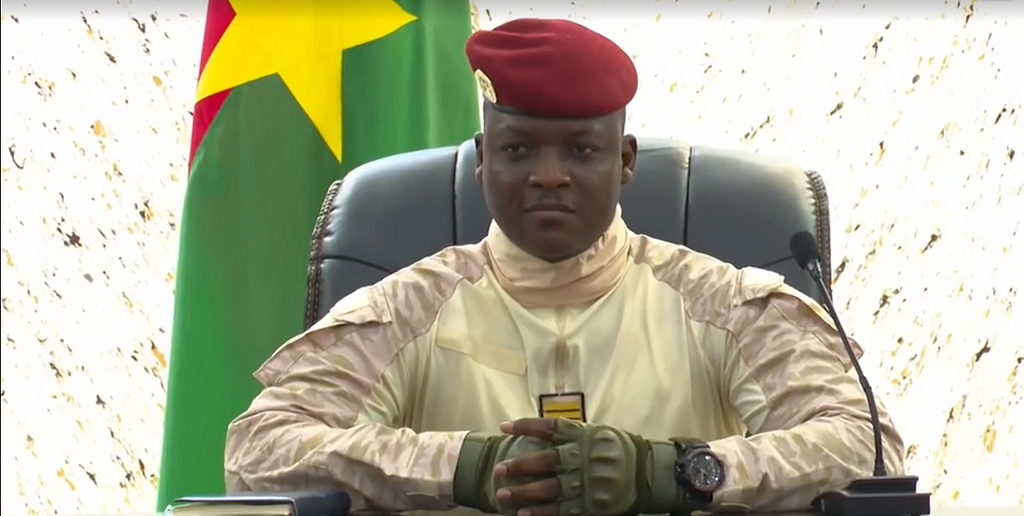
His anti-Western stance through expelling French troops, strengthening ties with Russia, and nationalising key resources has struck a chord with younger generations.
At the 2025 inauguration of Ghana’s president, Traoré received the loudest applause among 21 African heads of state, underscoring his regional appeal.
At home, his popularity rests on visible reforms. He reversed ministers’ pay rises while continuing to take only his captain’s salary.
He has redirected state revenues into national projects, and championed self-reliance.
Major initiatives include a national gold refinery, new roads, sanitation systems in regional cities, and the construction of the Ouagadougou-Donsin airport — flagship projects aimed at rebuilding infrastructure and asserting national sovereignty.