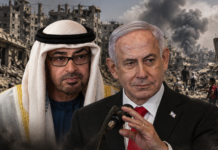



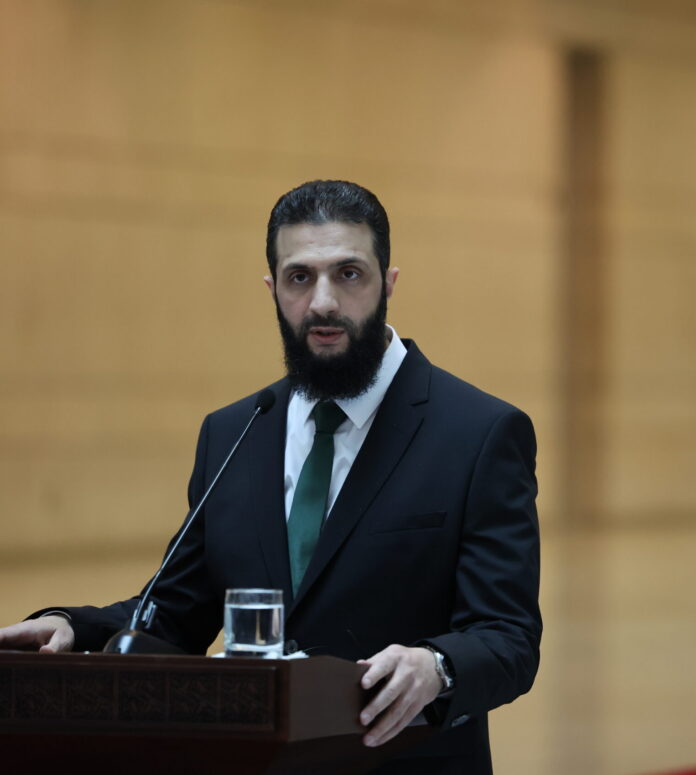
Syrian President Ahmad al-Sharaa has ruled out joining the Abraham Accords in the hopes of ending relentless speculation over Syria’s stance towards Israel and normalisation.
Saudi magazine Al-Majalla published the remarks by Al Sharaa which claimed that Syria’s approach is based on “zero problems” with neighbours, but stressed that normalisation with Israel is not on the table.
“The accords were signed with states that had no occupied land or direct conflicts with Israel. Syria’s situation is different, we have the Golan Heights under occupation,” he was quoted as saying.
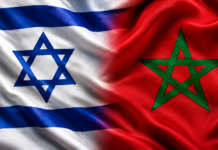
The Abraham Accords are a series of U.S.-brokered agreements signed during President Donald Trump’s first term in 2020 to normalise ties between Israel and Arab states.
The United Arab Emirates, Bahrain, Sudan, and Morocco have all signed up with Saudi Arabia rumoured to be close to agreeing before the 7 October 2023 attack on Israel which sparked the Hamas-Israel war.

The name of the accords was given in reference to the supposed common ancestor of the Jews and the Arabs, Prophet Abraham (Ibrahim) A.S., and as an expression of brotherhood.
Following the shock collapse of the former regime headed by Baathist dictator Bashar Al-Assad in 2024, rumours have swirled that the new leadership in Damascus may have been preparing to sign up to Trump’s Abraham Accords in exchange for sanctions relief and an end to Israeli aggression.
Subscribe to our newsletter and stay updated on the latest news and updates from around the Muslim world!
The comments from Al-Sharaa appeared to have been aimed at squashing these persistent rumours.

Editorial credit: noamgalai / Shutterstock.com
The Syrian leader said Damascus’ priority is to revive the 1974 UN-brokered Disengagement Agreement or a similar arrangement to stabilise southern Syria under international supervision.
Al-Sharaa also pointed to his upcoming appearance at the UN General Assembly in New York in September, the first by a Syrian president since 1967, describing it as a sign of Syria’s gradual reintegration into international diplomacy.
“This participation is itself a message Syria is no longer in isolation,” he said, noting that relations have opened in recent years with the US, Türkiye, Saudi Arabia, the UAE, Qatar, and European states.
He emphasised that Damascus is seeking regional stability rather than confrontation.
“Our strategy is to defuse tensions, resolve disputes and focus on reconstruction. Syria will not be dragged into wars,” he said.
Al-Sharaa stressed that the wider Middle East “needs a zero-problems approach,” arguing that the war in Syria had destabilised the entire region. He said Damascus now wants to project stability by improving its economy and offering a model of recovery.
The Syrian president said the formation of Syria’s new government carried a message to Lebanon, Iraq and others in the region: “I reject sectarian quotas. What we want is participation and shared responsibility in governing the country, and above all the promotion of citizenship.”
Assad, Syria’s leader for nearly 25 years, fled to Russia last December, ending the Baath Party regime which had been in power since 1963. A new transitional administration led by Al-Sharaa was formed in January.
Continued Israeli aggression
On Tuesday, Syria condemned the recent Israeli assaults on its territory, affirming its right to defend its land and people by all means guaranteed under international law.
In a statement, the Syrian Foreign Ministry said one person was killed in Israeli shelling of the village of Tranja in southwestern Syria, decrying Israel’s “arrest campaigns against civilians in the town of Suwayseh, and their continued illegal deployment in Mount Hermon (Jabal al-Sheikh) and the buffer zone.”
“These aggressive practices represent a flagrant violation of the UN Charter, international law, and relevant Security Council resolutions, and constitute a direct threat to peace and security in the region,” it said.
The ministry called on the international community, particularly the UN Security Council, to “take urgent action to put an end to these ongoing violations.”

Throughout August, the Israeli army carried out four incursions into Quneitra province in southwestern Syria, the latest taking place early Tuesday when one person was killed. After the fall of Assad, Israel has expanded its occupation of the Syrian Golan Heights by seizing the demilitarised buffer zone, a move that violated the 1974 Disengagement Agreement with Syria.
Protests have been witnessed across Syria as locals urge their leadership to take harsher action in fending off Israeli aggression and to recover lost Syria territory.
Al-Sharaa is faced with a delicate balancing act as he attempts to reunite and rebuild a deeply divide country, find a way to keep Israel at bay while not sparking a new war and maintaining good relations with the West.
Saudi Arabia also denounced Israel’s ongoing incursions into Syria’s territory, calling it flagrant violation of its sovereignty and international law.
A Foreign Ministry statement said that Saudi Arabia “expresses its strong condemnation and denunciation of the continued Israeli violations, its incursion into Syrian territory, and its interference in its internal affairs.”