



A Uyghur witness to China’s concentration camps, who died under mysterious circumstances in Bosnia, was forcibly buried in an atheist cemetery, despite being a devout Muslim.
Ehmetjan Ehet, a 42-year-old Uyghur, died in May in Sarajevo University Clinical Centre in Bosnia, in what global Uyghur activists are labelling “suspicious circumstances.”
It is believed that Ehmetjan passed away from an infectious disease after returning from working in Africa for several months.
Ehet had worked as a teacher and guardian in China’s internment camps in the Uyghur homeland (referred to by China as “Xinjiang”) between 2016 and 2021. He later fled to Turkey in 2023 and sought refuge in Europe.
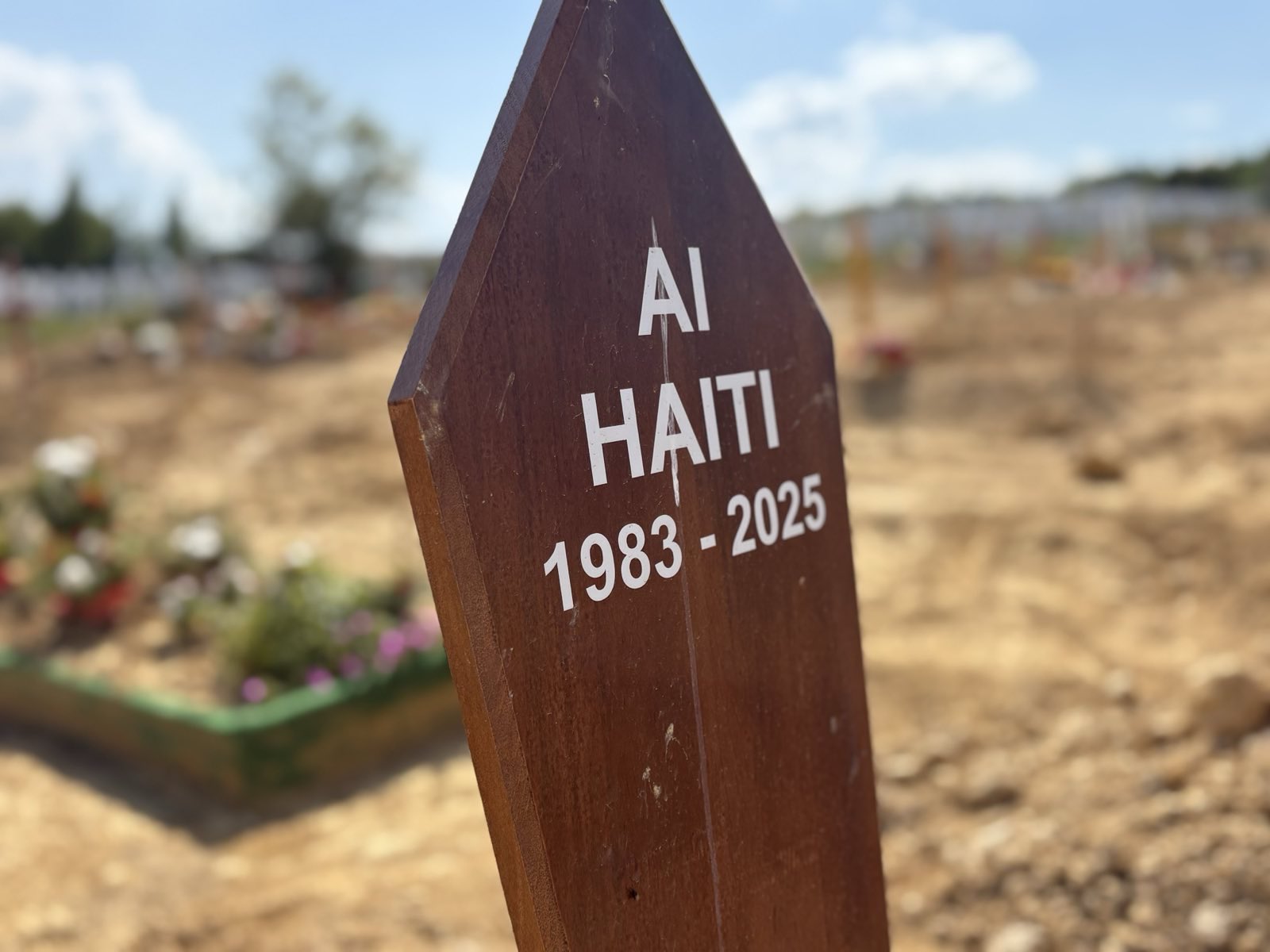
He was buried 70 days later on 8 August in Sarajevo’s Vlakovo cemetery in the designated “atheist” section, despite being an ethnic Uyghur Muslim.
The Chinese Embassy refused to do anything with his body for over 70 days, even denying The World Uyghur Congress’s requests to bury Ehet’s body according to Islamic practices.
China has been known to manipulate the burials of Uyghur Muslims by cremating the bodies of those who die within their concentration camps, and abroad, which is completely contrary to Islamic traditions.
Subscribe to our newsletter and stay updated on the latest news and updates from around the Muslim world!

After various enquiries into the death of Ehet from humanitarian groups, the Chinese Embassy in Sarajevo confirmed that “Mr. Ai. Haiti died of illness in Sarajevo,” using Ehet’s Chinese-registered name.
Ehmetjan Ehet was buried under his Chinese name, Ai Haiti, in an atheist plot, without any prior consultation to his friends or family.
Ehet’s journey and the Uyghur’s suffering
His friend, Abduweli Ayup, an outspoken Uyghur activist, described Ehet’s journey from a coerced system enforcer to a whistleblower who sought freedom and asylum from China.
Ayup told Bosnian media outlet N1 that Ehet was forced into working in two camps within Chinese occupied Xinjiang as an auxiliary police officer.
This was a position specifically created to deal with the mass arrests of Uyghur’s and other Turkic Muslims under China’s 2014 “Strike Hard Campaign Against Violent Terrorism.”
This campaign has been known to facilitate crimes against humanity, specifically aimed at the Turkic Muslim population of Xingjiang.
Stanford Law School’s Human Rights & Conflict Resolution Clinic, Human Rights Watch, and various other groups have produced reports on the issue of human rights abuses against China’s Uyghur minority.
It is estimated that millions of Uyghurs and other Muslims have passed through these camps, where torture, forced labour, political indoctrination, and other human rights abuses allegedly occur.
Ehet had reportedly shared a lot of the insider details with his friend Ayup, despite the great risks that Uyghurs face in doing so.
As an activist based in Norway, Ayup documented these exact stories of Uyghur escapees and makes them public to help raise awareness of the persecution.
Ehet managed to leave China in 2023 via Uzbekistan after securing a passport in Chengdu, a task that is made deliberately harder for Chinese Uyghurs.
He then found his way to Türkiye, where he changed his name and identity with the hope of escaping China’s surveillance.
“He told me he just wanted to live somewhere without the shadow of the Chinese Communist Party,” Ayup said. “But even in death, he’s not free from their reach.”
Ehet had testified in November of 2023 at an Uyghur human rights hearing in the Czech parliament, however, due to fear of repercussions for his family still in China, he refused to be recorded or identified.
Despite this, he was still denied asylum in Czechia, thus forced to return to Türkiye.
In April 2025, he found himself in Bosnia, hoping once again to seek asylum in Europe, only for this to be his final resting place.
“He wanted peace. He wanted freedom,” Ayup said. “And now, not even death has given him either.”
The denial of burial for Uyghur citizens from China
Abduweli Ayup told Radio Slobodna Evropa the difficulties Uyghurs face even in their own burial rites.
“The manner of burial shows a policy against its own Uyghur citizens. The Chinese communist government does not respect the Uyghurs and their religion while they are alive, they do not allow them to be buried as Muslims after death. They not only humiliate the Uyghurs while they are alive, while they are in China, but they do the same outside of China, even in a country where Muslims also live,” he said.
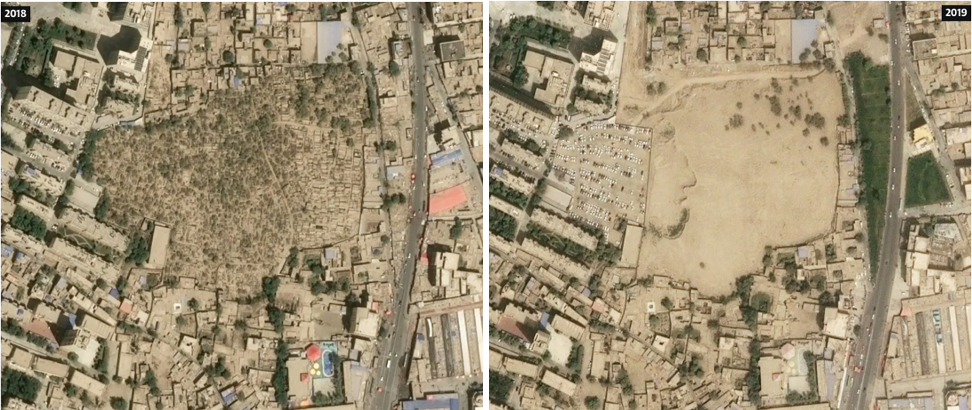
AFP journalists reported finding fragments of human bones and piles of demolished tombstones.
Worldwide Uyghur activists have condemned these actions as a conceited effort to erase the identity of the Uyghurs, amongst other Turkic ethnic groups, by China’s leadership.
According to AFP’s investigation and use of satellite imagery, dozens of cemeteries have been destroyed.
Ehmetjan Ehet’s death tells a story of how far-reaching the Uyghur’s oppression is with many never escaping Chinese communist grip, even in death.