


Syria and Israel held direct talks in Paris this week, discussing de-escalation and non-interference amid continuing violence in southern Syria and Israeli airstrikes.
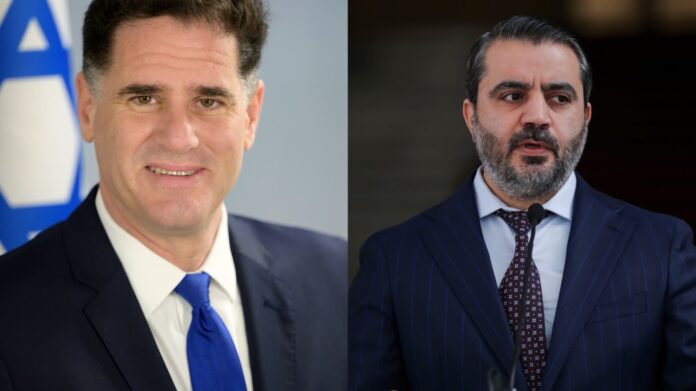
Syria’s foreign minister Asaad al-Shaibani met Israeli officials in Paris on Tuesday under U.S. mediation. According to Syrian state media SANA, the agenda included easing tensions and preserving Syrian sovereignty.
The talks mark another round of quiet diplomacy following Bashar al-Assad’s fall, as well as highlighting Washington’s efforts to shape regional security dynamics.
It was the latest in a series of discreet contacts facilitated by the U.S. The meetings have focused on avoiding escalation in Syria and preventing wider conflict across the region.

Officials also discussed reviving the 1974 disengagement agreement, which established a UN-monitored buffer in the Golan Heights, though Israel has occupied the territory since 1967.

After the collapse of Assad’s government last December, Israel declared the 1974 deal void and expanded military activity into Syrian territory, citing security threats from Hezbollah and Iran.
There was no immediate statement from Israeli officials about the Paris meeting, but Israeli media reported that Minister of Strategic Affairs Ron Dermer attended alongside U.S. envoy Tom Barrack.
Subscribe to our newsletter and stay updated on the latest news and updates from around the Muslim world!
The Paris talks followed another meeting between Shaibani and Dermer in Azerbaijan last month. Analysts have said that the frequency of such contacts signals the Trump administration’s push for regional de-escalation.
Druze militias
Violence in the southern province of Sweida has intensified the urgency of the talks. Clashes erupted in July between Druze factions, Bedouin tribes and government forces, leaving more than 1,400 people dead.
Israel launched airstrikes on Sweida and Damascus during the unrest. Israel framed their military aggression as “protecting” the Druze minority, but Israel has been widely accused of exploiting sectarian divisions to occupy more Syrian territory.
A U.S.-brokered truce was announced on July 18, but questions remain over whether it can deliver lasting stability in Syria’s fractured south.
Syria’s new government has struggled to consolidate authority since the downfall of Bashar al-Assad on 8 December, 2024. President Ahmed al-Sharaa has faced ongoing challenges from sectarian militias, Assad loyalist networks, and the Kurdish Syrian Democratic Forces (SDF) in the east.
Sectarian violence has since spread to other regions. In March, attacks by Assad loyalists in Latakia triggered revenge killings against Alawis, the sect from which Assad belongs to.
Observers say the violence underlines how fragile Syria remains even after Assad’s toppling.
Israeli violations
Israel, meanwhile, continues to strike Syrian territory. Last month, Israeli jets targeted the presidential palace and military headquarters in Damascus.
Officials justified the assault as a pre-emptive strike against Hezbollah positions.

Despite these attacks, Washington insists that its mediation aims to reduce violence.
U.S. officials have repeatedly stated their goal is preserving Syria’s unity while safeguarding Israel’s security concerns.
The Paris meeting therefore reflects both convergence and contradiction. On one hand, it shows Syria and Israel engaging diplomatically, while in reality, Israel continues to bomb Syria with impunity.
Analysts argue that the negotiations are less about reconciliation than about managing conflict. Both sides remain formally at war with no peace treaty since 1948.
Yet, the discussions also reflect shifting realities after Assad’s fall. With power now fragmented, Syria faces external interference and internal instability.
Some Syrian observers have criticised the talks as legitimising Israel’s occupation of Syrian land, while others argue that dialogue is necessary to avoid a new cycle of bloodshed.
The involvement of Washington underscores its dual role: defending Israel’s strategic interests while also presenting itself as a mediator, which critics say seriously undermines the credibility of the negotiations.
The talks show that Syria’s new leadership is willing to sit at the table with historic and existential enemies – whether that translates into stability for Syria remains uncertain.
For now, the outcome of the Paris meeting is limited to vague “understandings.” Both sides agreed in principle to prevent escalation, but implementation will depend on fragile local dynamics.
With more meetings expected in the coming months, observers will be watching closely. What is clear is that Syria’s future remains tied to regional rivalries and great-power mediation.