


The US and Israel have continued their strikes on Iran for the third day, with Iran intensifying its retaliatory strikes across the Middle East, hitting US bases and key energy infrastructure in the Gulf as Trump hints that war could last another month.
The Middle East has continued to descend into full-blown chaos and war as Iran, Israel, and the US trade attacks.
Tehran’s retaliatory strikes against the US’s allies in the region have intensified following the assassination of Iranian Supreme Leader Ayatollah Ali Khamenei on February 28.
Lebanon-Israel escalation
The conflict has now expanded, with Israel trading fire with Hezbollah in southern Lebanon as the Iranian-backed group seeks revenge for Khamenei’s killing.

Lebanese officials say at least 31 people have been killed in Israeli strikes, causing a mass frenzy of people fleeing to Beirut, leaving roads severely blocked for hours leading into the capital.
The Israeli army also issued expulsion orders for 18 Lebanese villages and towns they claim are being used by Hezbollah.
Subscribe to our newsletter and stay updated on the latest news and updates from around the Muslim world!
US vows to continue attacks
US President Donald Trump has vowed to continue the US attacks at “full force” until all his objectives are achieved, putting this at “four weeks or less”.

The US Defence Secretary Pete Hegseth told a press conference at the Pentagon on Monday that the aim of the military campaign against Iran is to destroy missiles and other security infrastructure.
Hegseth added that the military campaign will not become an “endless war”.
This has come after the death toll of American servicemen has risen to four following an Iranian attack yesterday.
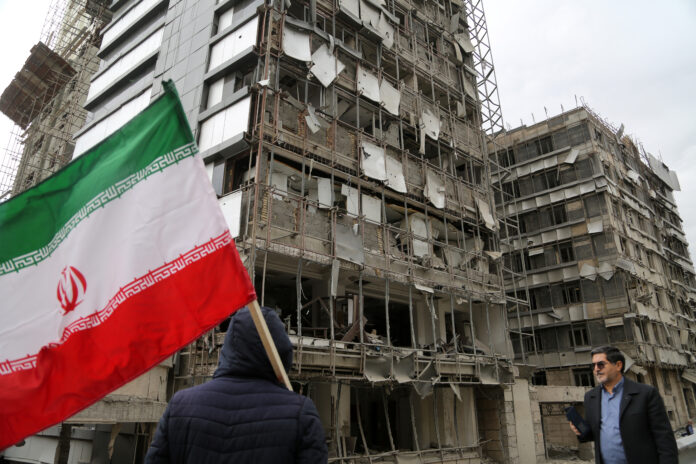
The death toll inside Iran from the joint US-Israeli strikes has risen to at least 555, including a strike on a girls’ primary school in the southern Iranian city of Minab which has killed at least 165 young girls.
Tehran has maintained that it is unwilling to negotiate with Washington on its nuclear programme, as Iran’s Security Chief said.
More recent developments from today saw the shooting down of three US fighter jets over Kuwait near the Al Salem Air Base, which US Central Command confirmed was due to mistaken friendly fire. According to Kuwaiti officials, all six crew members escaped “unscathed”.
Key Gulf energy infrastructure targeted
Significant Iranian strikes were also reported on major gas plants in Qatar and Saudi Arabia.
Saudi Aramco’s largest oil refinery in Ras Tanura was set on fire by falling debris from Iranian missiles, Saudi authorities claim. Plumes of smoke were filmed rising from the oil facility.
Ras Tanura is one of the largest oil refining and export facilities in the world. The facility is one of the Kingdom’s most strategic energy sites, sparking concern over potential further targeting of energy infrastructure in the region.
Qatar’s Defence Ministry also announced that two Iranian drones had struck energy facilities in the industrial city of Ras Laffan, with no reported casualties.
QatarEnergy has thus halted all production of liquefied natural gas (LNG) and associated products at its largest oil facility following the strike. QatarEnergy is the world’s largest LNG producer.
As a direct effect, natural gas prices in Europe soared by almost 50 percent.
Further regional escalations
Cyprus has also reported Iranian attacks, with two drones heading for a UK base being intercepted earlier on Sunday.
UK Prime Minister Keir Starmer also announced last night that the UK would be authorising the use of British air bases by the US to conduct attacks, directly involving themselves in the war.
Starmer categorised this as a “defensive measure” to stop Iranian missile launchers which have attacked Western and Israeli interests in the Middle East.

There have also been a number of significant strikes on Israel since Saturday where the Iron Dome system has failed.
Strikes were reported on West Jerusalem, Beersheba, and Beit Shemesh, which killed nine Israelis. The total number of Israelis injured has risen to 121, with millions of Israelis seeking refuge in bomb shelters.
The current war has seen more munitions dropped on Iran in the last 48 hours than the entirety of Israel’s assault on Iran in June 2025, a senior security official told Israeli outlet Ynet News.
According to the official, the Israeli air force has dropped over 2,300 munitions in two days while the US has dropped 1,500.
The regional escalation due to Iran’s retaliatory strikes has threatened the safety of popular tourist countries such as the UAE, with strikes falling on Dubai and Abu Dhabi, including on tourist and civilian infrastructure such as hotels and apartment buildings.