



A shocking new report detailing the events surrounding the 2022 Leicester street violence exposes the fear, harassment and abuse local Muslims face living alongside the Hindutva – an extremist Hindu ideology from India responsible for the unrest.
5Pillars recently reported on the planned release of the report by the United Kingdom-Indian Muslim Council (UKIMC) titled: Community Tensions, Hindutva, and Islamophobia.
The report has now been released and lays bare the shocking testimony of a significant number of local Muslim residents in Leicester who live in a constant state of fear and sectarian bullying from radicalised Hindutva supporters who also share the city.
Tales of terror from Leicester
In September 2022, the UK looked on in shock and horror as sectarian street battles erupted between mostly Muslim and Hindu men in Leicester.

The unrest lasted for some days and even spread to near by Birmingham before eventually cooling off.
The violence appeared to have erupted out of nowhere but, as 5Pillars reported at the time, tensions between the two communities had worsened following the arrival of the Hindutva ideology to Britain’s streets via the Indian diaspora.
Subscribe to our newsletter and stay updated on the latest news and updates from around the Muslim world!
Participants in the survey explained in disturbing detail how young Hindu men would routinely engage in anti-social behaviour, drinking, swearing, fighting, as well as, intimidating Muslims outside mosques, organising sectarian marches through Muslim streets, and sexually harassing hijabis as part of a campaign of hate similar to those carried out by Hindutva forces in India.
One respondent, named as Ali in the report, said: “There were many incidents that led to this major incident (2022 unrest) that was bubbling away for many months. Attacking Muslim individuals just because they were Muslims. One of my closest friend’s brothers were attacked.

“The 18 year old boy was smoking in a tiny park outside his house with a Somali friend. Two cars pulled up and asked his name. 10-15 thugs started badly beating him with sticks and stabbed him. This was attempted murder.”
Another female eyewitness of the attack added: “I saw him after this attack and his face was a complete mess. I also witnessed the hoards of Hindu men on Bridge Road some months later. I opened the door to men marching down the street. A few holding bats and poles.
“Other than this incident I can testify to many racist, sexual slurs and gestures towards myself and my family. The local Hindu lads would stand around and try to intimidate us as we walked past.”
The names of the participants have been changed or removed from the report to protect their identities amid continued fear and tensions.
Others were quoted explaining how mosques were targeted by groups of Hindus who engaged in anti-social or sectarian behaviour, mimicking the menacing thuggery seen by the Hindutva in India.
“Loads of cars deliberately drove near Jame Masjid on Ashfordby Street. Playing loud music, waving India or Hindutva flags and standing on car roofs chanting ‘Jai Shri Ram’ as if they were actually in India; deliberately proactively trying to create tensions with Muslims by this action in Muslim majority areas.”
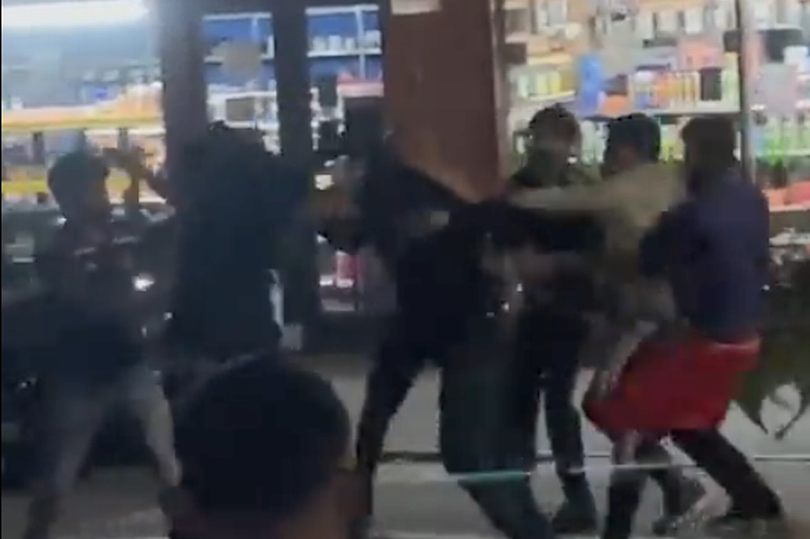
Another local Muslim father explained how men congregated in Muslim-heavy areas and engaged in threatening behaviour, creating fear for local women and children.
“My wife and daughter can’t walk in certain areas after dark because they get taunted. They play loud music outside mosques, intentionally to create a nuisance to local residents. They drink and urinate in corners with no shame.”
“Jai Shri Ram” is a Hindi phrase meaning “Hail Lord Rama” or “Victory to Lord Rama”. It’s a common Hindu expression, often used as a salutation, or a declaration of faith to their idol. However, in recent decades, it has also become a political slogan for Hindu extremist political groups and is often chanted by thugs engaging in violent attacks against Muslims in India.
“These newly arrived Hindutva thugs who don’t know the first thing about the UK think this is India and Modi is the Prime Minister and they can do whatever they want,” another local said.
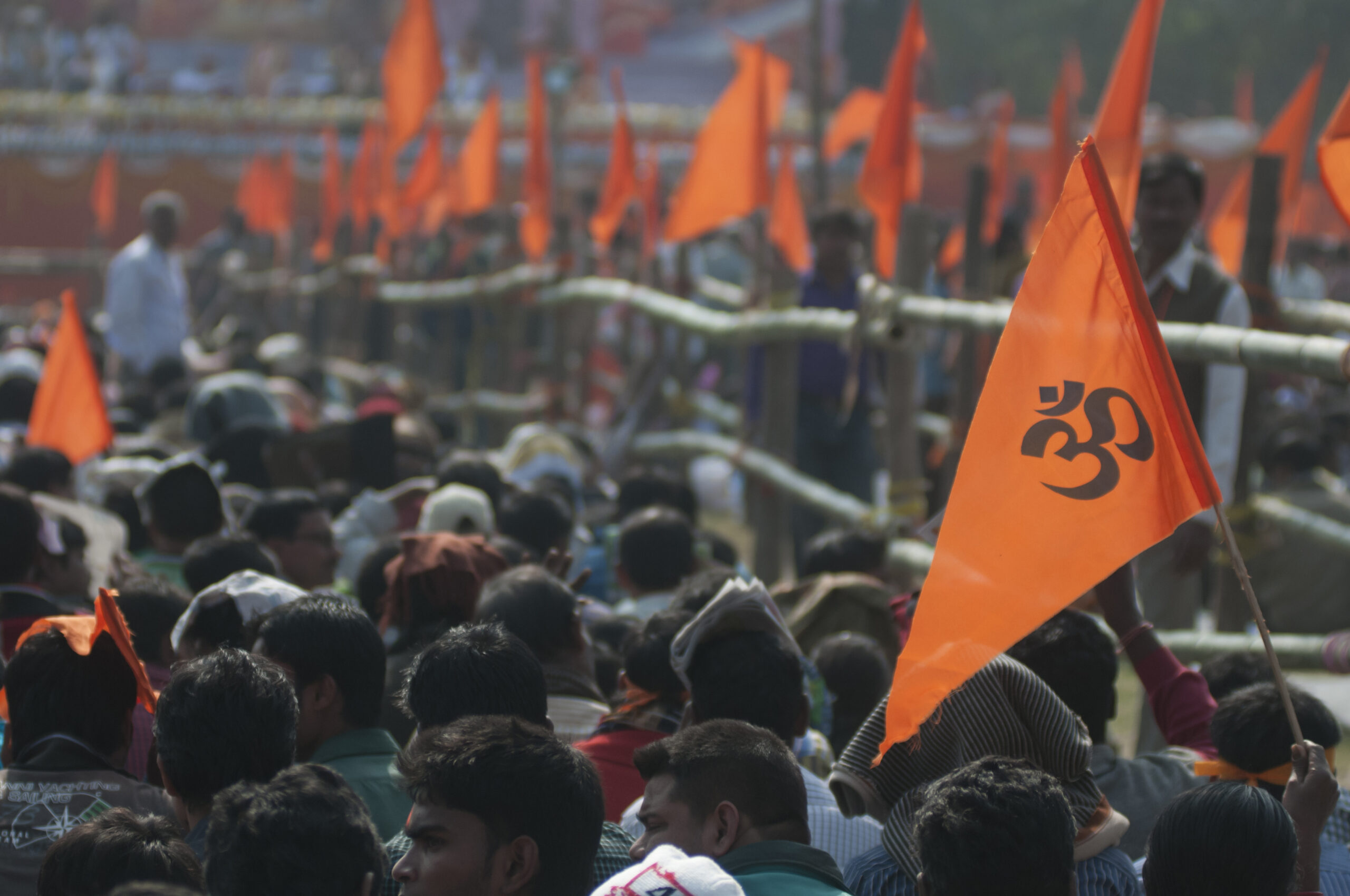
“When it was India’s Independence Day the Hindutva Hindus came out in their cars with saffron orange racist and fascist flags in a massive procession, drove past many local mosques, trying to intimidate local Muslims. They stopped and started chanting Hindutva slogans.”
Orange has become the brand colour for the Hindutva movement in India and the colour is worn or displayed during sectarian rallies.
Police inaction
During and after the 2022 unrest, the police and media were accused of failing to address and protect Muslims who felt under attack in the communities.
This was one of the factors which the report argues led to the outbreak of violence as local Muslims felt they had to protect themselves amid police inaction.
Another participant said: “In the streets around Green Lane before the riots, it felt like a number of Hindutva thugs were going out fighting, causing violence and engaging in racial abuse. They attacked Muslim kids and women. This became a regular occurrence three months before the riots.
“Police did absolutely nothing about this, victims and family have had to look for evidence for the police as the police failed to carry out their duty.”

According to some interviewed in the report, Muslims simply wouldn’t report crimes to the police because they believed the police wouldn’t act.
“I felt there was no point in reporting to the police as i felt the police were very one sided when dealing with cases as they were more sympathetic to the Hindus.”
The groundbreaking report by the British-Indian advocacy organisation is based on analysis and conclusions drawn from their surveys of almost 500 members of Leicester’s Muslim community that was conducted during 2023-2024.
A UKIMC spokesperson said: “This report is a wake-up call. Leicester’s story shows how quickly harmony can unravel when divisive ideologies take root. But with bold action, locally and nationally, we can rebuild trust and ensure no community feels targeted or abandoned.”
During the research stage, the UKIMC conducted surveys asking respondents about how Hindutva anti-social behaviour has affected them psychologically.
The words “fearful,” “anxious” and “angry” were the top three key words used when responding to the question: How did the experience of communal tensions and anti-social behaviour make you feel?
Hindutva terror in India
The Hindutva ideology is a form of extremist Hindu nationalism, a political ideology that dates back to the 19th century. It encompassed a broad range of groups but at its core is a belief that Indian national identity and culture are inseparable from the Hindu religion and that other religions need to be purged.
At the heart of the Hindu nationalist movement in India is the Rashtriya Swayamsevak Sangh (RSS), an all-male Hindu nationalist volunteer group, often described as a paramilitary organisation.
The RSS has been accused of engaging in violent anti-Muslim pogroms in India and radicalising Hindus into the sectarian Hindu supremacist ideology.
Editorial credit: arindambanerjee / Shutterstock.com
The Hindutva ideology has risen to power in India under the BJP leader Narendra Modi.
During his term in power, mosque demolitions, sectarian violence and an oppressive occupation over Muslim-majority Jammu & Kashmir has become the norm.
Local residents in Leicester fear that a new generation of Hindus arriving to the UK from India are bringing their extremist politics with them and are engaging in the same type of anti-Muslim hate that has become common in India on Leicesters streets.
The report has issued a warning to the local authorities, urging them to educate themselves about threat and to engage in local community efforts to counter the damage Hindutva has done to social harmony of the multi-cultural city.
“There has not been in the past 20+ years of living in Leicester anything like the gross and open incitement from the Hindutva. Hindus and Muslims and many other faiths have lived in Leicester peacefully. This element of incitement can only have been brought in from outside. It is very sad indeed.”