


A special court in India has acquitted all seven Hindu nationalists who were accused of playing a role in the deadly 2008 Malegaon bomb blast case, which targeted a Muslim neighbourhood during Ramadan, killing six Muslims.
The National Investigation Agency (NIA) court in Mumbai, led by Judge A.K. Lahoti, delivered the verdict on Thursday after a 17-year trial.
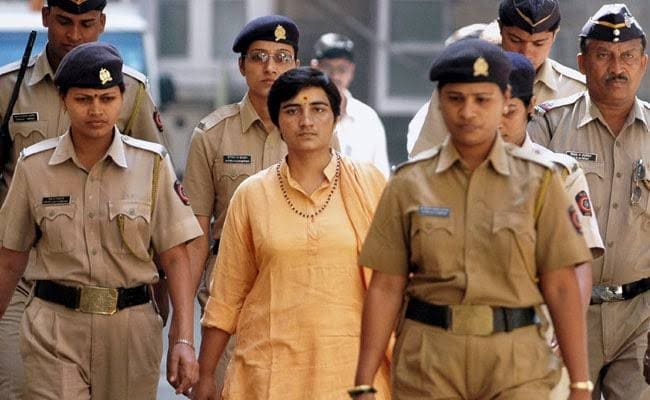
Those cleared of all charges include former BJP Member of Parliament Sadhvi Pragya Singh Thakur and Indian Army officer Lt Col Prasad Purohit.
The attack took place on 29 September 2008, when an explosive device strapped to a motorbike detonated in Malegaon, Maharashtra — a town with a large Muslim population.
Over 100 people were injured in the blast, which occurred during the holy month of Ramadan. Six Muslim worshippers were killed in the attack.
The court said it was forced to grant the accused the “benefit of doubt” due to lack of “cogent evidence,” despite the prosecution examining more than 300 witnesses. The judge remarked that “terrorism has no religion,” but added that “conviction cannot be based on moral grounds.”
“Terrorism has no religion because no religion can advocate violence. The court cannot convict anyone merely on perception and moral evidence; there has to be cogent evidence,” news agency ANI reported, quoting the verdict.
Subscribe to our newsletter and stay updated on the latest news and updates from around the Muslim world!

Lawyers of the victims’ families said they will challenge the acquittal in the High Court and file an appeal independently following the “disappointing” verdict.
Hindu extremist group links
The seven acquitted are all linked to Hindutva organisations. They include former BJP MP Sadhvi Pragya Singh Thakur, Lt Col Purohit, Major (retd) Ramesh Upadhyay, Sameer Kulkarni, Ajay Rahirkar, Sudhakar Chaturvedi, and Sudhakar Dwivedi.
All were initially accused of being part of a conspiracy involving the Hindu extremist outfit Abhinav Bharat.
The case was first investigated by Maharashtra’s Anti-Terrorism Squad (ATS) and later handed over to the National Investigation Agency in 2010.
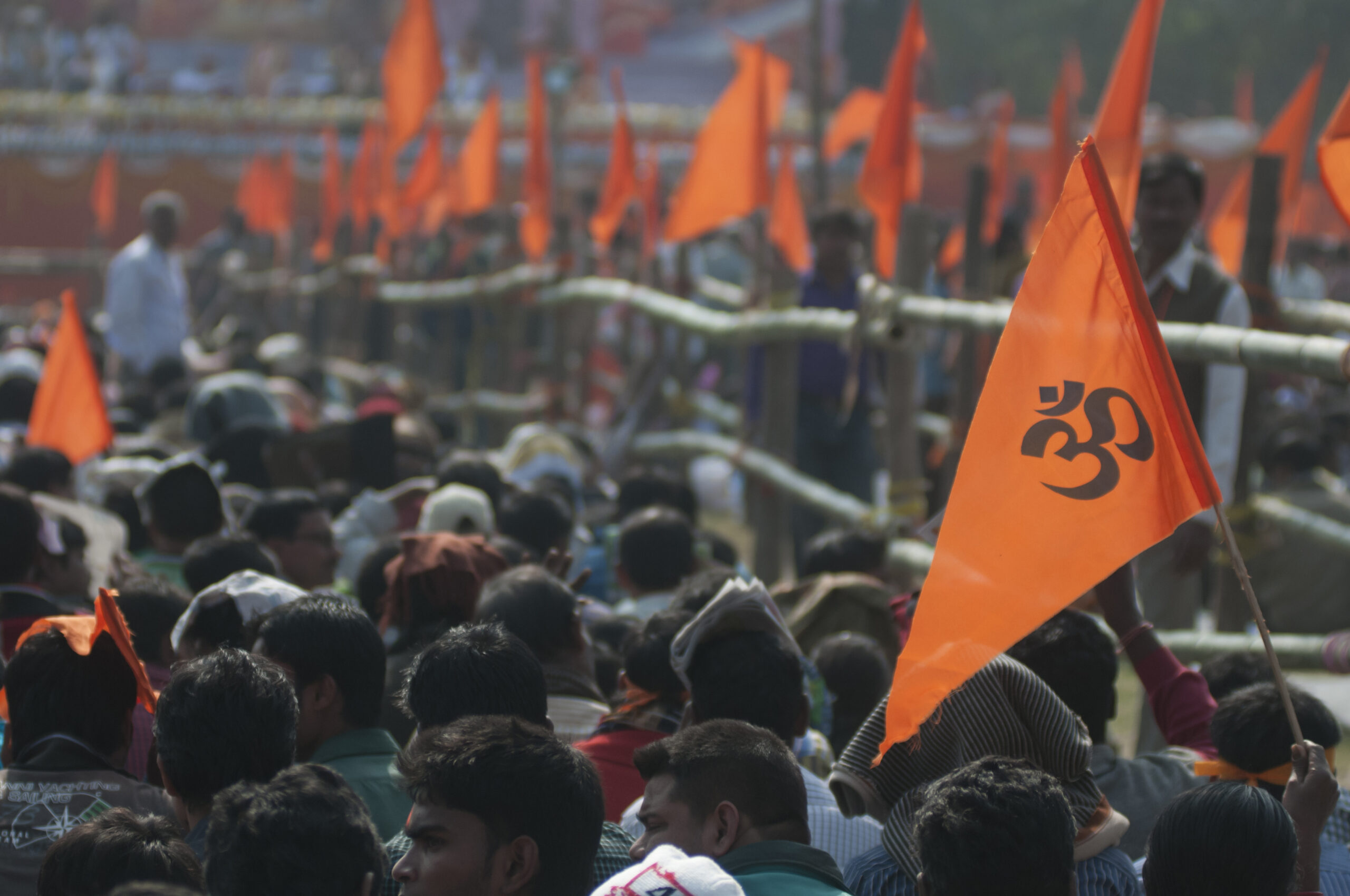
Editorial credit: arindambanerjee / Shutterstock.com
Though the NIA in 2016 recommended dropping the most serious charges against some of the accused, claiming lack of evidence, the special court in 2017 decided the trial would continue under various sections of the Indian Penal Code, the Unlawful Activities (Prevention) Act (UAPA), and the Explosive Substances Act.
The prosecution claimed the bomb was planted using a motorcycle registered to Thakur. However, the court found the evidence insufficient, noting that the bike’s full chassis number could not be recovered, and therefore ownership could not be proven.
In Lt Col Purohit’s case, the court said there was no evidence linking him to sourcing or assembling the RDX used in the explosion.
The Hindutva ideology has risen to prominence in India and a noticeable treat of state-backed empowerment of sectarian Hindu initiatives has been witnessed.
Justice remains undelivered
Families of the victims expressed deep disappointment and vowed to appeal the verdict. The acquittal has renewed concerns about communal bias and selective justice in India’s legal system, particularly in cases involving Hindu nationalist violence against Muslims.
“The bomb blast has been proven by the court. We will challenge this acquittal in the High Court,” said Advocate Shahid Nadeem, representing the families.
Muslim MP and AIMIM leader Asaduddin Owaisi called the acquittal a “grave miscarriage of justice.” He said the case reflected a “deliberately shoddy” investigation and prosecution.
“Six namazis (a local term for devout Muslims) were killed. They were targeted for their religion. Yet, after 17 years, not one person has been held accountable,” Owaisi said on X.

He reminded the public of allegations made by former special public prosecutor Rohini Salian, who in 2016 said the NIA had instructed her to “go soft” on the accused.
Owaisi also pointed to the role of former ATS chief Hemant Karkare, who led the original investigation before being killed during the 2008 Mumbai attacks.
“The world will remember that India made a terror accused a Member of Parliament,” he said, referring to Sadhvi Pragya, who won a seat in India’s parliament in 2019 while still facing terror charges.
The Malegaon case has long symbolised the intersection of religious violence and politics in India.
It was among the first terror cases where Hindu extremists were accused of attacking Muslims. But over time, political shifts and changes in investigative agencies led to a weakening of the case.
With the acquittal now delivered, the case moves to the Bombay High Court, where the victims’ families hope for justice that has eluded them for nearly two decades.