


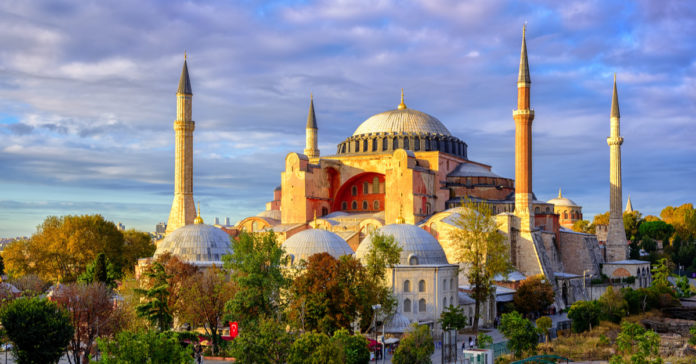
Türkiye and the wider Muslim world celebrate the fifth anniversary of the reconversion of the historic Hagia Sophia (Ayasofya) from a museum back into a Grand Mosque.
In July 2020, Friday prayers in the Ayasofya Grand Mosque marked the first Muslim prayer at the beloved house of worship in 86 years.
Turkish President Recep Tayyip Erdogan marked the occasion with a message shared on X on Thursday.
“Five years ago today, we broke its chains and reunited Ayasofya with the call to prayer. Allah willing, it will remain free forever.”
His post also included the official Presidential Decree, published in the Official Gazette, which transferred Ayasofya to the Presidency of Religious Affairs and reopened it for worship.
This years anniversary comes as Turkey is set to begin restoration and reinforcement work on the Mosque’s famous dome in one of the biggest repair projects carried out on the 1,486-year-old structure.

The Ayasofya was the largest cathedral in the world for 900 years and sat at the centre of power for the Eastern Roman (Byzantine) Empire until its capture by Ottoman Sultan Mehmet the Conqueror in 1453, after which it was converted into one of Islam’s most exalted mosques for over 500 years.
Subscribe to our newsletter and stay updated on the latest news and updates from around the Muslim world!
Sultan Mehmed earned the title “Fatih”, the Conqueror, after he successfully captured Constantinople, known today as Istanbul, and performed the first Friday prayer at the Ayasofya on June 1, 1453.
The site was considered the home of political and religious power in the Eastern Roman world as a Cathedral for Orthodox Christianity prior to the conquest of the Muslim Ottomans.
The Ottomans maintained the site as a house of worship for Muslims until the fall of the Ottoman Caliphate and the establishment of the secular Republic of Türkiye in 1923.
The Ayasofya’s status changed again. On Nov. 24, 1934, the Council of Ministers issued Decree No. 7/1589, converting Hagia Sophia into a museum.
The move was backed by extremist secularists such as Mustafa Kemal Atatürk who worked to reduce the influence of Islam in Türkiye in favour of a secular nationalist agenda.
In 1985, Ayasofya was added to the UNESCO World Heritage List.
However, in 2016, the Association for the Service of Historical Foundations and the Environment filed a lawsuit with the Council of State seeking to annul the 1934 Cabinet decision.
The case was resolved on July 10, 2020, when the 10th Chamber of the Council of State unanimously annulled the 1934 Cabinet decision determining Hagia Sophia’s museum status.

The Council of State’s ruling was met with joy by citizens gathered in Hagia Sophia Square.
On the same day, President Recep Tayyip Erdoğan signed the Presidential Decree to reopen Hagia Sophia for worship.
Erdogan and other Turkish leaders had long advocated it returning to a working mosque, open for prayers.
Globally, move was met with controversy criticism from the U.S. secretary of state, Mike Pompeo, Pope Francis and several Orthodox church leaders around the world as well as UNESCO itself.
However, the move was widely celebrated across the Islamic world with huge crowds gathering to be among the first to pray at the site.
The mosque is visited by millions of Muslims every year and is a popular choice to visit during Islamic special occasions such as Ramadhan and Eid.
Besides being a mosque, the Hagia Sophia is also among Türkiye’s top tourism destinations and remains open for domestic and foreign visitors.