



On the 20th anniversary of the July 7, 2005 bombings in London, Abdul Wahid reflects on how Britain’s draconian security policies have devoured the very values of freedom that this nation claims to uphold.
It is hard to fathom why anyone would think that murdering 52 ordinary people going about their daily business would help any cause they believed in.
It was said to have been meant as vengeance for the actions of the British government for their murderous policies in the Muslim world. But aside from such an action being prohibited in Islam, it did not punish those who were responsible for those crimes but instead gave them an excuse (as if they needed any) for yet more criminal policies in the years to come.
The political leadership in Britain also wanted vengeance. In their febrile hunt for anyone involved in the crime, anti-terror police shot an innocent 27-year old Brazilian man, Jean Charles De Menezes, seven times in the head at close range on the London Underground, terrifying ordinary people going about their daily business.
Many years later, the former head of MI5, Eliza Manningham Buller, told the Chilcot Inquiry that it was the US-UK invasion of Iraq in 2003 that had increased the terrorist threat in Britain.

Whilst her words were an admission of where much of the blame lay for what followed that invasion, she did not expose the half of it. The hundreds of thousands dead; the destabilising of Iraq and later Syria; the deliberate fomenting of sectarian divisions across the Middle East – all of these were just a few consequences of “Operation Iraqi Freedom.”
But the domestic consequences of that era continue until today through the increased securitisation of the British state. The policies forged in the aftermath of those bombings created a very different Britain.
Subscribe to our newsletter and stay updated on the latest news and updates from around the Muslim world!
That securitisation started with the Muslim community, but did not end there.
Tony Blair’s crusade
Prime Minister Tony Blair set the narrative following 7/7 in a speech he gave on July 16, 2025 where he made it clear that in his view it was not “blowback” from his destructive decision to invade Iraq that was to blame – but an “evil ideology” which demanded “the elimination of Israel; the withdrawal of all Westerners from Muslim countries, irrespective of the wishes of people and government; the establishment of effectively Taliban states and Shari’ah law in the Arab world en route to one caliphate of all Muslim nations.”
Just as in war, Blair was justifying what was to follow with the distortion of legitimate concerns and aspirations of Muslims the world over – the liberation of Palestine spun as “elimination”; the withdrawal of Western colonial influence in Muslim countries abbreviated to “Westerners”; and the re-establishment of Islamic governance and civilisation as “Taliban states.”
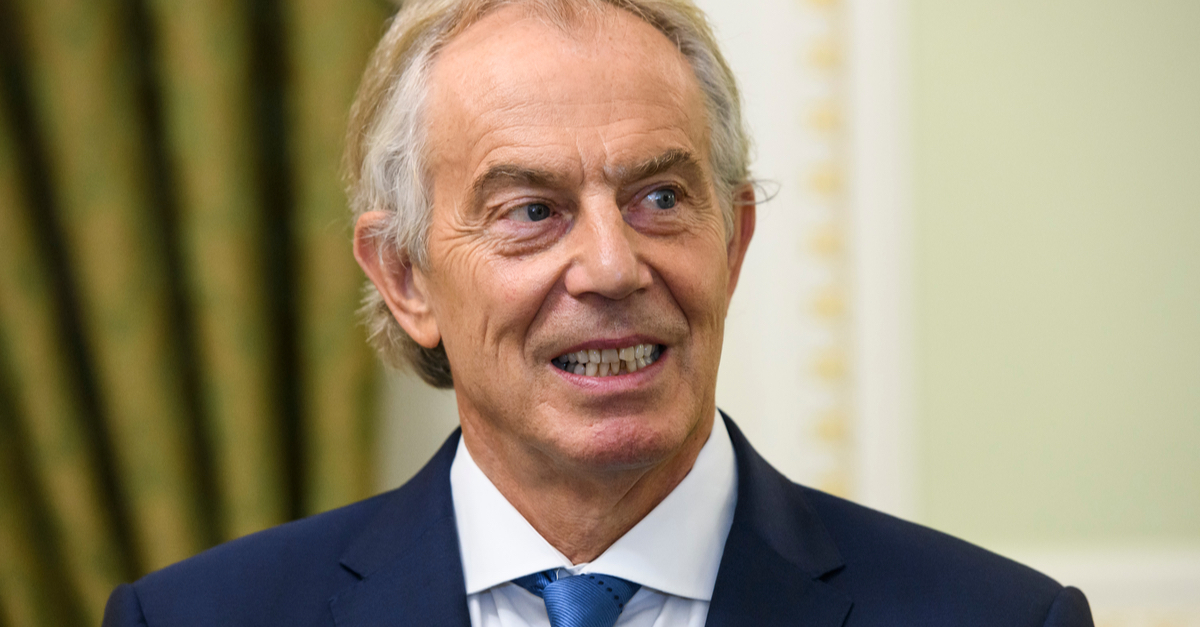
He said there was a need to expose “the propaganda about America and its allies wanting to punish Muslims or eradicate Islam.” Those in Gaza, Afghanistan, Iraq, or Syria might more accurately describe it as their lived experience, rather than “propaganda.”
A few weeks later Blair expanded on this trajectory making another speech in which he announced policy proposals saying that “rules of the game are changing.”
Those changes to “the rules” included the proposal to introduce thought-crime offences – i.e. that condoning or glorifying “terrorism” would itself be considered “terrorism” – as well as a proposal to ban a non-violent Islamic political organisation that had nothing whatsoever to do with 7/7. Blair later proposed a 90-day detention without charge for terrorism offences.
Twenty years ago such proposals were met with horror. Significant members of the political and legal establishment raised concerns. Lord Stein, the Law Lord, spoke out that the maintenance of the rule of law “is not a game. It is about access to justice, fundamental human rights and democratic values.”
Slippery slope
Yet the path to change started by Blair was continued by his successors, and what started with the Muslims eventually encompassed others, as it always does.
A few days ago the British government banned a direct action group that tried to disrupt material support for Israel’s ongoing genocide and ethnic cleansing in Gaza, by labelling it a terrorist organisation because it broke into a military base.
That group, which had never harmed human life, was proscribed by Parliament under terrorism laws by 385 votes in favour to 26 against. Would this have happened in the pre-7/7 era? I doubt it.

Back in the day Blair said: “We must be clear about how we win this struggle. We should take what security measures we can… But it is by the power of argument, debate, true religious faith and true legitimate politics that we will defeat this threat… It means championing our values of freedom, tolerance and respect for others.”
Yet Blair and his successors silenced debate through the securitisation of the education system from early years to universities under the Prevent Duty.
Their security policies have devoured those values of freedom, tolerance and respect that they pretended to champion – just as their invasion of Iraq, the “War on Terror” and support for the Gaza Genocide destroyed all semblance of International Law.
They erected their “god of freedom,” evangelised it to the world, but then destroyed it using the axe they claimed was there to defend it.
Twenty years later there are no winners but it is very clear Blair and his successors have lost the struggle.
Abdul Wahid has been active in Muslim affairs in the UK for over 25 years. He has been published on the websites of Foreign Policy, Open Democracy, the Times Higher Educational Supplement, and Prospect Magazine. You can follow him on X/Twitter @AbdulWahid_X.