


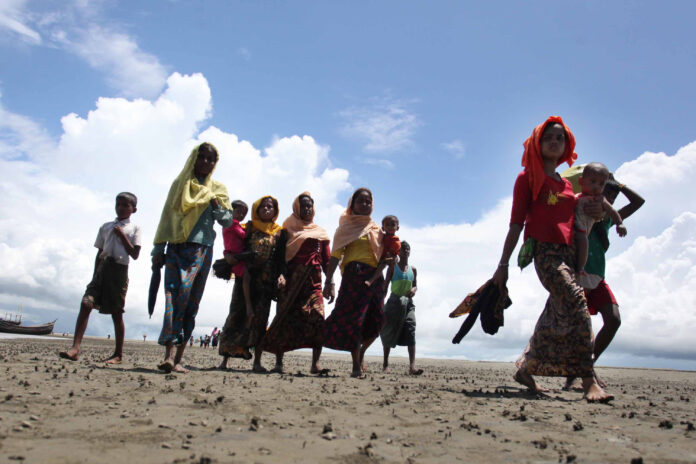
Last week Rohingya refugees in India were forcibly abducted, had their hands tied and were blindfolded, and were then thrown in international waters by Indian authorities, according to eyewitness testimony.
The incident allegedly began on May 6, when Rohingya refugees in Delhi were summoned for what was described as routine biometric verification.
Instead, over 80 refugees, including Christian and Muslim families, were detained at police stations and detainees were then transferred to detention centres, before being flown to Port Blair in the Andaman and Nicobar Islands.
Survivors’ families allege that the refugees were then placed on Indian naval ships, where they were blindfolded, had their hands tied, and were subjected to physical abuse.
Some reportedly bled from tight restraints but were denied relief, with navy officers accusing them of involvement in the recent Pahalgam attack.

On May 8, the refugees were allegedly forced off the vessels into the Andaman Sea, expected to swim to Myanmar’s shores or left to perish. While they are believed to have survived, their current whereabouts and condition remain unknown.
The People’s Union for Civil Liberties (PUCL) and the United Nations High Commissioner for Refugees (UNHCR) have condemned the deportations.
Subscribe to our newsletter and stay updated on the latest news and updates from around the Muslim world!
Tom Andrews, the UN Special Rapporteur on human rights in Myanmar, announced an inquiry and urged India to provide a full accounting.
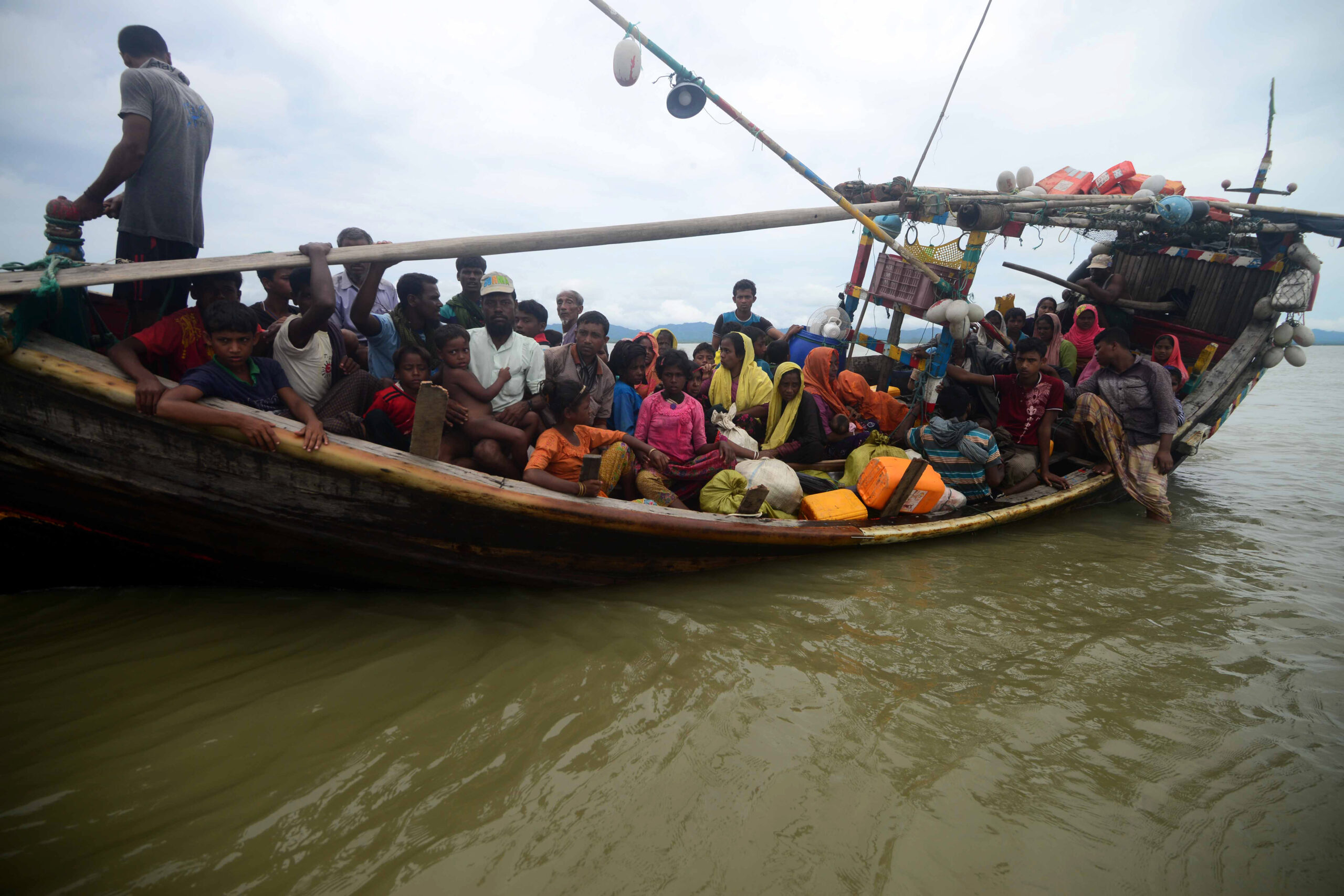
“The idea that Rohingya refugees have been cast into the sea from naval vessels is nothing short of outrageous,” Andrews said in a statement. He described the actions as a “blatant disregard” for human life and a violation of the principle of non-refoulement, which prohibits returning refugees to places where they face persecution.
Andrews called on India to halt all deportations to Myanmar, hold those responsible accountable, and uphold international obligations.
Additionally, reports indicate another group of about 100 Rohingya refugees was removed from a detention centre in Assam and transferred near the Bangladesh border, raising further concerns.
The Rohingya, a Muslim minority long oppressed in Myanmar’s Rakhine state, face ongoing persecution under Myanmar’s military junta, with accusations of genocide driving over one million to flee to Bangladesh since 2017.
In India, approximately 22,500 registered Rohingya refugees live under constant surveillance, reporting monthly to police and facing exploitation, such as unpaid wages, due to their vulnerable status.
The BJP-led government’s policies and Islamophobic rhetoric have further marginalised the group, according to Refugees International.
The Indian government has not issued an official public statement directly addressing the specific allegations, however on the same day the alleged deportations occurred, the Supreme Court of India ruled that if Rohingya are deemed foreigners under Indian law, they must be deported.
Solicitor General Tushar Mehta emphasised that India does not recognise Rohingya as refugees, as the country is not a signatory to the 1951 UN Refugee Convention, and questioned the legitimacy of UNHCR refugee cards.
The Indian government has consistently labeled Rohingya as “illegal immigrants” rather than refugees, citing national security concerns.
In Supreme Court hearings, the government has argued that the presence of Rohingya poses risks, referencing past affidavits claiming some Rohingya may sympathise with “militant groups.”