


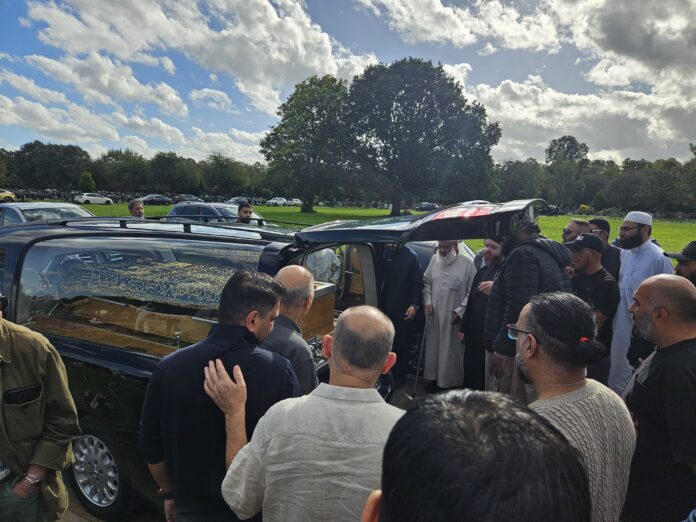
Munir Farooqi, the Manchester Muslim da’ee jailed for 17 years on controversial terrorism charges, has been buried after his janazah was conducted yesterday. His family considers him a martyr who died doing what he loved – giving da’wah – and have accused prison authorities of neglect.
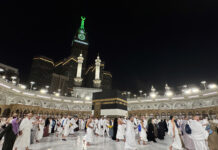
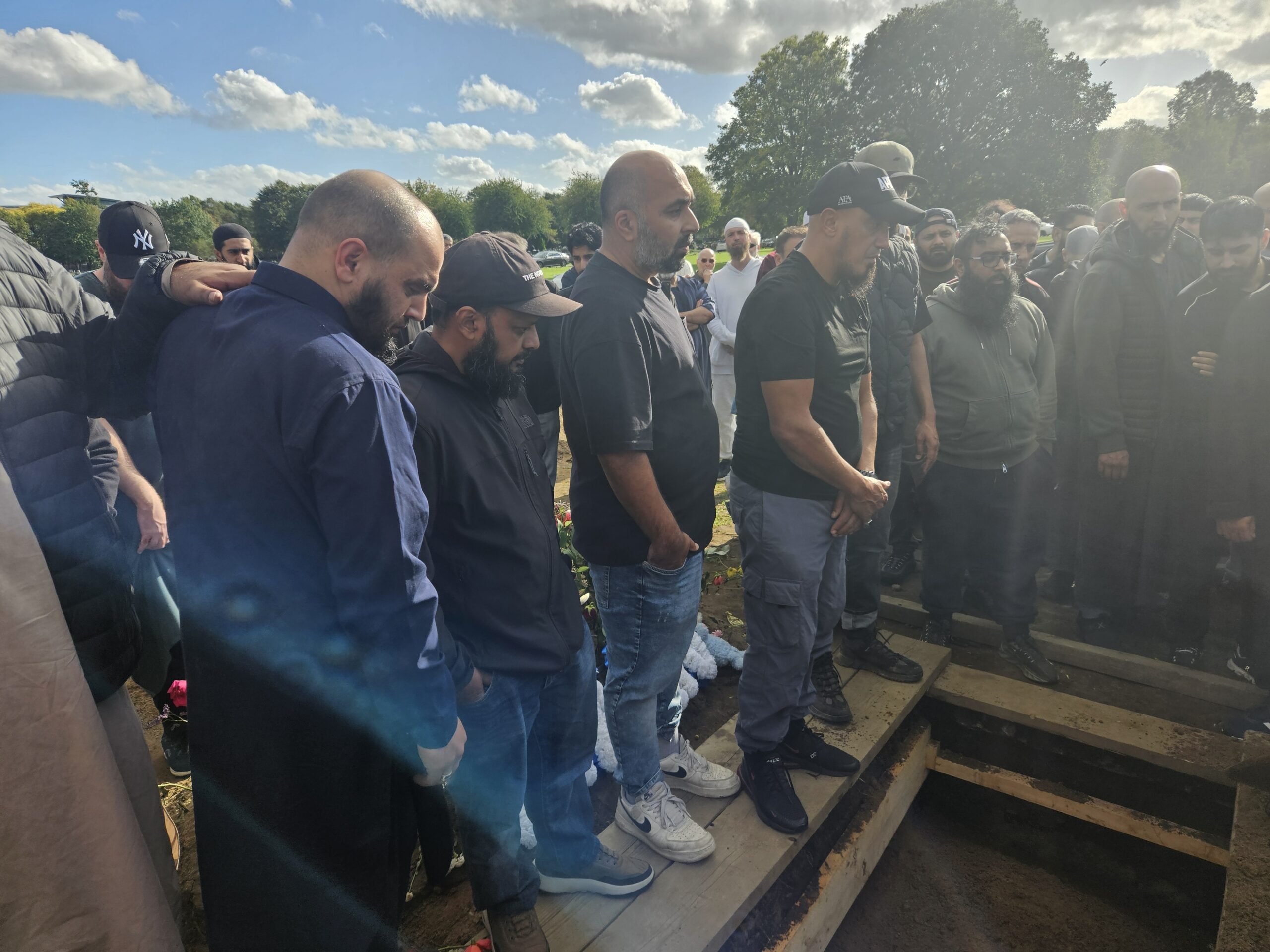
Well over 100 people attended the burial of Farooqi, who was laid to rest in a cemetery in Manchester. Ṣalāt al-Janāzah was performed by Manchester Central Mosque, which held prayers for him prior to the burial.
Muslim attendees hailed his life as a dedicated da’ee who “fathered the daw’ah stall efforts” in Manchester.
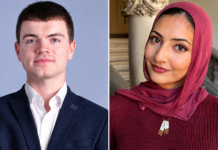
His relatives attended the janazah, included his son Harris and daughter Zulaikha who had spent years campaigning for their father amid controversy over his conviction and lengthy jail sentence.
Speaking to 5Pillars, Haris Farooqi explained that although his family felt sadness following his death, they were also celebrating his passing in the way martyrs are celebrated in accordance with Islamic customs.

“There is a lot that can be said about my father, but I believe that the main crime that he committed, in my eyes, was performing da’wah. It’s as simple as that. The Islamic material which he was sharing was considered at the time to be ‘terror’ publications, but Islam is not a terrorist religion. All Muslims around the world believe in the Qur’an and Sunnah – what my father was preaching. Fortunately, now he has finally been released – to the greatest of places now, Jannah – alhamdulillah. We grieve because my father faced great injustices, but we celebrate because dying a martyr is one of the greatest deaths we can achieve.”
Zulaikha Farooqi added: “It’s a mixture of feelings, I guess. It’s been 17 years of difficulties and torture that’s finally come to an end. We’ve been able to get closure by knowing that our father is in peace, alhamdulillah, and at rest. There’s also a feeling of honour that despite excruciating difficulties and injustices, he remained firm and steadfast and strong, and there’s very few people that could bear the injustices that he did. And there’s also the pain, the anger at what has led us to this stage, which is clearly just lack of care and neglect by the prison systems.”
Subscribe to our newsletter and stay updated on the latest news and updates from around the Muslim world!
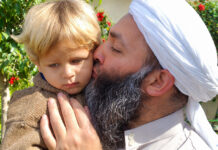
Farooqi was a father of five from Manchester and a familiar figure on the city’s da’wah scene. He ran a stall in the city centre, distributing Islamic literature and speaking to passers-by about Islam.
Between 2008 and 2009, two undercover police officers approached Farooqi through the stall. Posing as men interested in Islam and even pretending to convert to the religion, they spent about a year meeting him and secretly recording conversations in his home, in cars and elsewhere. Prosecutors argued that Farooqi had sought to encourage them to fight in Pakistan or Afghanistan.
In 2011, a jury convicted him of offences including preparing others for acts of terrorism, soliciting murder, disseminating terrorist publications and encouraging terrorism. He received four life sentences, with a minimum term of nine years before he could be considered for parole. His appeal against the convictions and sentence was dismissed in 2013.
Farooqi denied all criminal wrongdoing, arguing there was no intent, no weapons and no plot. The defence centred on his intent and the religious context of the discussions. His legal team argued that references to jihad were made in the context of defensive jihad — the belief that Muslims may legitimately defend themselves against aggression.
The Court of Appeal summarised his position: “He did not intend anyone to travel to Pakistan or Afghanistan in order to participate in terrorism and he did nothing with the intention of soliciting murder.”
Supporters argued that his comments amounted to political and religious expression rather than criminal incitement.
In recent years, his family had drawn attention to his deteriorating health at HMP Frankland, near Durham. In June, 5Pillars reported their allegations that he had undergone multiple amputations and was being denied medication and medical attention. In a recent statement, the family also said he had lost his sight and hearing.
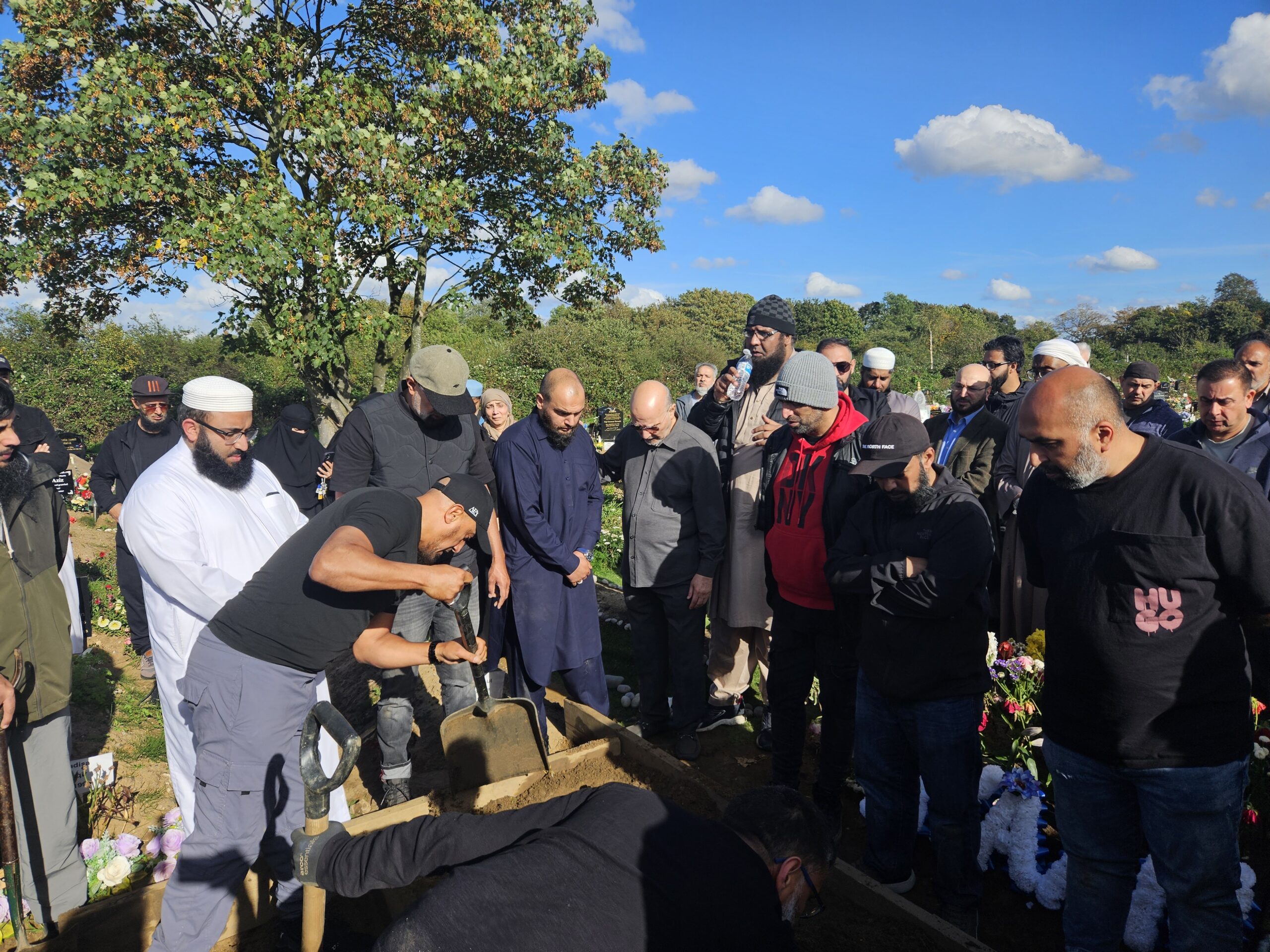
Speaking before the janazah, 5Pillars editor Roshan M Salih, who has reported extensively on the story over the past 13 years, said: “I have no doubt that Munir Farooqi, who died today in prison in Durham, was stitched up by the British establishment. He was jailed for life for terrorism, but he clearly wasn’t a terrorist. He was condemned to a cell for the rest of his life, even though there was no plot, no weapons, no nothing. It was the flimsiest terrorism conviction that I’ve ever come across.
“And it was attained by pure entrapment. Two police officers pretended to convert to Islam, and they spent a year trying to get him to say incendiary stuff. And eventually he was convicted of encouraging people to go and fight in Afghanistan against the US-led occupation. At worst, Munir Farooqi was injudicious with some of his off-the-cuff remarks. That’s literally the strongest case that anyone has against him. In reality, he was a victim of the hysterical post-9/11 war on terror climate, where Muslims in this country were incapable of getting a fair trial.”
5Pillars contacted HMP Frankland regarding allegations made by the family relating to medical neglect. In a response email a spokesperson said: “All prisoners’ needs are assessed when they enter custody – with arrangements made, and appropriate action taken, to ensure those needs are met.”
They added:
- We do not comment on individual prisoners’ healthcare
- Prison staff make every effort to provide prisoners with an appropriate wheelchair. Where the most suitable wheelchair is not available, staff will work with the local NHS England trust to secure an appropriate solution.
- Healthcare in prisons is the responsibility of the NHS in England and Wales. The prison Healthcare and Safety team are aware of Mr Farooqi’s needs and are taking the necessary steps to ensure he is appropriately cared for.
- People in prison are entitled to the same standard and range of health and social care services as they would receive in the community.
- Following prison and healthcare assessments at reception, arrangements are put in place to meet individual needs.
- Meeting urgent eligible adult social care needs is the responsibility of the local authority.