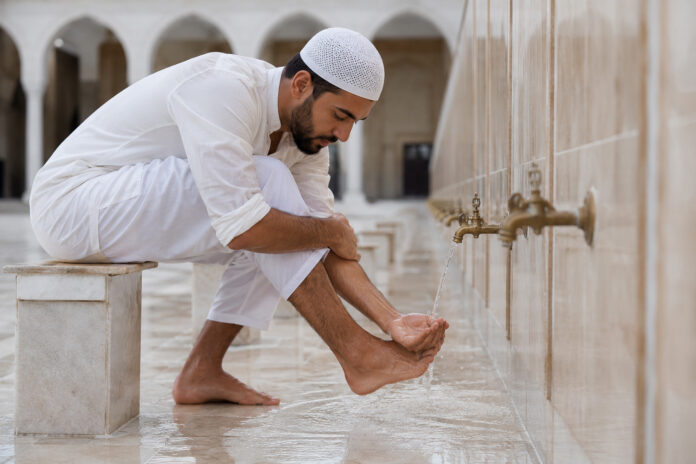
A water-saving project funded by the UK’s water regulator has teamed up with Cambridge Central Masjid to encourage Muslims to use less water when performing wudu, reviving the Prophetic practice of carrying out ablution with around one litre of water or less.
The project, called “Reviving the Sunnah”, was developed as part of a wider £270,000 Ofwat-funded initiative exploring ways to reduce water consumption among faith and culturally diverse communities.
The scheme worked with Cambridge Central Mosque and encouraged Muslims to perform wudu using one mudd – approximately one litre of water – rather than leaving taps running throughout the daily ritual purification process.
The campaign was developed by South Staffs Water and Cambridge Water as part of a wider project funded through Ofwat’s Innovation Fund.
It was one of two main campaigns developed under the initiative, with the other encouraging people in Southeast Asian communities to reconsider how much water they use when washing rice.

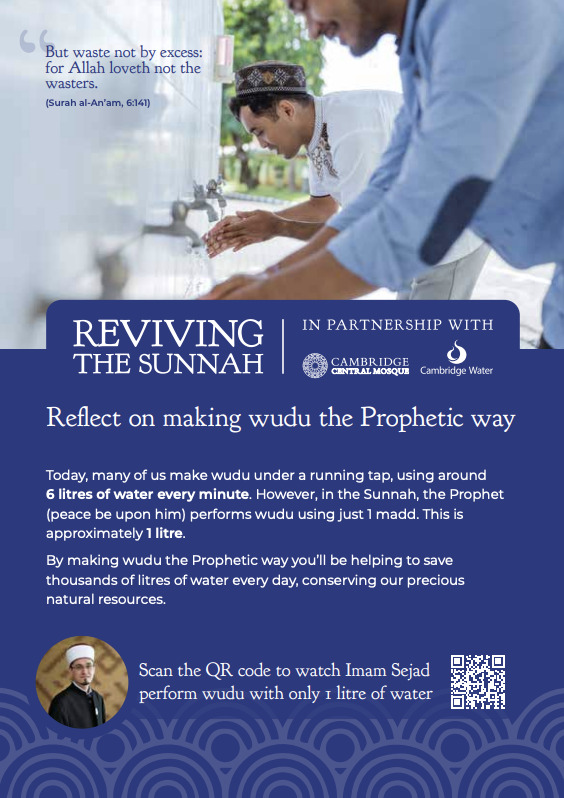
Reviving the Sunnah
The water efficiency project identified that Muslims can perform wudu up to five times a day before prayer and pinpointed the practice as an area where significant quantities of water could potentially be saved.
Subscribe to our newsletter and stay updated on the latest news and updates from around the Muslim world!
According to the project’s guidance, performing wudu under a running tap for two minutes can use approximately six litres of water.
The “Reviving the Sunnah” campaign instead encouraged Muslims to follow the example of the Prophet Muhammad ﷺ, who is reported to have performed ablution using around one mudd of water.
Campaign material stated: “Save water, avoid waste and Revive the Sunnah” and “make your intention today. It’s a great opportunity to Revive the Sunnah when making wudu, save water and protect the environment.”
The report also quotes the Quran, Surah al-An’am, 6:141: “But waste not by excess: for Allah loveth not the wasters.”
The project encouraged members of Cambridge Central Mosque’s congregation to adapt their wudu practices by using a measured quantity of water, with campaign organisers providing wudu bottles and holding events during Ramadan.
The official guidance stressed that the campaign was designed to work with Muslim communities and trusted faith figures rather than simply imposing instructions from water companies.
It said that messaging should originate from within the Muslim community because this represented a more trusted voice.
The guidance also warned that faith-based campaigns should not appear to target a specific group, but should instead involve respectful engagement with communities and recognise their particular traditions and practices.
Ofwat’s annual report said the wider Water Efficiency in Faith and Diverse Communities project received £270,000 through the regulator’s Water Breakthrough Challenge.
The project explored how water companies could promote conservation by working with communities whose religious or cultural practices involve particular uses of water.
According to Ofwat, the evaluation of the wudu campaign suggested potential savings of between 1,400 and 5,900 litres of water per day across participating households.
However, the project has attracted attention because it comes as the water industry faces increasing criticism a failure to address its own issues regarding leaks, sewage pollution and the amount of water lost through ageing infrastructure.
Ofwat itself has acknowledged that England faces major long-term pressure on water supplies, with demand rising alongside concerns about climate change, population growth and future droughts.
The regulator says reducing household consumption is only one part of the response, alongside reducing leakage and increasing available water supplies.
For Muslims, however, the campaign’s central message was not to alter the religious requirements of wudu, but to encourage a return to the Sunnah of avoiding unnecessary waste and performing ablution with a relatively small amount of water.
Islamic response to drought
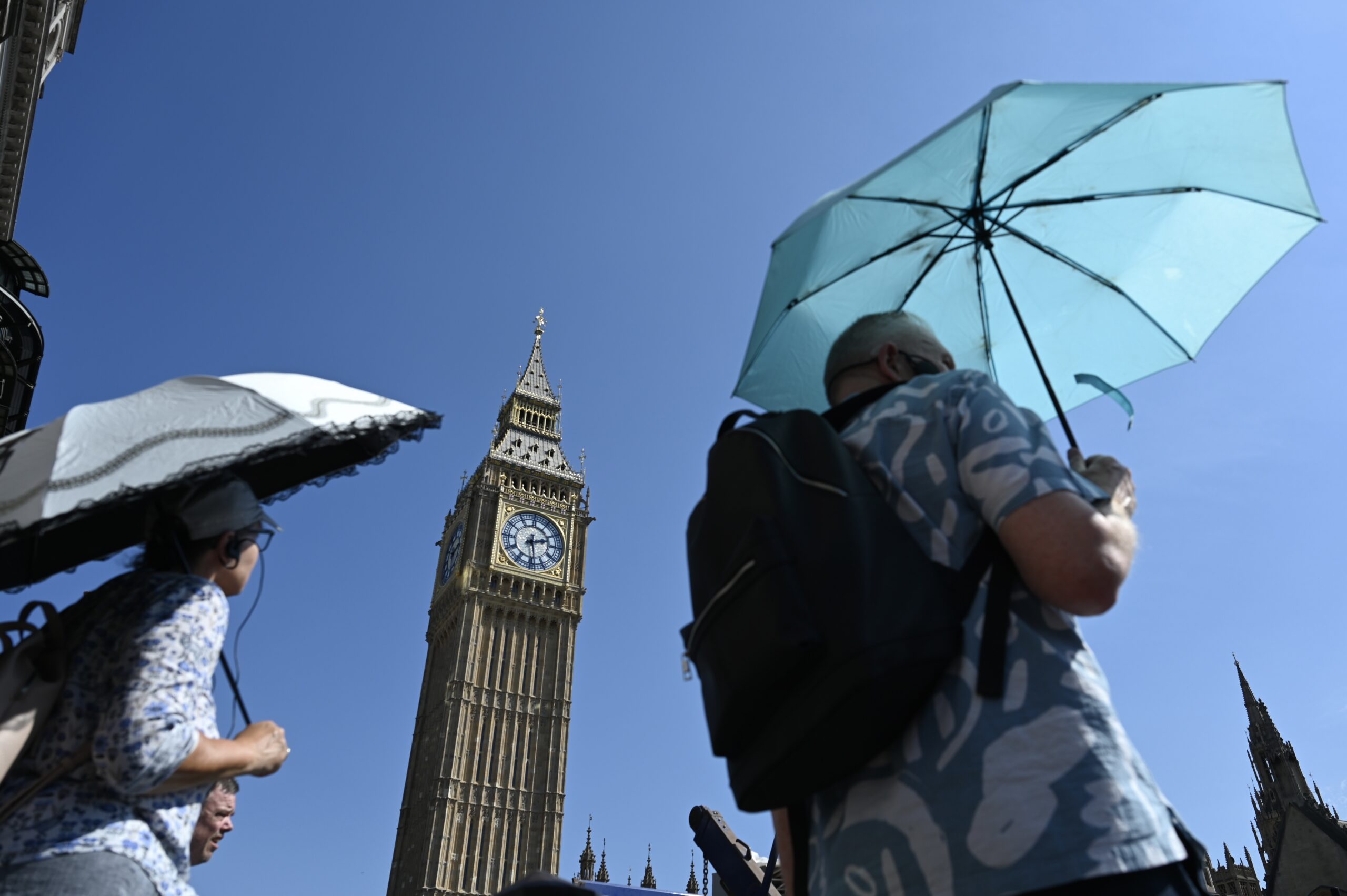
Prior the the start of the state-backed water saving campaign, British Muslims had already begun mobilising to offer support to Britain amid an ongoing summer of intense heat and drought.
In response to the prolonged dry weather and rising ecological concerns across the UK this year, British Muslim leaders organised a National Day of Prayer for Rain, to revive the historic Prophetic tradition of Salat al-Istisqa – asking Allah swt for mercy during times of drought.
Birmingham’s Green Lane Masjid & Community Centre announced that start of Salat al-Istisqaive the tradition of Salat al-Istisqa – a special communal prayer offered during periods of drought to seek relief, sustenance, and divine mercy through rainfall.
In Islamic theology, water is regarded as the source of all life and a sacred trust (Amanah). The practice of Salat al-Istisqa brings communities together not merely to ask for rain, but to engage in deep self-reflection, gratitude, and moral renewal. The tradition teaches that human wellbeing is inseparable from the health of the natural world, placing a strong duty on believers to act as responsible custodians (Khulafa) of the Earth.
Some of the Islamic organisations who supported the day included: Darul Ihsaan Barking, Darul Jannah Community Centre, Green Lane Masjid & Community Centre, Aytac Aid, the World Islamic Forum and the London Ifta Council.
A joint spokesperson for the participating organisations said: “Rain is a vital mercy that sustains all living things – our crops, wildlife, and natural ecosystems.
“In Islam, turning to God in times of environmental distress is paired with our duty to protect the Earth. By coming together for Salat al-Istisqa, we acknowledge our reliance on God’s grace while reaffirming our shared responsibility to care for our climate and preserve precious water resources. We are representatives of the best of Allah’s creation, the one who is ‘a mercy to humanity.’
“Therefore, we must embody this mercy towards all our fellow Britons, including the thousands of farmers directly affected by the drought. These droughts will not only increase the cost of food this winter but will also have a significant impact on those in our society who are already struggling with the cost of living.”