


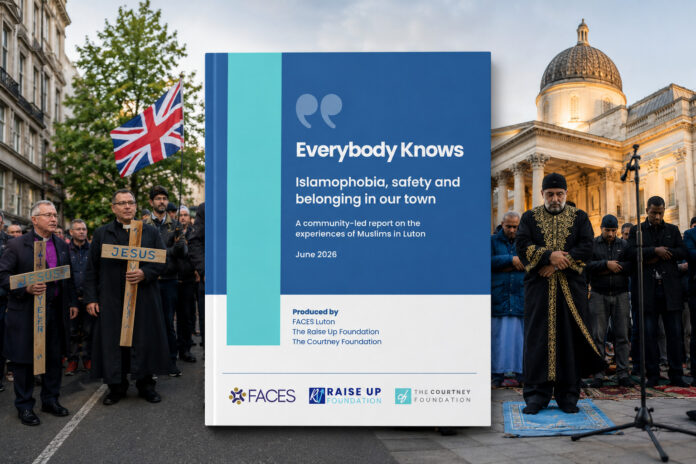
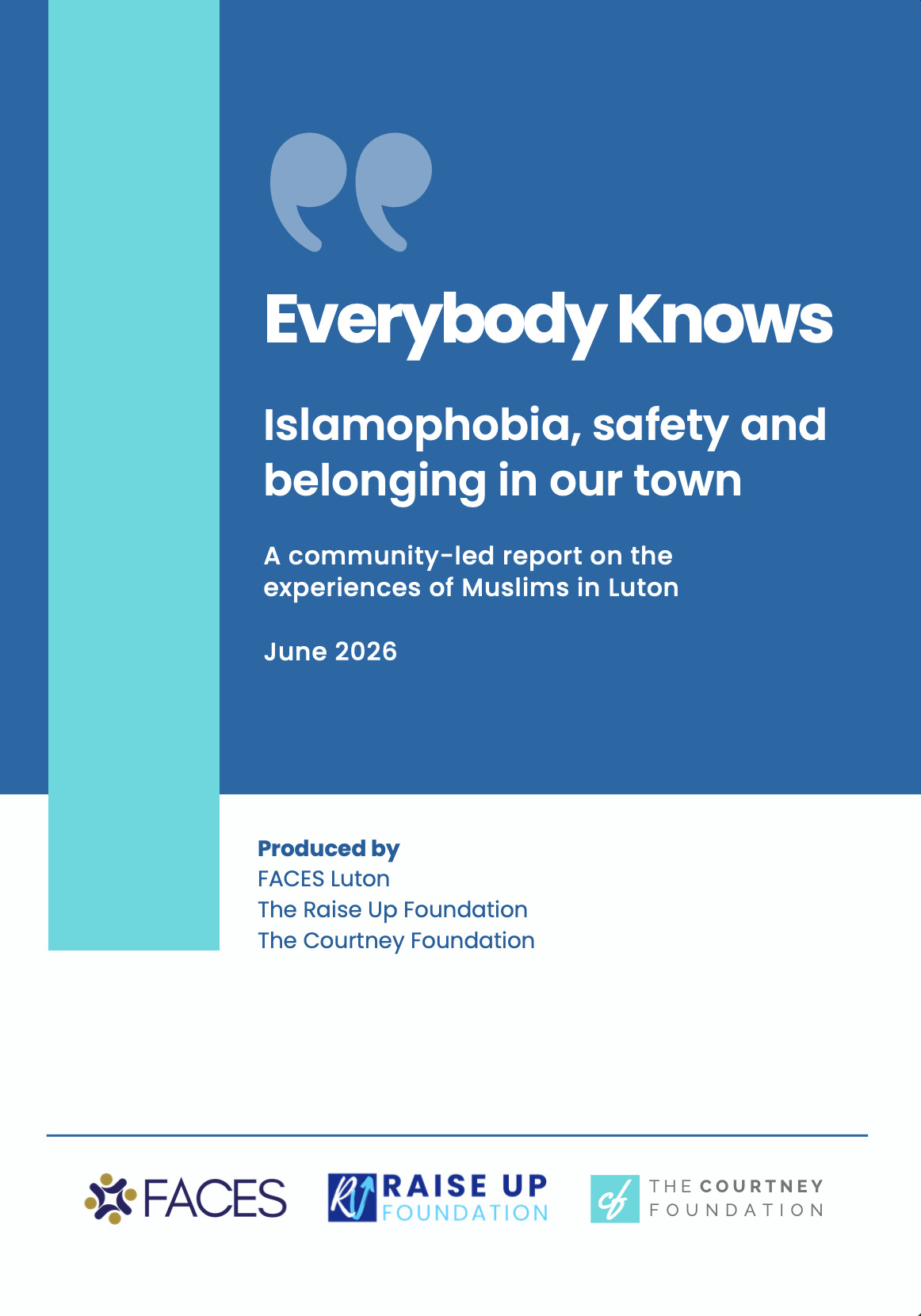
The report, Everybody Knows: Islamophobia, safety and belonging in our town, was produced by FACES Luton, The Raise Up Foundation and The Courtney Foundation following a community survey of 209 residents and visitors during Islamophobia Awareness Month 2025, alongside discussions with local school pupils.
While the research is focused on Luton, its authors argue that the findings reflect a wider national trend, pointing to record levels of anti-Muslim hate documented by organisations including the Home Office and Muslim Census.
Among the report’s most striking findings, 67% of Muslim respondents said they had experienced or witnessed Islamophobia within Luton during the six months before the survey.
Looking across their lifetimes, in all settings including work, schools, healthcare and online, that figure rose to 94%, suggesting that almost every respondent had encountered anti-Muslim prejudice at some point.
More than half (51%) also reported feeling “less safe” or “less welcome” than they had six months earlier, with respondents repeatedly citing the rise of the far-right, hostile media coverage of Muslims and the lasting impact of the summer 2024 riots as key reasons.

One respondent summarised those concerns bluntly: “The rise of the far-right and blaming Muslims for everything.”
Subscribe to our newsletter and stay updated on the latest news and updates from around the Muslim world!
The report stresses that these findings are based on voluntary responses rather than a scientific sample of the town’s population. However, its authors say the consistency of the evidence, alongside similar national datasets, makes the conclusions difficult to dismiss.
Women, young people hardest hit
The research found Muslim women reported feeling significantly more vulnerable than men.
Thirty-six per cent of Muslim women said they felt “quite” or “very” unsafe in Luton compared with 26% of Muslim men, despite both groups reporting similar levels of exposure to Islamophobia. The report links this to the greater visibility of Muslim women wearing religious dress such as the hijab or niqab, making them more frequent targets of public hostility.
One woman described the emotional toll on her family: “Whenever I go out I have to think about where I’m going and what I am wearing, especially after the riots. I was born in England and lived in Luton my whole life, but I think it is time that we started thinking about leaving before we are forced to. My daughter is 11 and she asked me why people hate us and it’s disgusting that our children are made to feel this way and nobody cares.”
 The findings concerning young Muslims were equally stark. Only 17% of young Muslim respondents said they had someone at school they could speak to about racism or Islamophobia, while 88% of those who experienced or witnessed Islamophobia said they received no support afterwards. School pupils described feelings of collective blame, fear of judgement and a belief that reporting incidents would achieve little.
One survey respondent recalled: “My cousin was called a terrorist in school and the school just made him shake hands with the other boy.”
The report also identifies workplaces as one of the most common settings in which Muslims experience discrimination.
Sixty-two per cent of Muslim respondents reported experiencing or witnessing racism or Islamophobia at work, with examples ranging from mocking religious dress to discrimination over Muslim names.
One respondent said: “My manager stated that we had too many hijabi staff and it made our clients uncomfortable.”
Trust in public institutions was also found to be low. Thirty-eight per cent of Muslim respondents said the police “rarely” or “never” treated them fairly and with respect, while the report found that 89% of Muslims who had experienced or witnessed Islamophobia received no support afterwards from workplaces, schools, police or other organisations.
One respondent wrote: “There isn’t any point because nothing is done and nobody cares or even wants to do anything. Everybody knows, but nobody does anything.”
“We don’t matter.”
The report takes its title from a comment made by a young participant during discussions with school pupils: “Everybody knows, but nobody does anything. We don’t matter.”
In the foreword, Rehana Faisal, Chair of The Raise Up Foundation and Co-Chair of FACES Luton, said the findings mirrored both her own research and wider national evidence.
“What comes to light in this report tells me that not much has changed, and in some respects things have gotten worse,” she wrote, adding that anti-Muslim hatred in Britain had reached “record levels” while institutions that should protect Muslims often compounded the harm.
Luton Council of Mosques also welcomed the report, saying it reflected what local mosques regularly hear from congregants.
General Secretary Imam Muhammad Rayhan said parents worry about their children’s wellbeing in schools, Muslim women fear travelling on public transport because of abuse, and many workers stay silent about discrimination because they believe speaking up will make no difference.
“The data is here. The testimony is here. Our community has spoken clearly. We expect that clarity to be met with action,” he wrote.
The report concludes with a series of recommendations aimed at local authorities, schools, employers, police and other public bodies, including:
- Stronger action against hate incidents
- Improved anti-racism education
- Greater representation of minority communities in leadership
- Better institutional support for victims of Islamophobia
- Among all respondents, 91% backed stronger laws and consequences for hate incidents
- 88% supported anti-racism training in schools and institutions
- And 87% wanted local leaders to stand together publicly against Islamophobia