



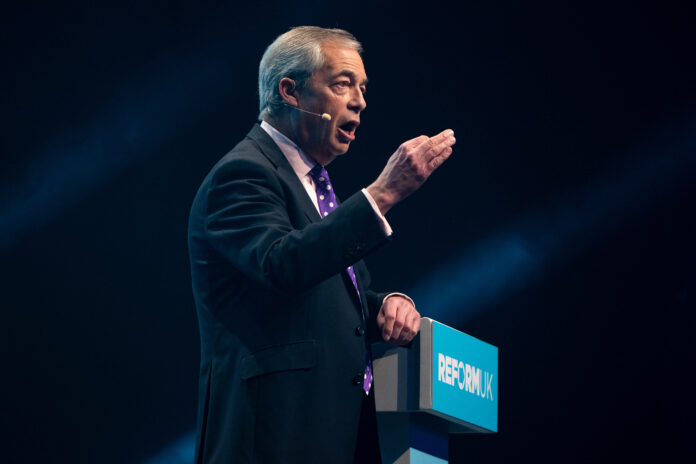
A new prediction from the respected polling aggregator Electoral Calculus suggests that if a UK general election were held today, the right-wing, Islamophobic Reform UK party would become the largest party in Parliament with around 266 seats but would still fall 60 seats short of an overall majority.
The forecast, updated on March 31 and based on opinion polls conducted between early and late March involving nearly 20,000 respondents, represents a clear downturn for Reform UK which Electoral Calculus last June predicted would win a comfortable majority in the next General Election.
That said, the forecast still shows a remarkable realignment to the far-right in British politics less than two years after Labour’s landslide victory in July 2024.
Reform UK is frequently accused of Islamophobia, mainly because of statements by leaders and its rhetoric on immigration and cultural issues.
There have been documented cases of individuals linked to the party making anti-Muslim comments, which has fuelled those claims.

However, the party itself denies being Islamophobic and says its positions are about immigration control, national identity, and free speech rather than hostility to Islam as a religion.
Meanwhile, Electoral Calculus also predicts a catastrophic collapse for Labour which will only achieve 63 seats.
Subscribe to our newsletter and stay updated on the latest news and updates from around the Muslim world!
These are the projections:
- Reform UK: 26.5% of the national vote, 266 seats
- Conservatives: 18.5%, 107 seats
- Green Party: 16.2% vote share, 74 seats
- Liberal Democrats: 12.0%, 69 seats
- Labour: 18.6%, 63 seats
- SNP: 3.0%, 44 seats
- Plaid Cymru: 1.0%, 6 seats
Other parties, mainly in Northern Ireland, would take the remaining seats. No single party would command a majority in the 650-seat Commons.
The model incorporates adjustments for tactical voting and highlights significant volatility.
Probable outcomes
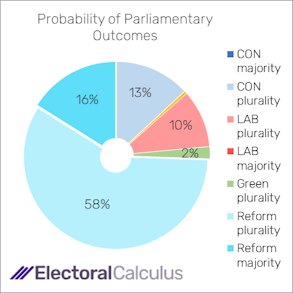
Electoral Calculus assigns the following probabilities to different scenarios:
- Reform minority government: 42%
- Reform outright majority: 16%
- Labour minority: 16%
- Conservative minority: 10%
Reform is given a 74% chance of emerging as the largest party, far ahead of the Conservatives (13%) or Labour (10%).
Potential coalitions and opposition
With Reform short of a majority, analysts suggest it could seek support from the Conservatives to form a government.
In that scenario, the Green Party — projected to leap from 4 to 74 seats — would likely become the official opposition, marking an extraordinary shift in the political landscape.
The projection underscores deep voter dissatisfaction with the two traditional main parties.
Both Labour and the Conservatives are now polling in the high teens, with combined support well below 40%, while insurgent parties on the right (Reform) and left (Greens) have capitalised on issues ranging from immigration and net zero policies to cost-of-living concerns and disillusionment with Westminster.
The next General Election is not due until no later than August 2029, though Prime Minister Keir Starmer could call one earlier.
Local elections across England, plus Scottish Parliament and Senedd elections, are scheduled for May 7, 2026, which may provide further clues about shifting voter sentiment.
This projected fragmentation would represent one of the most dramatic upheavals in modern British electoral history, potentially leading to a period of unstable minority or coalition governments and forcing major parties to rethink their strategies ahead of 2029.