



For most, the current conflict in the Middle East has been seen by the Muslim community as a matter of right and wrong.
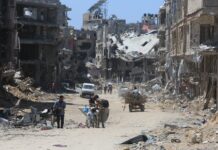
The US-“Israel” alliance has caused so much death and destruction over the years; their declared justification for the attacks is embarrassingly weak; and their targets have included schoolchildren and a desalination plant providing drinking water for civilians. It is hard to imagine anyone with an ounce of decency supporting their bloodthirsty war.
But people like a “Good vs. Bad” narrative to make sense of the world. Sometimes, as in Gaza, it has been crystal clear. In other places this binary simplicity fails to map onto the complex reality of war.
Is this the case with Iran? Certainly, when it comes to the Iranian people, we can say that it is. They did not deserve this attack.
Yet whilst the US-“Israel” attack is unjustifiable, the Iranian regime’s history makes it a difficult candidate for the role of a pure “hero” in the eyes of many Muslims and international observers.

That said, a lack of moral clarity about Saddam Hussain’s Ba’athist regime in Iraq did not prevent the majority of us from seeing moral clarity about the Gulf Wars of 1991 and 2003.
Subscribe to our newsletter and stay updated on the latest news and updates from around the Muslim world!
So why the confusion over Iran for some?
A Legacy of Contradiction: The Iranian Regime
The confusion surrounding Iran stems from its own internal and external contradictions. For decades, Tehran has marketed itself as a supporter of “resistance” – yet its actions often tell a different story.
Its narrative on the Arab Spring was that it represented a righteous uprising against despotic regimes that deserved support… until people spoke out in Syria.
There the regime has been viewed as a brutal aggressor, with critics pointing out that its forces have “more Muslim blood on their hands than any other regime” due to the massacre of hundreds of thousands during the civil war.
Many characterised this as a sectarian war, based on theological difference – yet this is incorrect. Iran, as a nation state, did what all nation states do: undertake horrific acts driven more by pragmatic national interest than by theology. Had this regime been thinking in a sectarian way, why would it have such enmity towards Azerbaijan, which is 85% Shia Muslim?

More recently, the regime has faced severe accusations of attacking its own people during domestic unrest, though Western suggestions that up to 35,000 people were killed over two months are frankly difficult to believe – given that the “official” death tolls in Gaza have been around 70,000 over more than two years, or that 25,000–40,000 were killed by Hafez al-Assad during his four-week indiscriminate bombing of Hama in 1982. (Some human rights organisations estimate approximately 7,000 deaths; the Iranian government acknowledges around 3,000, blaming an armed minority amongst the protesters for triggering the violence.)
Historically, Iran’s relationship with the United States has been characterised by a perplexing “frenemy” dynamic. Despite public rhetoric of “Death to America,” Tehran has periodically engaged in tacit strategic co-operation with Washington. In 2001, Iran provided intelligence and coordinates to help the US topple the Taliban in Afghanistan. Similarly, in Iraq, Iranian-backed militias played a decisive role in stabilising the US occupation at critical moments, when they could have created chaos instead.
During one interview, President Donald Trump even claimed that Iran informed him of their planned retaliation for the killing of Qasem Soleimani, suggesting that their strike targeted unoccupied areas so as to result in minimal damage to US military interests – boasting that whilst his security team were up all night anxious about the blowback, he accepted the Iranian government’s reassurances and went to bed.
This history of private accommodation masking public belligerence leaves many sceptical of the regime’s current claims to pure anti-imperialist resistance.
Yet be in no doubt: this criminal attack on Iran is very real – and must be opposed!
America and “Israel” as Aggressors
Despite this chequered past, America and “Israel” are the clear aggressors in this current war, utilising justifications that many find wholly lacking in credibility. The US-“Israel” alliance launched pre-emptive strikes against Iran without a formal declaration or public ultimatum, even whilst diplomatic negotiations were reportedly progressing.
Many analysts viewed these negotiations as a sham designed to buy time for military preparation. Omani mediators announced a major breakthrough in which Iran agreed never to stockpile enriched uranium – yet the attack came just hours later. This suggests the objective was never peace.
Even within the United States, the rationale for war is seen as fragile. Senators have expressed confusion after classified briefings, noting that the administration has offered multiple, shifting justifications – ranging from nuclear disarmament to halting “terrorist activities” – without providing a clear priority or objective. This lack of a coherent plan has led to significant domestic opposition, with polls showing approval for the war dropping below 25%.
“Israel’s” War of Destruction versus America’s War of Subjugation
It should be noted that these allies do not share the same aims. US Secretary of State Marco Rubio made clear that the Zionist occupation planned to attack. The Zionist occupying force genuinely fears the rise of any regional state capable of rivalling its strength – even though it enjoys the backing of America, Britain, Europe, Australia and Canada, as well as local Arab regimes acting as a de facto defence force.
Iran’s development of civil nuclear power was deemed unacceptable, as was its missile capability. That several missiles penetrated the “Iron Dome” during the Twelve Day War proved intolerable. Even as the US claimed to have neutralised Iran’s capability during that episode, the Zionist occupying force used the subsequent lull in its attacks on Gaza to plan a strike on Iran. Its intelligence capability allowed it to identify leadership figures for assassination, as it has done with prominent figures in the past.
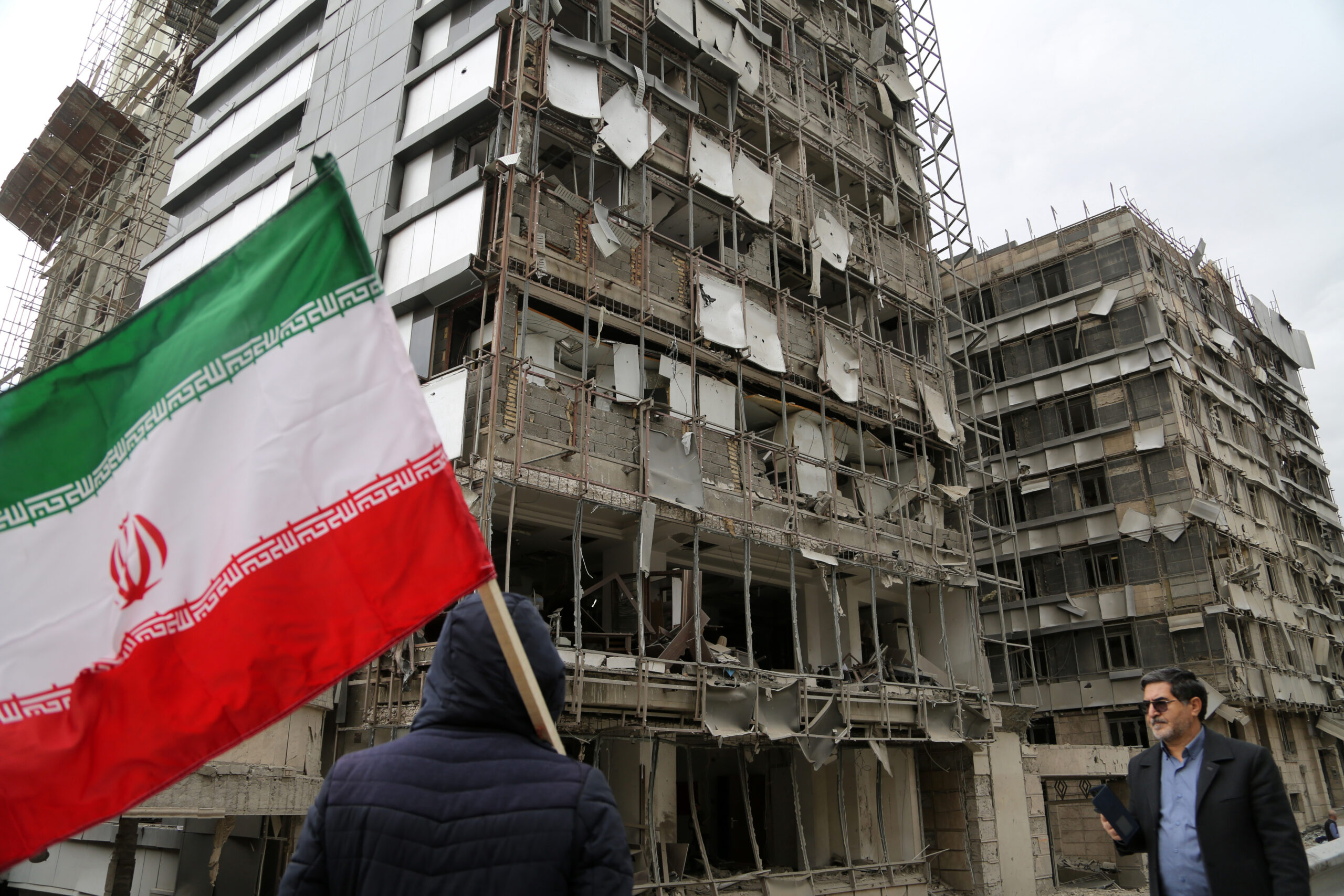
Its aim is to destroy Iran’s strength entirely – not merely the regime, but all capacity for power – even if that leaves the country in civil war and chaos.
The United States, however, prefers a balance of power in the region. Civil war in Iran and regional destabilisation would carry serious implications for its interests in Iraq and Syria, as well as for its allies and client states. A protracted war could also impact the global economy, which is similarly undesirable.
Hence Trump’s early calls for an “off-ramp” – seeking an interlocutor within the regime who did not hold the same red lines as those with whom he had been negotiating prior to the attacks.
Palestine and “Greater Israel”
Iran’s consistent support for Palestinian resistance had become a thorn in the side of the Zionist occupation that it could no longer accept after 7th October 2023.
Moreover, Netanyahu’s humiliation over that major security failure – alongside the internal political difficulties he faces – made it all the more necessary for him to be seen to secure a victory over a historic enemy.
From the “Israeli” perspective, the war is also a necessary step towards rearranging the regional balance of power to create a “New Levant.” This strategy seeks to weaken any nation with the inherent capability to resist “Israel” – including Turkey and Saudi Arabia – until they voluntarily submit to a regional order dominated by Tel Aviv. By striking Iran, the alliance hopes to dismantle the proxy network supporting Palestinian groups, thereby removing the primary obstacle to the realisation of a “Greater Israel.”
Yet despite this overt aim of supremacy, we see ever-increasing normalisation between regional regimes and the Zionist occupation – regimes that cannot seem to recognise what constitutes a threat to their own national interest, let alone consider the Islamic ruling on such betrayal.
Conclusion: Will the Ummah Awaken?
Once again we face a dramatic moment in which a major geopolitical shock serves as a wake-up call for the Muslim Ummah.
Iran could not have been attacked by the US-“Israel” alliance without US bases in Qatar, the UAE, Saudi Arabia and Bahrain. The attack could not have succeeded without Jordan shooting down Iranian missiles, Azerbaijan supplying oil to the Zionist occupation force, and Turkey permitting its transit.
The US has proposed using long-suffering Kurdish Muslims to open a new front against Iran – yet Egypt and Jordan have not considered opening a new front against the Zionist entity.
The conflict has exposed the bankruptcy of the nation-state system, demonstrating that regimes in Tehran, Riyadh, Dubai and elsewhere are often more concerned with their own survival and back-channel dealings with global powers than with the unified interests of the Muslim world or the rulings of Islam in geopolitics.
It is worth remembering that the Khilafah was destroyed and Palestine occupied in the wake of the enormous geopolitical upheaval during and after the First World War, which transformed the politics and geography of the Muslim world.
Whilst the human misery unfolding in Iran, Lebanon and occupied Palestine is unbearable to witness, it may yet be that these seismic geopolitical events herald an opportunity for a change for the better. And Allah knows best.
Abdul Wahid has been active in Muslim affairs in the UK for over 25 years. He has been published on the websites of Foreign Policy, Open Democracy, the Times Higher Educational Supplement, and Prospect Magazine. You can follow him on X/Twitter and on Substack.