


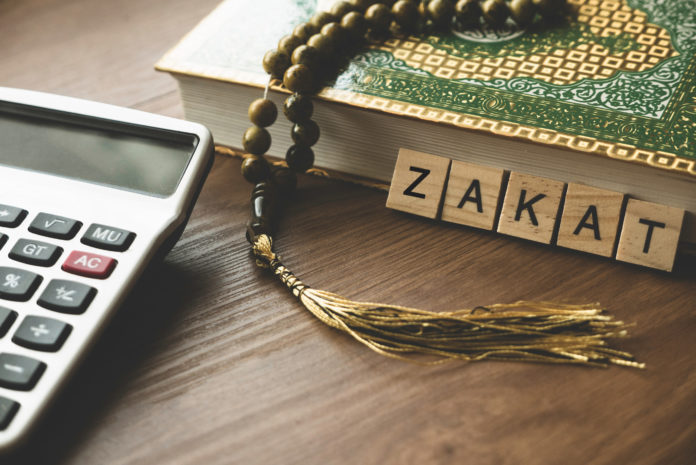
The recent joint fatwa by the Fiqh Council of North America (FCNA) and the Assembly of Muslim Jurists of America (AMJA) permitting the use of Zakat for political campaigns has sparked significant outrage and condemnation from Muslims worldwide. Blogger Najm Al-Din writes about the damaging risks.
The majority of objections – supported by notable dissent from within the Fiqh Council itself – centre around the breadth of its formulation, especially regarding the expansion of the specific category of Zakat recipients known as mu’allafat al-qulub (those whose hearts are to be reconciled).
While the fatwa was intended to provide a religious framework for the Muslim American community to use Zakat as a tool for strategic political advocacy and protection, I believe this expansive scope risks recharacterising Zakat by transforming it from a mechanism of social equity into a tool for secular institutional funding.
Furthermore, I join all those who argue that such an extension compromises the divine rights of the poor by unethically shifting wealth toward the political middle class at the expense of the destitute, who remain the rightful recipients according to classical tradition.
Political contributions

As many have noted, the fatwa not only lacks a framework for implementation – inviting abuse by private actors and organisations who may invoke it to secure their own institutional survival under the pretext of “reconciling hearts through dawah” – but it also glosses over the fact that political contributions often have a weak influence on the trajectory of party policies and political behaviour.

It would appear the scholars have relied on speculative political aims in a system where opportunism and expediency are not only rife but deeply embedded in the structure of secular democracies.
Subscribe to our newsletter and stay updated on the latest news and updates from around the Muslim world!
Advocacy and interest group contributions often fail to deliver desired outcomes when faced with the immense financial influence of opposing parties.
For example, auto dealers recently failed to block Tesla’s market expansion despite their heavy lobbying, highlighting how corporations exploit jurisdictional loopholes.
Similarly, despite mobilising millions over decades, anti-war movements are consistently overwhelmed by the superior resources of the military-industrial complex.
Regardless of how sincere the intentions of the Muslim jurists may be, anti-war lobbies -despite having far greater capital and institutional infrastructure than Muslim organisations – are still unable to compete with the influence of major defence contractors, which are projected to receive hundreds of billions in the coming years.
The scholars who issued the fatwa must contend with a reality where the financial resources of anti-war groups are dwarfed by the scale of government military spending and the profits of private contractors.
Therefore, by ignoring the mechanisms of modern electoral systems and basing its verdict on the speculative, unproven assumption that zakat-funded contributions can stop the industrial slaughter of Muslims and secure favourable foreign policies, the fatwa reflects profound political naivety.
This strategic misjudgement stems from a detachment from the realities of Western political systems and a fundamental misunderstanding of how political influence works.
By placing excessive faith in the political system, the signatories of this fatwa have overlooked the transactional nature and multifaceted motivations of modern electoral politics, where elected officials must navigate a plethora of pressures beyond donor demands, including career ambitions and media scrutiny.
Khilafah
Since one of the rationales for allocating Zakat to political campaigns is to alleviate the suffering of Muslims in conflict zones by deterring hostile policymaking, the scholars issuing this fatwa should recognise above all others that the primary means of achieving this objective is the re-establishment of the Khilafah upon the Prophetic Methodology.
Historically, the Khilafah system was responsible for collecting and strategically deploying zakat through a ruler (Wali al-Amr) with legitimate enforcement power.
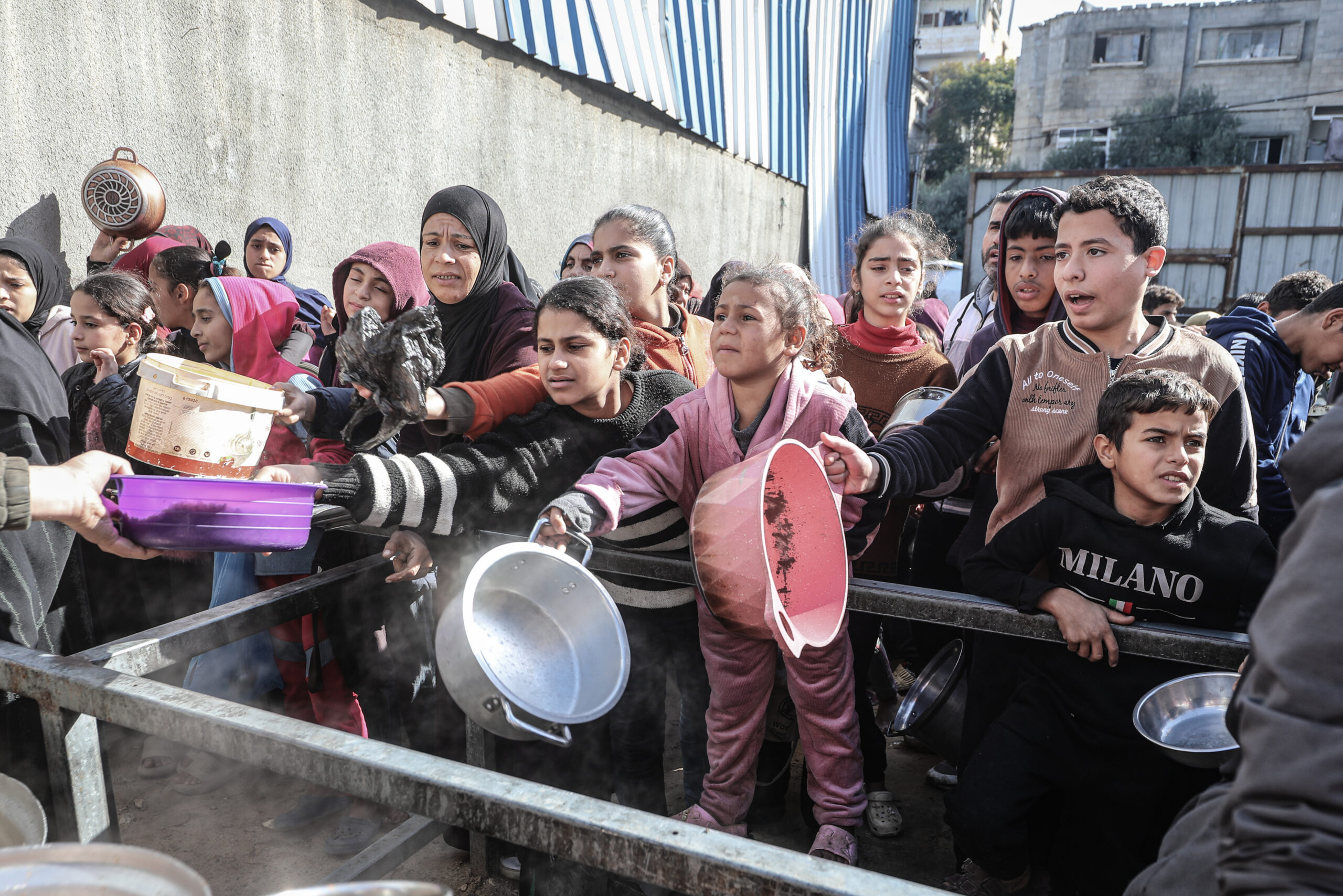
Rather than serving as a discretionary fund for private agendas or speculative politics, zakat was administered by the Khalifah and his delegates as a communal right, directly addressing the public interest (maslahah amma).
Furthermore, Hifz al-Nafs (the preservation of life) was a foundational element of the Khalifah’s mandate and social contract under traditional Islamic law.
This principle obliged the Caliph not only to refrain from harming citizens but also to actively foster conditions that promote well-being, such as maintaining security and providing protection against natural and man-made disasters, including tyranny and oppression.
Therefore, instead of encouraging Muslims to fund political campaigns – albeit with noble aims – within a kufr system in which war, exploitation, and Islamophobia are deeply embedded in the political machinery, the Assembly of Muslim Jurists of America ought to exhort its followers to become protectors of their own security by reviving the institution that classical Islamic scholarship deemed the primary and practical method to avert harm and protect the interests of the Ummah.
If anything, the destruction wrought against our brothers and sisters in Palestine and beyond underscores the religious and rational necessity of a unified Islamic leadership (Imamah) and the urgency of working toward its establishment.
Minority status
Another major issue with the ruling is that it keeps Muslims in a perpetual state of servitude by tightening our integration into existing secular frameworks, rather than advocating for a more fundamental shift in Islamic political thought and activism.
Directing a pillar of worship intended for the purification of wealth toward secular political campaigns will fuel our dependence on the kufr system and ultimately bind the community to a system over which our influence and control are, at best, marginal.

After decades of lobbying secular governments to end their aggressive foreign and domestic policies towards Muslims, Western governments have doubled down on their witch hunt against the Muslim Ummah at home and abroad.
Despite this reality, Muslim scholarship remains trapped in the fiqh of minorities, giving precedence to a discourse of civil rights and a language of survival over the pursuit of an independent political identity anchored in the Islamic tradition.
By settling for the status of a protected minority, it is difficult to view this fatwa as anything other than subservience to a secular political system, as it abdicates the responsibility to call for the implementation of Islam as a comprehensive deen through the restoration of the Khilafah, thus reflecting a lack of political ambition among some influential ulema.
Once again, we are sacrificing long-term political vision for short-term, dangerous pragmatism, and the Islamic impulse to lead rather than follow has sadly vanished from scholarly discourse.
When we refuse to chart a path toward ummatic sovereignty and choose instead to justify integration with the status quo, we condemn Muslims to a position of passive participation and bureaucratic servitude within a secular state.
In conclusion, if Muslim jurists fail to prioritise the implementation of Islam on a state level, they should certainly not be granted the authority to manage zakat for political aims. After all, what business do those who undermine the call for Khilafah have pontificating on its pillars?
In my view, those who marginalise the importance of such a core institution have forfeited the moral and legal right to administer its financial systems.
If we, as the Muslim diaspora in the West, truly want to emerge from this political morass, we must recognise the folly of exhausting our resources on a system designed to keep us as a permanent minority.
We can only move forward once we acknowledge that the need of the hour is to invest in a long-term vision for Islamic self-determination.