


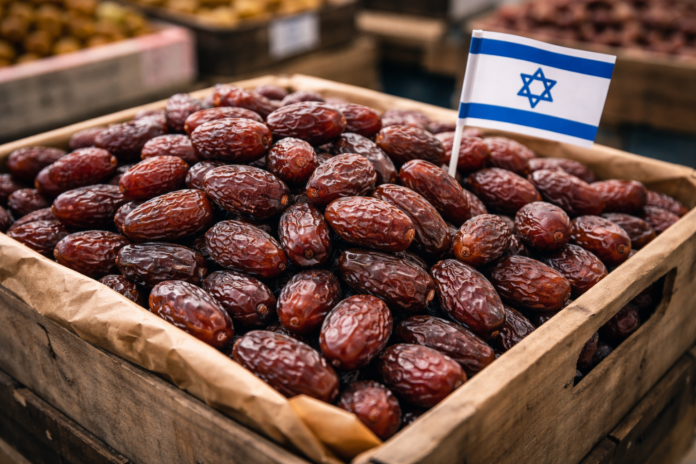
Medjool dates from Israel are being sold in Europe with false labelling, according to industry experts.
Reports suggest that as much as 50–75% of Medjool dates reaching Europe come from Israel, according to the Centre for the Promotion of Imports from Developing Countries (CBI).
Critics allege that a significant portion of these dates originate from settlements in the occupied West Bank.
These dates often enter European markets through indirect routes, repackaged or labeled under alternative origins, including the Netherlands, Morocco, the UAE or even Palestine. The term “date laundering” has emerged to describe this practice.
Israel exports around 35,000 tons of dates annually, yet only 8,800 tons are produced within internationally recognised Israeli borders, primarily in the Arava Valley.

If accurate, roughly 75% of exports could be of settlement-origin. Some companies are said to mix settlement dates into Palestinian supply chains or route products through intermediary countries, obscuring their true origin to bypass EU boycott measures and regulatory scrutiny.
The rapid growth of the global date market has added fuel to the debate over traceability and transparency.
Subscribe to our newsletter and stay updated on the latest news and updates from around the Muslim world!
Valued at $32.7 billion in 2025, it is projected to reach $34.5 billion in 2026, with a compound annual growth rate of 6.14%.
By 2034, analysts forecast a $55.58 billion market. The Middle East and Africa dominate production, accounting for 85% of the market, with annual harvests exceeding nine million tons.
Key producers include Egypt, Saudi Arabia, Iran, Algeria, and Israel, with Egypt leading at 1.7 million tons annually, followed closely by Saudi Arabia and Iran.
Israel’s date sector, while trailing in volume, focuses on high-value exports, particularly Medjools.
But discrepancies between production and export figures have drawn scrutiny from media, consumer watchdogs, and industry analysts.
Concerns are particularly high in Europe, where ethical sourcing and fair trade are increasingly important to consumers.
Dominating the market
According to World Bank data, roughly half of dates sold in the Netherlands and more than one-third in France are of Israeli origin.
Germany also sources a quarter of its dates from Israeli-linked products, many routed via packaging hubs in the Netherlands or France.
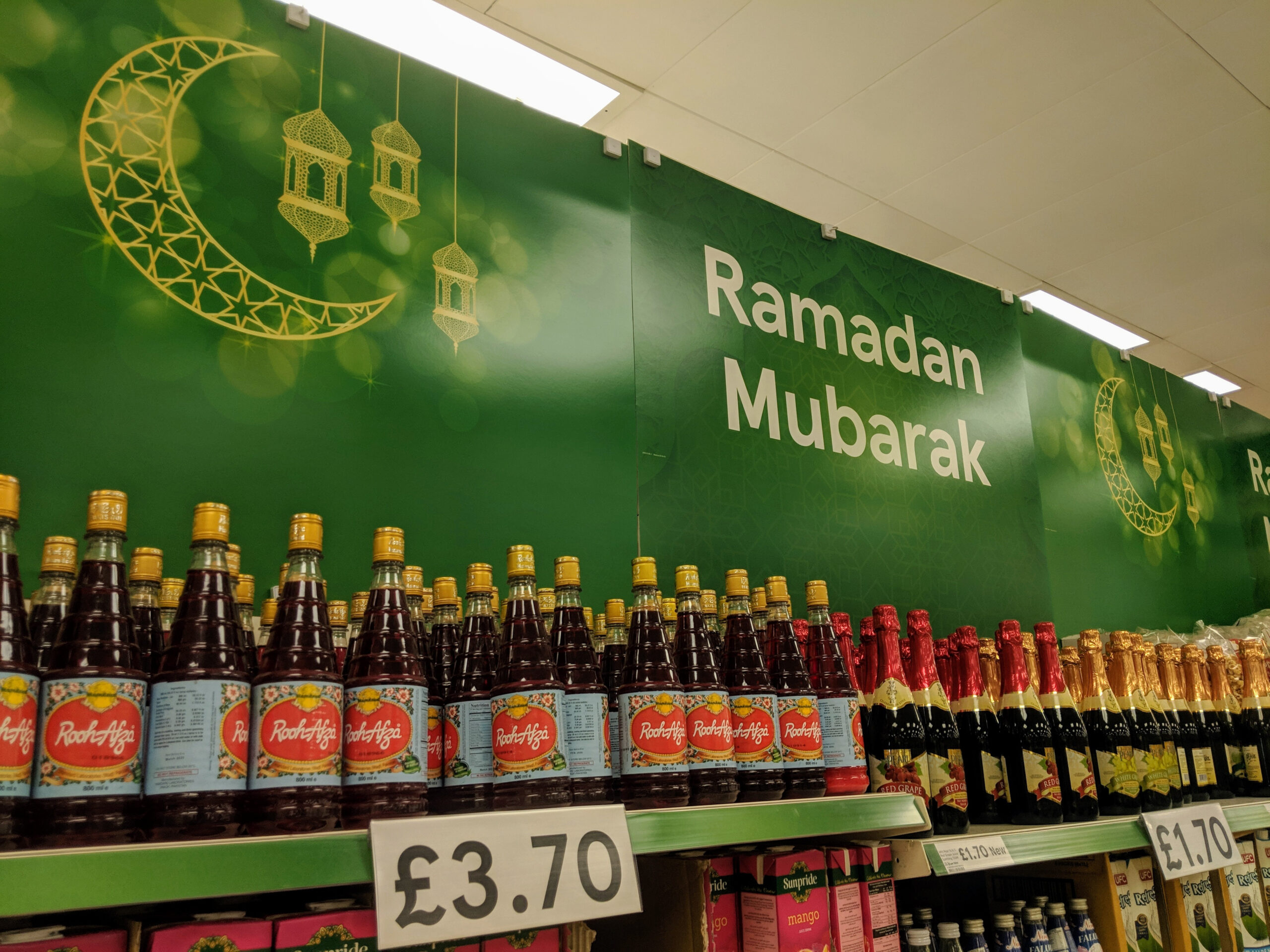
These patterns intensify during Ramadan, when demand peaks, straining inspection mechanisms and distorting competition.
EU regulations now require settlement goods to be labeled with their actual place of production.
A 2019 EU Court of Justice ruling ruled that labeling products solely as “Israeli” is insufficient. Settlement origin must be clearly indicated to avoid misleading consumers.
Despite this, European supermarkets and importers continue to source Israeli dates, sometimes through intermediaries or free trade zones, making true origin difficult to trace.
The debate over “date laundering” is not new. Palestinian authorities have previously seized settlement dates marketed as Palestinian products.
In 2014, the Palestinian Ministry of National Economy confiscated 20 tons of such dates. Similar enforcement actions have occurred in later years.
Discrepancies between official export declarations and actual volumes allow settlement-origin products to enter European supply chains under different labels.
Boycott campaigns and consumer activism in Europe have started to impact Israeli date exports.
The UK Co-op, for example, has stopped sourcing from Israel, while pressure grows in Belgium, Ireland, and other EU markets.
Israel’s agricultural sector reportedly faces strain from these campaigns and logistical disruptions linked to the Gaza conflict, with producers warning that the industry is nearing collapse.