


A joint fatwa by the Fiqh Council of North America and the Assembly of Muslim Jurists of America has backed giving Zakat to political campaigns, sparking controversy among Muslims living in the West.
On February 3, the Fiqh Council of North America (FCNA) and the Assembly of Muslim Jurists of America (AMJA) issued a fatwa titled “Giving Zakat for Political Campaigns”.
The fatwa dealt with the matter of permissibility over whether a Muslim could donate Zakat to support politicians or campaigns that change public policy regarding the prevention of genocide in Gaza.
The question posed to the board of scholars in FCNA and AMJA said: “Given the reality of what is happening in Gaza, and that one of the most effective ways to help prevent genocide is by supporting politicians or campaigns that change public policy, is it permissible to give Zakat for such purposes?”
The fatwa

The fatwa stated:
“If Muslim minorities are living in a non-Islamic country, ruled by a non-Muslim government, and it becomes evident that these minorities are in circumstances that call for winning that government’s goodwill so that it will attend to their condition and safeguard their rights and freedoms, then assisting that government from the zakat allotment for ‘those whose hearts are to be reconciled’ (al-mu’allafah qulūbuhum) — in a way that secures for these Muslim minorities support, respect, standing, and empowerment — is warranted, and its permissibility is derived from realising the public interest of these Muslim communities.”
Subscribe to our newsletter and stay updated on the latest news and updates from around the Muslim world!
The fatwa then stated: “As this fatwā is being written, the world is seeing the impact that specific lobbies have had in unethically shaping domestic and foreign policy in aiding and abetting a genocide against our brothers and sisters in Gaza; it is imperative that people of conscience then also strive to influence policies to be more ethical and humane, and to save innocent life and to protect the most vulnerable of our Ummah.”
The fatwa then proceeded to list five conditions for giving one’s portion of Zakat to influencing political causes.
These can be summarised as:
- It must be a “reputable” institution which is annually monitored and audited to ensure it fulfils the Shari’ah.
- The causes for which the funds are spent are directly related to benefitting the Ummah.
- There are reasonable signs to believe the funds would help the cause for which they are being raised.
- One does not give the majority of their Zakat to the category of political campaigns, so as to preserve the needs of the poor.
- The institutions must abide by local laws and not operate outside the country’s laws related to campaign financing.
The fatwa was signed off by some popular scholars, such as Dr Yasir Qadhi, among others.

What is Zakat?
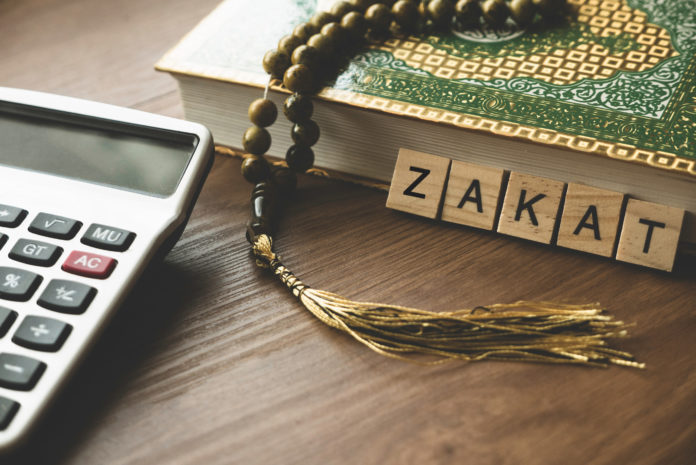
Zakat is one of the five pillars of Islam and is a compulsory act of worship in Islam. It requires Muslims who possess wealth above a certain threshold (called the Nisab) to donate a portion (typically 2.5%) of their qualifying wealth to those who are eligible to receive it.
According to Islamic law, there are eight factors that make someone eligible to receive Zakat.
Verse 9:60 of the Qur’an outlines the categories: “Indeed, the prescribed charitable offerings are only to be given to: 1. The poor 2. The needy 3. To those who work on administering it 4. Those who have a reconciliation of heart (those who have embraced Islam or are inclined to it) 5. To free those in bondage 6. To the debt-ridden 7. For the cause of God 8. To the wayfarer This is an obligation from God. And God is all-knowing, all-wise.”
Response and pushback
There have been many institutions and scholars who have pushed back against the fatwa, citing it as controversial and invalid.
Shaykh Kholwadia, President of Darul Qasim College, an Islamic studies institution based in the United States, has published an official response, advising the “US Muslim community not to give credence” to the fatwa.
The college also published a more detailed rebuttal from a legal (fiqh) perspective, titled: “A Refutation of the Untenable-Fatwa on the Permissibility of Giving Zakat to the Non-Muslim for Political Purposes.”
The statement from Shaykh Kholwadia said: “The opinion expressed by these two groups represents a minuscule minority, and the overwhelming majority of Muslim scholars in the USA are vehemently against the idea.
“A fatwā is supposed to bring ease and sukūn to Muslims, not make their lives difficult and complicated. Orientalists and others have already taken the meaning and interpretation of the Islamic text away from the Ummah. Now, super-rich politicians of the West — who by no means qualify to receive zakāt — want to hijack our ʿibādah as well.
“The advocates of such a pitiful fatwā should be courageous enough to exhort Muslims to fight their own battles in Gaza and other parts of the world,” the statement concluded.
The board of 18 scholars at Darul Qasim also concluded, according to their own rebuttal, that “giving Zakat to political campaigns is unequivocally not allowed and will not fulfil the mandate of Zakat.”